Haley James M, Thackeray James T, Thorn Stephanie L, DaSilva Jean N
Cardiac PET Centre, University of Ottawa Heart Institute, 40 Ruskin Street, Ottawa, Ontario, Canada K1Y4W7; Department of Cellular and Molecular Medicine, Faculty of Medicine, University of Ottawa, Roger Guindon Hall, 451 Smyth Road, Ottawa, Ontario, Canada K1H8M5.
Cardiac PET Centre, University of Ottawa Heart Institute, 40 Ruskin Street, Ottawa, Ontario, Canada K1Y4W7; Department of Cellular and Molecular Medicine, Faculty of Medicine, University of Ottawa, Roger Guindon Hall, 451 Smyth Road, Ottawa, Ontario, Canada K1H8M5; Department of Nuclear Medicine, Hannover Medical School, Carl Neuberg Street 1, 30625 Hannover, Germany.
PLoS One. 2015 May 21;10(5):e0127581. doi: 10.1371/journal.pone.0127581. eCollection 2015.
Reduced cardiac β-adrenoceptor (β-AR) expression and cardiovascular dysfunction occur in models of hyperglycemia and hypoinsulinemia. Cardiac β-AR expression in type-2 diabetes models of hyperglycemia and hyperinsulinemia, remain less clear. This study investigates cardiac β-AR expression in type-2 diabetic Zucker diabetic fatty (ZDF) rats.
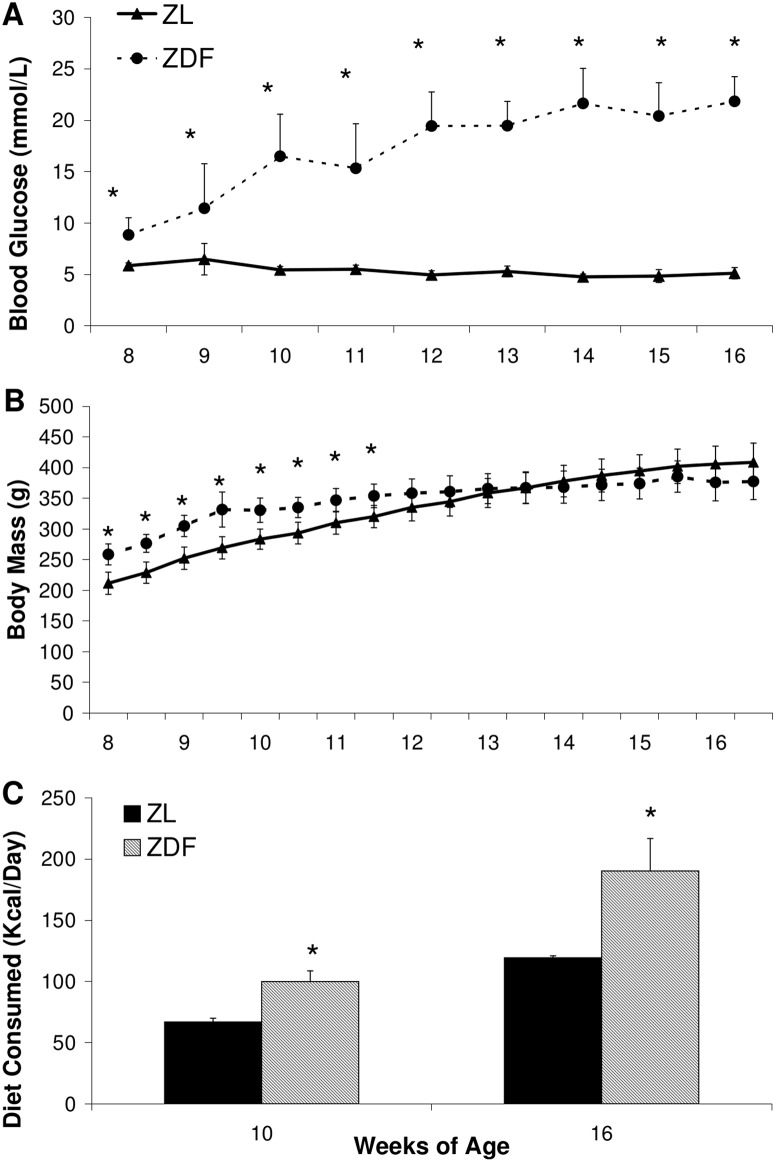
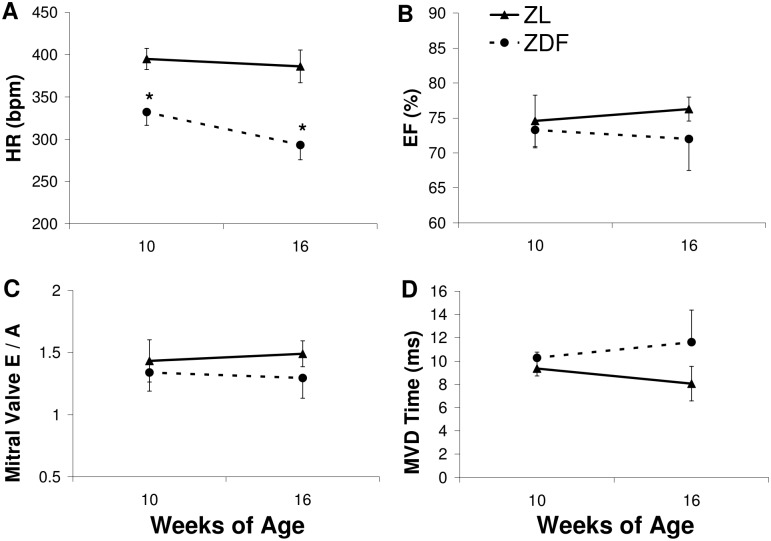
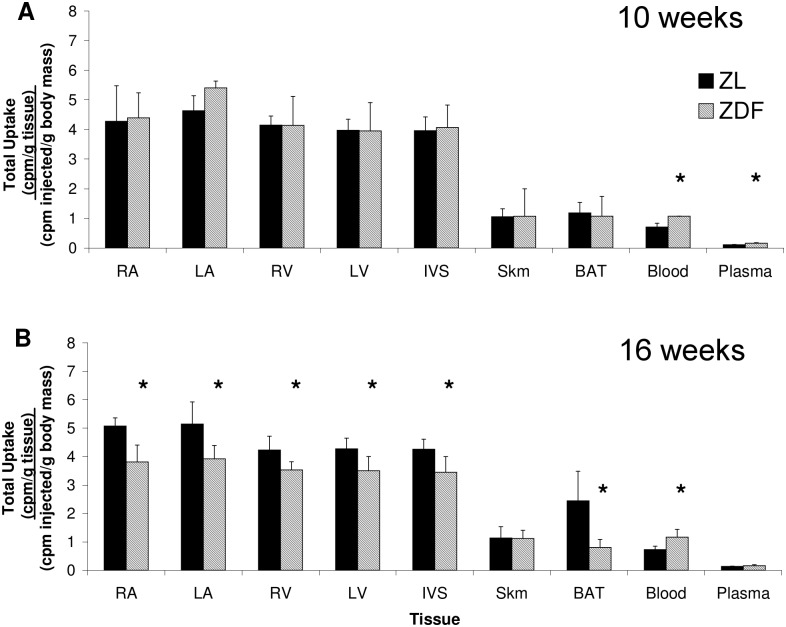
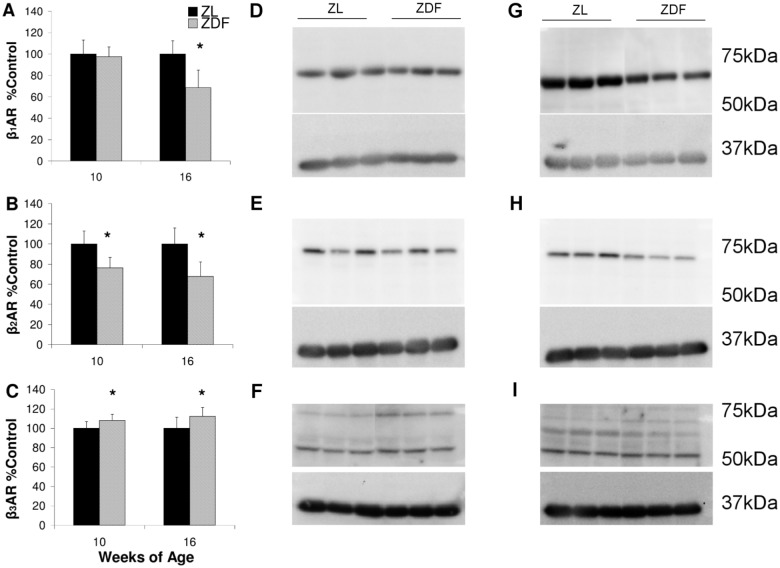
Ex vivo biodistribution experiments with [3H]CGP12177 were performed in Zucker lean (ZL) and ZDF rats at 10 and 16 weeks of age as diabetes develops. Blood glucose, body mass, and diet consumption were measured. Western blotting of β-AR subtypes was completed in parallel. Echocardiography was performed at 10 and 16 weeks to assess systolic and diastolic function. Fasted plasma insulin, free fatty acids (FFA), leptin and fed-state insulin were also measured.
At 10 weeks, myocardial [3H]CGP12177 was normal in hyperglycemic ZDF (17±4.1mM) compared to ZL, but reduced 16-25% at 16 weeks of age as diabetes and hyperglycemia (22±2.4mM) progressed. Reduced β-AR expression not apparent at 10 weeks also developed by 16 weeks of age in ZDF brown adipose tissue. In the heart, Western blotting at 10 weeks indicated normal β1-AR (98±9%), reduced β2-AR (76±10%), and elevated β3-AR (108±6). At 16 weeks, β1-AR expression became reduced (69±16%), β2-AR expression decreased further (68±14%), and β3-AR remained elevated, similar to 10 weeks (112±9%). While HR was reduced at 10 and 16 weeks in ZDF rats, no significant changes were observed in diastolic or systolic function.
Cardiac β-AR are reduced over 6 weeks of sustained hyperglycemia in type-2 diabetic ZDF rats. This indicates cardiac [3H]CGP12177 retention and β1- and β2-AR expression are inversely correlated with the progression of type-2 diabetes.
在高血糖和低胰岛素血症模型中,心脏β-肾上腺素能受体(β-AR)表达降低及心血管功能障碍会出现。而在高血糖和高胰岛素血症的2型糖尿病模型中,心脏β-AR的表达情况仍不太清楚。本研究调查2型糖尿病Zucker糖尿病肥胖(ZDF)大鼠的心脏β-AR表达。
随着糖尿病的发展,在10周龄和16周龄的Zucker瘦鼠(ZL)和ZDF大鼠中进行了用[3H]CGP12177的体外生物分布实验。测量了血糖、体重和饮食消耗。同时完成了β-AR亚型的蛋白质免疫印迹分析。在10周龄和16周龄时进行超声心动图检查以评估收缩和舒张功能。还测量了空腹血浆胰岛素、游离脂肪酸(FFA)、瘦素和进食状态下的胰岛素。
在10周时,与ZL相比,高血糖的ZDF大鼠(血糖17±4.1mM)心肌[3H]CGP12177正常,但在16周龄时随着糖尿病和高血糖(血糖22±2.4mM)的进展,其降低了16 - 25%。ZDF棕色脂肪组织中10周时不明显的β-AR表达降低在16周龄时也出现了。在心脏中,10周时的蛋白质免疫印迹分析表明β1-AR正常(98±9%),β2-AR降低(76±10%),β3-AR升高(108±6)。在16周时,β1-AR表达降低(69±16%),β2-AR表达进一步下降(68±14%),β3-AR仍然升高,与10周时相似(112±9%)。虽然ZDF大鼠在10周龄和16周龄时心率降低,但舒张或收缩功能未观察到显著变化。
在2型糖尿病ZDF大鼠中,持续高血糖6周以上会导致心脏β-AR减少。这表明心脏[3H]CGP12177保留以及β1-和β2-AR表达与2型糖尿病的进展呈负相关。