Cardiovascular Research Group, Department of Biochemistry, Faculty of Medicine, University of Szeged, Szeged, Hungary.
Cardiovasc Diabetol. 2013 Jan 15;12:16. doi: 10.1186/1475-2840-12-16.
Metabolic syndrome (coexisting visceral obesity, dyslipidemia, hyperglycemia, and hypertension) is a prominent risk factor for cardiovascular morbidity and mortality, however, its effect on cardiac gene expression pattern is unclear. Therefore, we examined the possible alterations in cardiac gene expression pattern in male Zucker Diabetic Fatty (ZDF) rats, a model of metabolic syndrome.
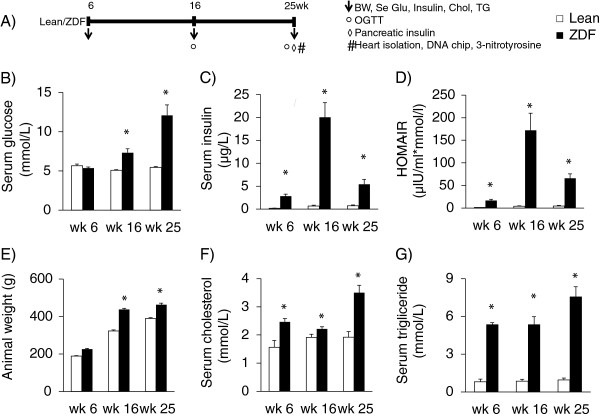
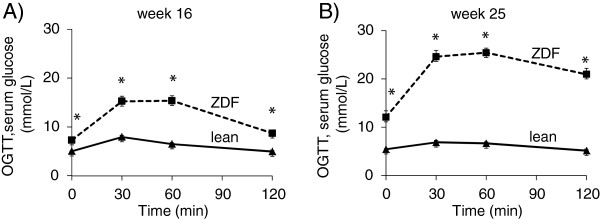
Fasting blood glucose, serum insulin, cholesterol and triglyceride levels were measured at 6, 16, and 25 wk of age in male ZDF and lean control rats. Oral glucose tolerance test was performed at 16 and 25 wk of age. At week 25, total RNA was isolated from the myocardium and assayed by rat oligonucleotide microarray for 14921 genes. Expression of selected genes was confirmed by qRT-PCR.
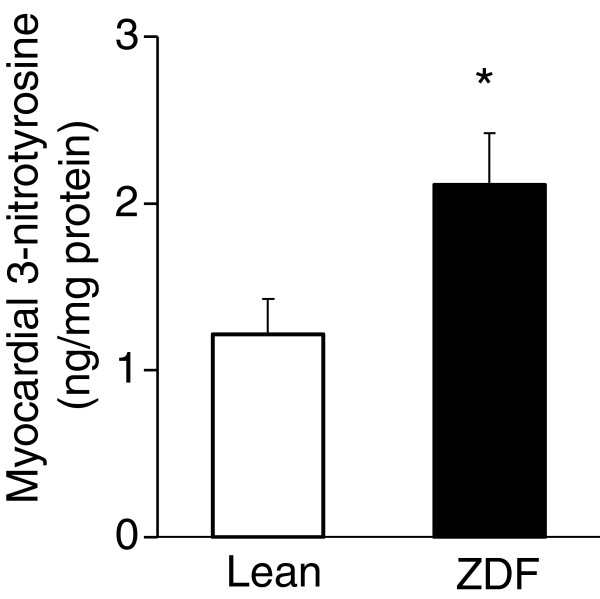
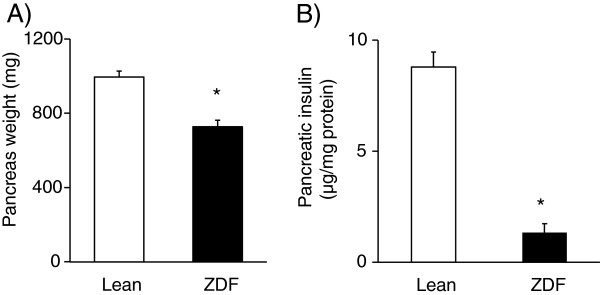
Fasting blood glucose, serum insulin, cholesterol and triglyceride levels were significantly increased, glucose tolerance and insulin sensitivity were impaired in ZDF rats compared to leans. In hearts of ZDF rats, 36 genes showed significant up-regulation and 49 genes showed down-regulation as compared to lean controls. Genes with significantly altered expression in the heart due to metabolic syndrome includes functional clusters of metabolism (e.g. 3-hydroxy-3-methylglutaryl-Coenzyme A synthase 2; argininosuccinate synthetase; 2-amino-3-ketobutyrate-coenzyme A ligase), structural proteins (e.g. myosin IXA; aggrecan1), signal transduction (e.g. activating transcription factor 3; phospholipase A2; insulin responsive sequence DNA binding protein-1) stress response (e.g. heat shock 70kD protein 1A; heat shock protein 60; glutathione S-transferase Yc2 subunit), ion channels and receptors (e.g. ATPase, (Na+)/K+ transporting, beta 4 polypeptide; ATPase, H+/K+ transporting, nongastric, alpha polypeptide). Moreover some other genes with no definite functional clusters were also changed such as e.g. S100 calcium binding protein A3; ubiquitin carboxy-terminal hydrolase L1; interleukin 18. Gene ontology analysis revealed several significantly enriched functional inter-relationships between genes influenced by metabolic syndrome.
Metabolic syndrome significantly alters cardiac gene expression profile which may be involved in development of cardiac pathologies in the presence of metabolic syndrome.
代谢综合征(合并内脏肥胖、血脂异常、高血糖和高血压)是心血管发病率和死亡率的重要危险因素,然而,其对心脏基因表达模式的影响尚不清楚。因此,我们研究了代谢综合征雄性 Zucker 糖尿病肥胖(ZDF)大鼠模型中心脏基因表达模式可能发生的改变。
在 6、16 和 25 周龄时,测量雄性 ZDF 和瘦对照大鼠的空腹血糖、血清胰岛素、胆固醇和甘油三酯水平。在 16 和 25 周龄时进行口服葡萄糖耐量试验。在第 25 周时,从心肌中分离总 RNA,并通过大鼠寡核苷酸微阵列检测 14921 个基因。通过 qRT-PCR 确认选定基因的表达。
与瘦对照组相比,ZDF 大鼠的空腹血糖、血清胰岛素、胆固醇和甘油三酯水平显著升高,葡萄糖耐量和胰岛素敏感性受损。在 ZDF 大鼠的心脏中,与瘦对照组相比,有 36 个基因显著上调,49 个基因下调。由于代谢综合征而导致心脏表达发生显著改变的基因包括代谢功能簇(例如 3-羟-3-甲基戊二酰辅酶 A 合酶 2;精氨酰琥珀酸合成酶;2-氨基-3-酮丁酸-辅酶 A 连接酶)、结构蛋白(例如肌球蛋白 IXA;聚集蛋白 1)、信号转导(例如激活转录因子 3;磷脂酶 A2;胰岛素反应序列 DNA 结合蛋白-1)、应激反应(例如热休克 70kD 蛋白 1A;热休克蛋白 60;谷胱甘肽 S-转移酶 Yc2 亚基)、离子通道和受体(例如 ATP 酶,(Na+)/K+转运,β 4 多肽;ATP 酶,H+/K+转运,非胃,α 多肽)。此外,一些其他没有明确功能簇的基因也发生了变化,例如 S100 钙结合蛋白 A3;泛素羧基末端水解酶 L1;白细胞介素 18。基因本体论分析揭示了代谢综合征影响的基因之间存在几个显著富集的功能相互关系。
代谢综合征显著改变了心脏基因表达谱,这可能与代谢综合征存在时心脏病变的发展有关。