Mylvaganam Geetha H, Silvestri Guido, Amara Rama Rao
Department of Microbiology and Immunology, Emory University School of Medicine, Atlanta, GA 30322, USA; Emory Vaccine Center, Yerkes National Primate Research Center, Emory University, Atlanta, GA 30329, USA.
Emory Vaccine Center, Yerkes National Primate Research Center, Emory University, Atlanta, GA 30329, USA; Department of Pathology, Emory University School of Medicine, Atlanta, GA 30322, USA.
Curr Opin Immunol. 2015 Aug;35:1-8. doi: 10.1016/j.coi.2015.05.001. Epub 2015 May 18.
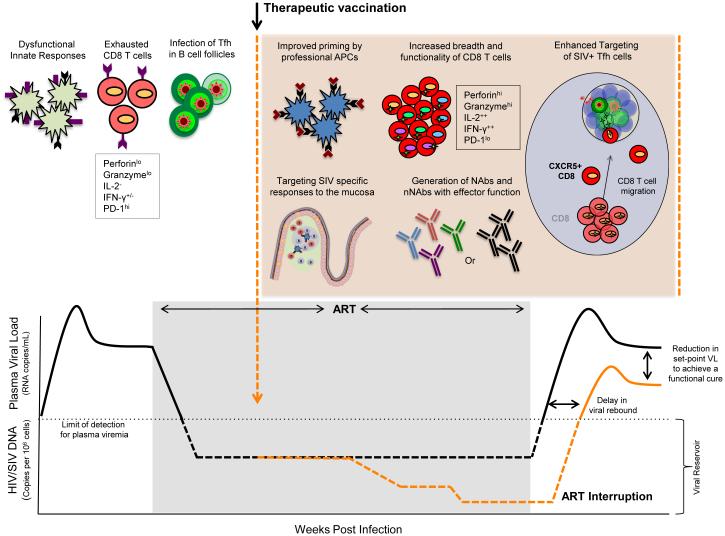
Anti-viral T-cell and B-cell responses play a crucial role in suppressing HIV and SIV replication during chronic infection. However, these infections are rarely controlled by the host immune response, and most infected individuals need lifelong antiretroviral therapy (ART). Recent advances in our understanding of how anti-HIV immune responses are elicited and regulated prompted a surge of interest in harnessing these responses to reduce the HIV 'residual disease' that is present in ART-treated HIV-infected individuals. Novel approaches that are currently explored include both conventional therapeutic vaccines (i.e., active immunization strategies using HIV-derived immunogens) as well as the use of checkpoint blockers such as anti-PD-1 antibodies. These approaches appear promising as key components of complex therapeutic strategies aimed at curing HIV infection.
抗病毒T细胞和B细胞反应在慢性感染期间抑制HIV和SIV复制中起着关键作用。然而,这些感染很少被宿主免疫反应控制,大多数感染者需要终身抗逆转录病毒治疗(ART)。我们对如何引发和调节抗HIV免疫反应的理解取得的最新进展,引发了人们对利用这些反应来减少接受ART治疗的HIV感染者中存在的HIV“残留疾病”的兴趣激增。目前正在探索的新方法包括传统治疗性疫苗(即使用HIV衍生免疫原的主动免疫策略)以及使用检查点阻断剂,如抗PD-1抗体。作为旨在治愈HIV感染的复杂治疗策略的关键组成部分,这些方法似乎很有前景。