Hassett Kimberly J, Meinerz Natalie M, Semmelmann Florian, Cousins Megan C, Garcea Robert L, Randolph Theodore W
Center for Pharmaceutical Biotechnology, Department of Chemical and Biological Engineering, University of Colorado, Boulder, CO 80309, United States.
Department of Molecular, Cellular, and Developmental Biology, University of Colorado, Boulder, CO 80309, United States; The Bio Frontiers Institute, University of Colorado, Boulder, CO 80309, United States.
Eur J Pharm Biopharm. 2015 Aug;94:220-8. doi: 10.1016/j.ejpb.2015.05.009. Epub 2015 May 18.
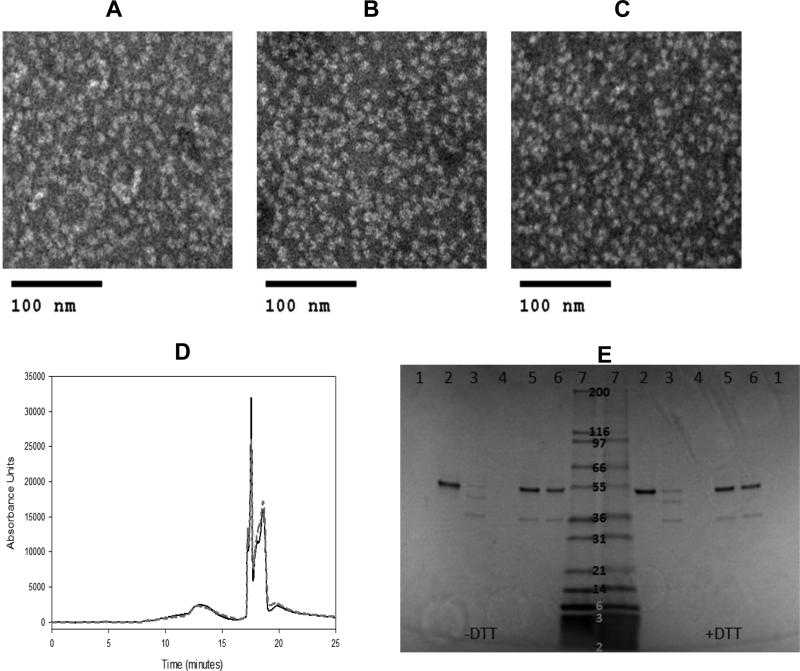
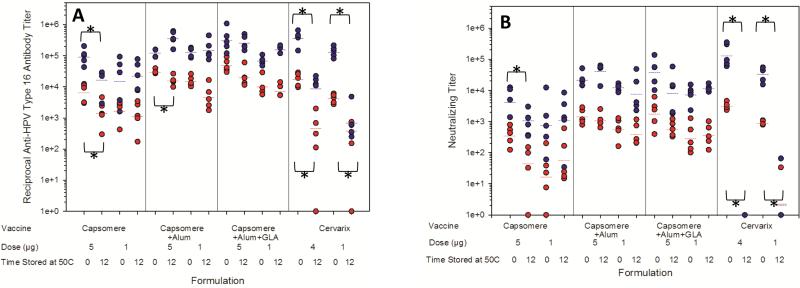
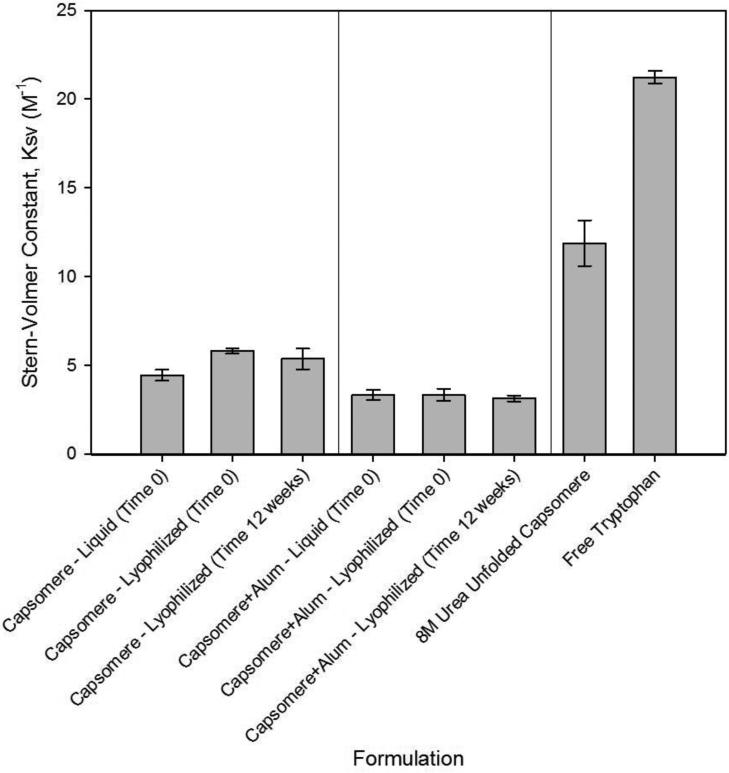
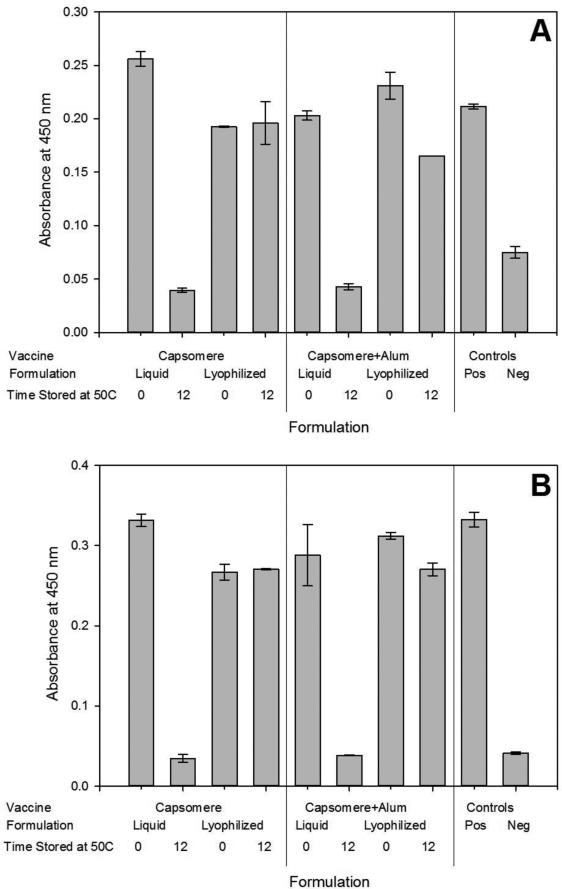
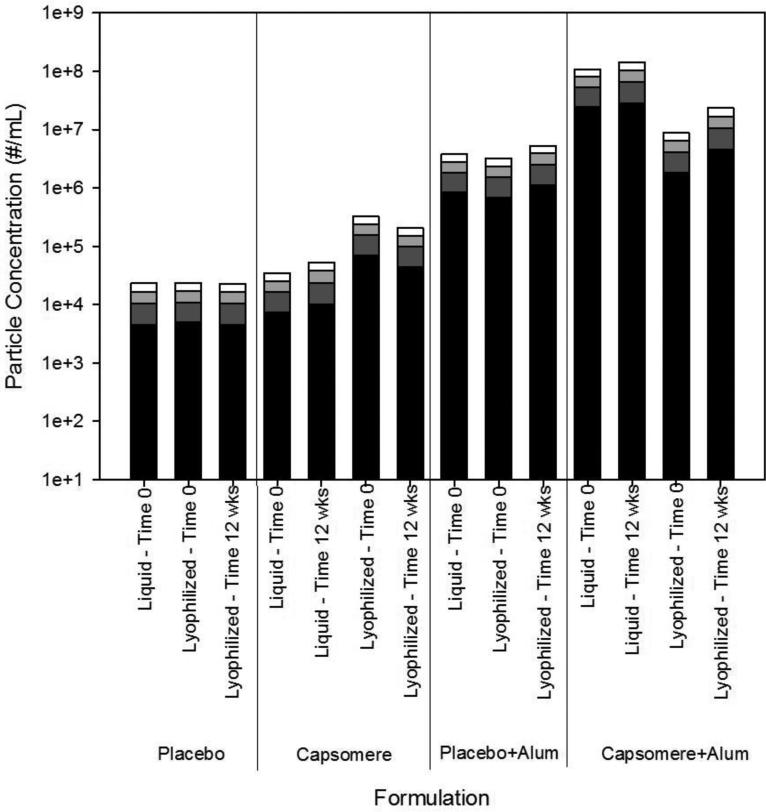
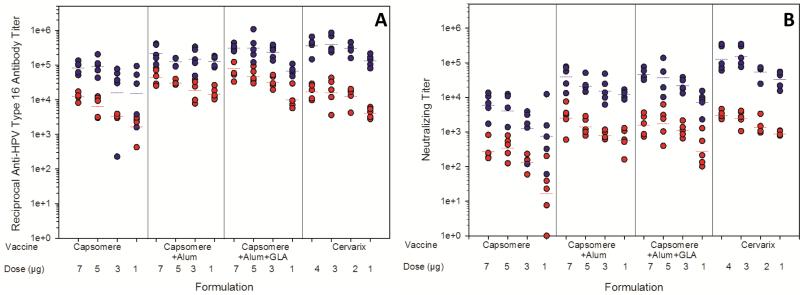
A major impediment to economical, worldwide vaccine distribution is the requirement for a "cold chain" to preserve antigenicity. We addressed this problem using a model human papillomavirus (HPV) vaccine stabilized by immobilizing HPV16 L1 capsomeres, i.e., pentameric subunits of the virus capsid, within organic glasses formed by lyophilization. Lyophilized glass and liquid vaccine formulations were incubated at 50°C for 12weeks, and then analyzed for retention of capsomere conformational integrity and the ability to elicit neutralizing antibody responses after immunization of BALB/c mice. Capsomeres in glassy-state vaccines retained tertiary and quaternary structure, and critical conformational epitopes. Moreover, glassy formulations adjuvanted with aluminum hydroxide or aluminum hydroxide and glycopyranoside lipid A were not only as immunogenic as the commercially available HPV vaccine Cervarix®, but also retained complete neutralizing immunogenicity after high-temperature storage. The thermal stability of such adjuvanted vaccine powder preparations may thus eliminate the need for the cold chain.
经济高效的全球疫苗分发面临的一个主要障碍是需要“冷链”来保持抗原性。我们使用一种模型人乳头瘤病毒(HPV)疫苗解决了这个问题,该疫苗通过将HPV16 L1衣壳粒(即病毒衣壳的五聚体亚基)固定在冻干形成的有机玻璃中来实现稳定。将冻干的玻璃态疫苗制剂和液态疫苗制剂在50°C下孵育12周,然后分析衣壳粒构象完整性的保留情况以及在免疫BALB/c小鼠后引发中和抗体反应的能力。玻璃态疫苗中的衣壳粒保留了三级和四级结构以及关键的构象表位。此外,用氢氧化铝或氢氧化铝和吡喃葡萄糖苷脂A佐剂的玻璃态制剂不仅与市售的HPV疫苗希瑞适®一样具有免疫原性,而且在高温储存后仍保留完全的中和免疫原性。因此,这种佐剂疫苗粉末制剂的热稳定性可能消除对冷链的需求。