Zhong Beilong, Wang Tao, Zou Jianyong, Zheng Fangfang, Huang Rijiao, Zheng Xiaobin, Yang Weilin, Chen Zhenguang
Department of Thoracic Surgery, The Fifth Affiliated Hospital, Sun Yat-sen University, Zhuhai, Guangdong, China.
Center for Stem Cell Biology and Tissue Engineering, Sun Yat-sen University, Key Laboratory for Stem Cells and Tissue Engineering, Ministry of Education, Guangzhou, Guangdong, China.
Oncotarget. 2015 Sep 8;6(26):22970-7. doi: 10.18632/oncotarget.4042.
Nestin, a member of the intermediate filament protein family, has been reported to be associated with several types of neoplastic transformation. However, questions remain, with studies reporting sometimes inconclusive or conflicting data. Thus, the aim of this study was to evaluate literature reports on the relationship between nestin and cancer stage.
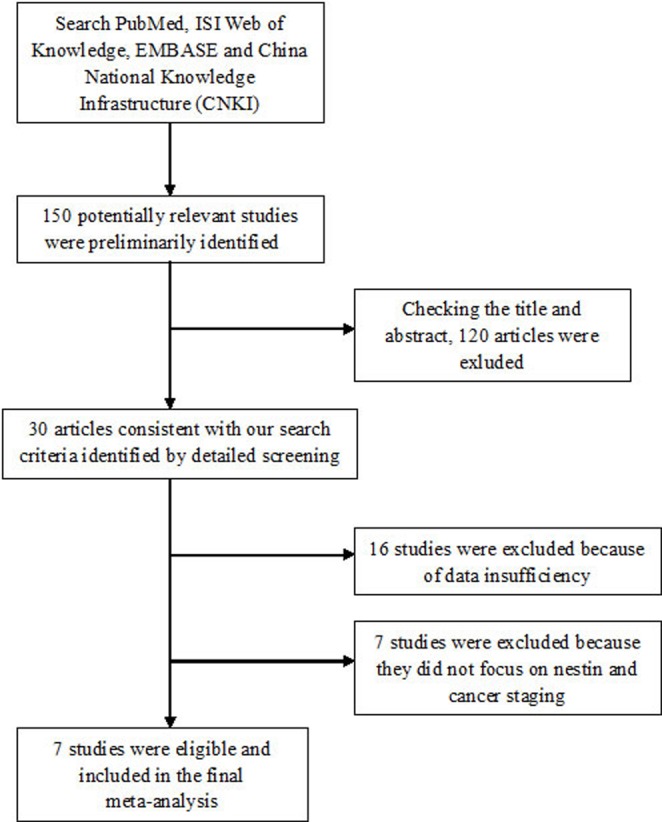
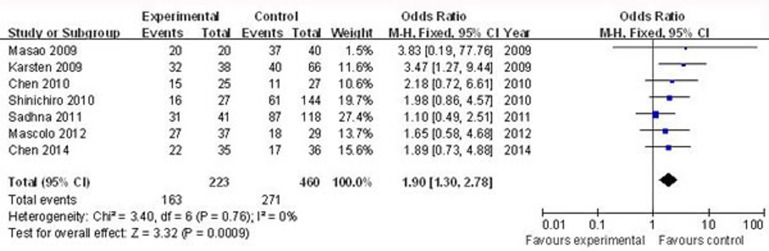
Relevant articles published as of June 2014 were retrieved from multiple databases. After applying specific inclusion criteria, we chose seven articles relating to nestin expression and cancer stage, which included a total of 223 positive/high nestin cases and 460 negative/low case-free controls.
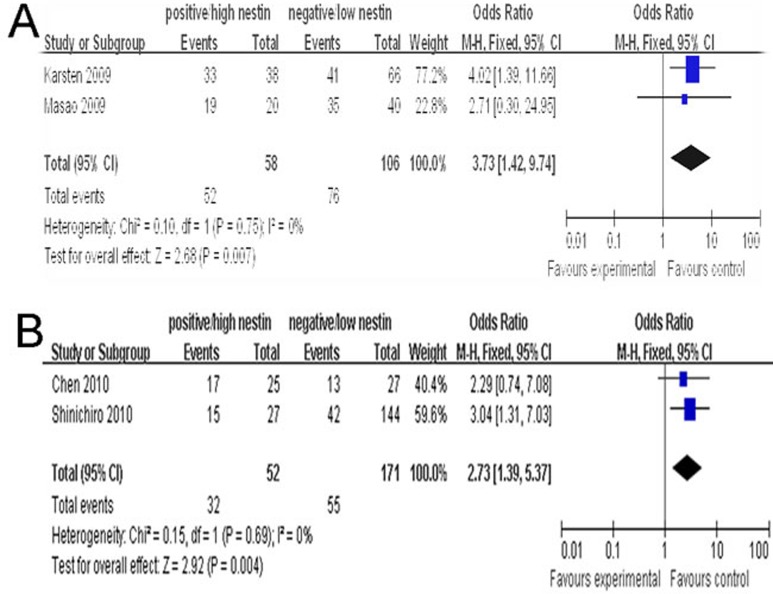
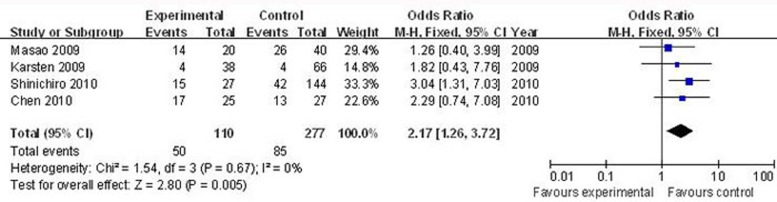
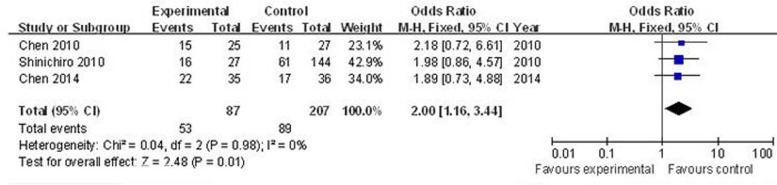
Overall, positive/high nestin was significantly associated with median or advanced stages of several types of cancer (nestin and cancer stage: OR = 1.90, 95% CI = 1.30-2.78; nestin and lymph node: OR = 2.17, 95% CI = 1.26-3.72). Notably, studies relating to lung cancer (three qualifying articles) showed a significant association between nestin and lung cancer stage (OR = 2.00, 95% CI = 1.16-3.44).
These findings indicate that positive/high nestin may be more strongly linked to median or advanced cancer stage and correlated with malignant characteristics that lead to poor prognosis in different cancers, especially lung cancer.
巢蛋白是中间丝蛋白家族的成员,据报道与多种类型的肿瘤转化有关。然而,问题依然存在,一些研究报告的数据有时不确定或相互矛盾。因此,本研究的目的是评估关于巢蛋白与癌症分期之间关系的文献报道。
从多个数据库中检索截至2014年6月发表的相关文章。应用特定的纳入标准后,我们选择了7篇与巢蛋白表达和癌症分期相关的文章,其中包括总共223例巢蛋白阳性/高表达病例和460例巢蛋白阴性/低表达无病例对照。
总体而言,巢蛋白阳性/高表达与几种类型癌症的中期或晚期显著相关(巢蛋白与癌症分期:比值比=1.90,95%置信区间=1.30 - 2.78;巢蛋白与淋巴结:比值比=2.17,95%置信区间=1.26 - 3.72)。值得注意的是,与肺癌相关的研究(3篇符合条件的文章)显示巢蛋白与肺癌分期之间存在显著关联(比值比=2.00, 95%置信区间=1.16 - 3.44)。
这些发现表明,巢蛋白阳性/高表达可能与癌症中期或晚期有更强的关联,并与导致不同癌症,尤其是肺癌预后不良的恶性特征相关。