Golan Guy, Oksenberg Adi, Peleg Zvi
The Robert H. Smith Institute of Plant Sciences and Genetics in Agriculture, The Hebrew University of Jerusalem, Rehovot 7610001, Israel.
The Robert H. Smith Institute of Plant Sciences and Genetics in Agriculture, The Hebrew University of Jerusalem, Rehovot 7610001, Israel
J Exp Bot. 2015 Sep;66(19):5703-11. doi: 10.1093/jxb/erv249. Epub 2015 May 27.
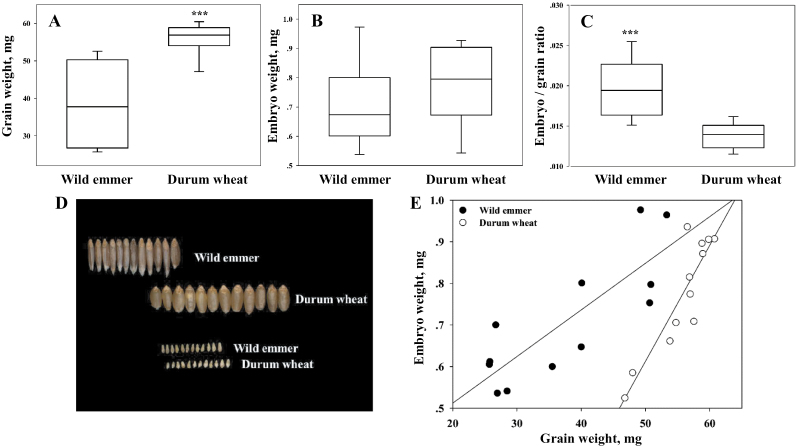
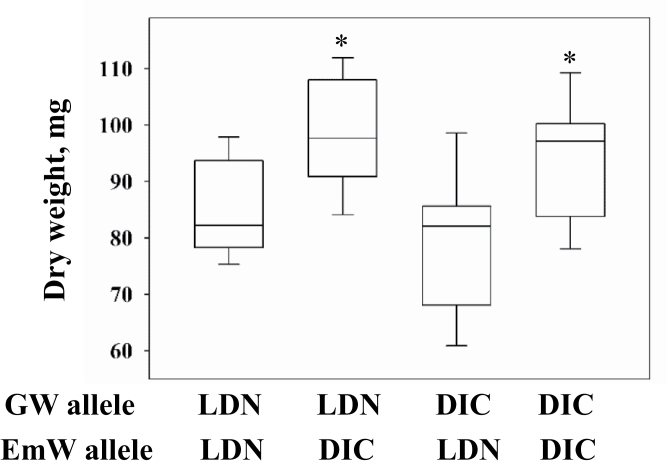
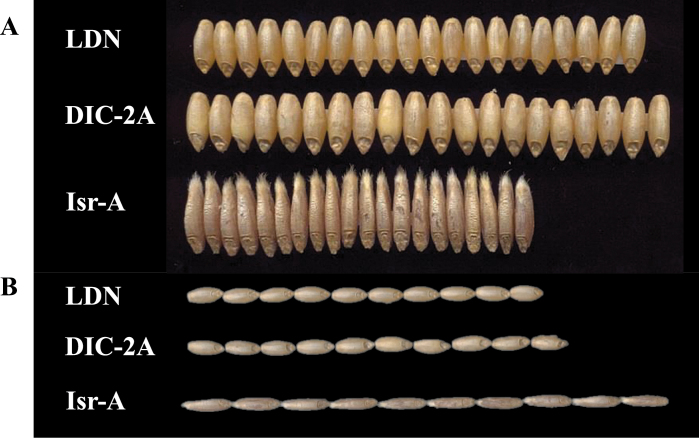
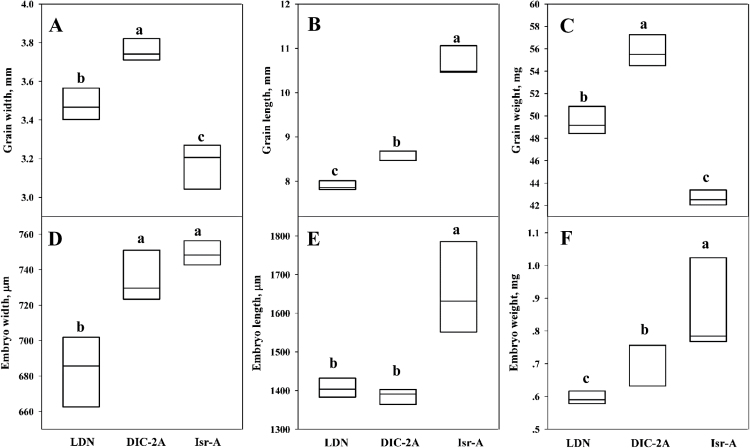
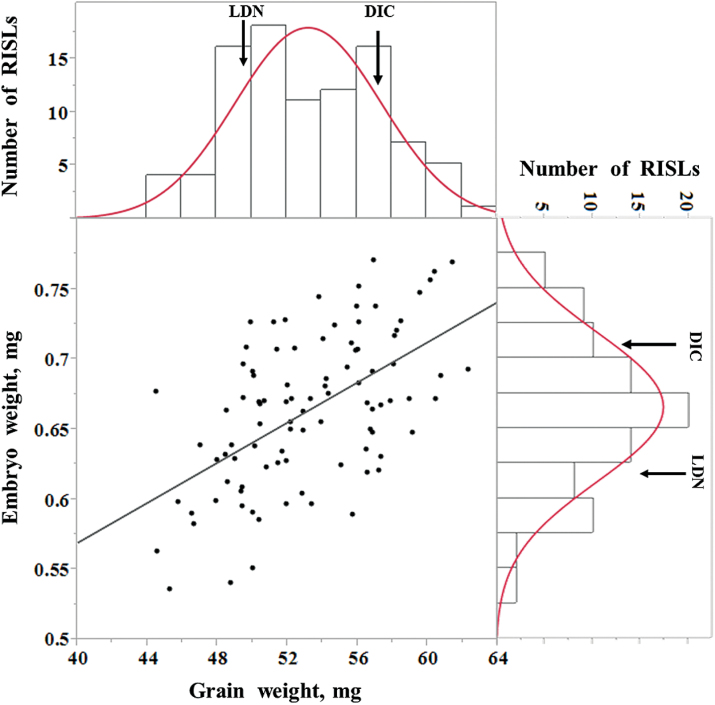
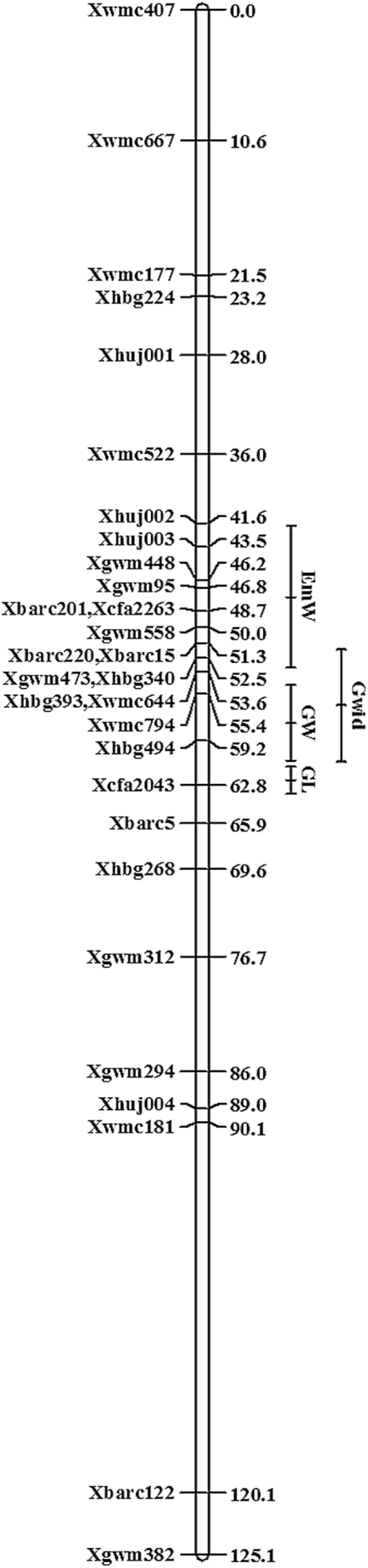
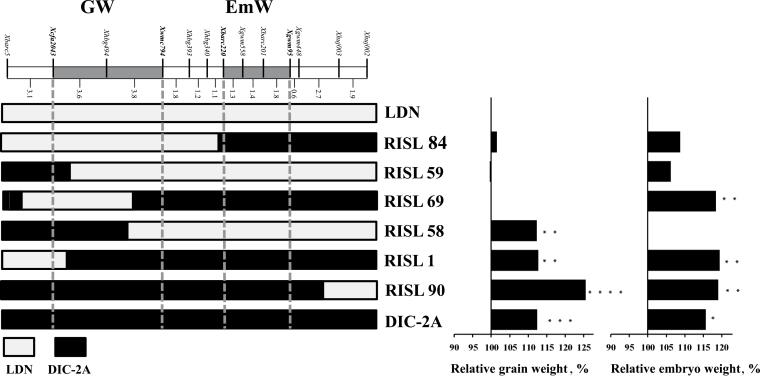
Wheat is one of the Neolithic founder crops domesticated ~10 500 years ago. Following the domestication episode, its evolution under domestication has resulted in various genetic modifications. Grain weight, embryo weight, and the interaction between those factors were examined among domesticated durum wheat and its direct progenitor, wild emmer wheat. Experimental data show that grain weight has increased over the course of wheat evolution without any parallel change in embryo weight, resulting in a significantly reduced (30%) embryo weight/grain weight ratio in domesticated wheat. The genetic factors associated with these modifications were further investigated using a population of recombinant inbred substitution lines that segregated for chromosome 2A. A cluster of loci affecting grain weight and shape was identified on the long arm of chromosome 2AL. Interestingly, a novel locus controlling embryo weight was mapped on chromosome 2AS, on which the wild emmer allele promotes heavier embryos and greater seedling vigour. To the best of our knowledge, this is the first report of a QTL for embryo weight in wheat. The results suggest a differential selection of grain and embryo weight during the evolution of domesticated wheat. It is argued that conscious selection by early farmers favouring larger grains and smaller embryos appears to have resulted in a significant change in endosperm weight/embryo weight ratio in the domesticated wheat. Exposing the genetic factors associated with endosperm and embryo size improves our understanding of the evolutionary dynamics of wheat under domestication and is likely to be useful for future wheat-breeding efforts.
小麦是约10500年前驯化的新石器时代的主要作物之一。在驯化过程之后,其在驯化下的进化导致了各种基因改变。在驯化的硬粒小麦及其直接祖先野生二粒小麦中,研究了粒重、胚重以及这些因素之间的相互作用。实验数据表明,在小麦进化过程中粒重增加,而胚重没有任何相应变化,导致驯化小麦中胚重/粒重比显著降低(30%)。利用在2A染色体上分离的重组自交替代系群体,进一步研究了与这些改变相关的遗传因素。在2AL染色体长臂上鉴定出了一组影响粒重和粒形的位点。有趣的是,一个控制胚重的新位点被定位在2AS染色体上,野生二粒小麦的等位基因在该位点上促进胚更重和幼苗活力更强。据我们所知,这是关于小麦胚重数量性状位点的首次报道。结果表明,在驯化小麦的进化过程中,粒重和胚重受到不同的选择。有人认为,早期农民有意识地选择较大的籽粒和较小的胚,似乎导致了驯化小麦中胚乳重/胚重比的显著变化。揭示与胚乳和胚大小相关的遗传因素,有助于我们理解驯化条件下小麦的进化动态,并且可能对未来的小麦育种工作有用。