Bahr Keisha D, Jokiel Paul L, Toonen Robert J
University of Hawai'i, Hawai'i Institute of Marine Biology , Kāne'ohe, HI , USA.
PeerJ. 2015 May 12;3:e950. doi: 10.7717/peerj.950. eCollection 2015.
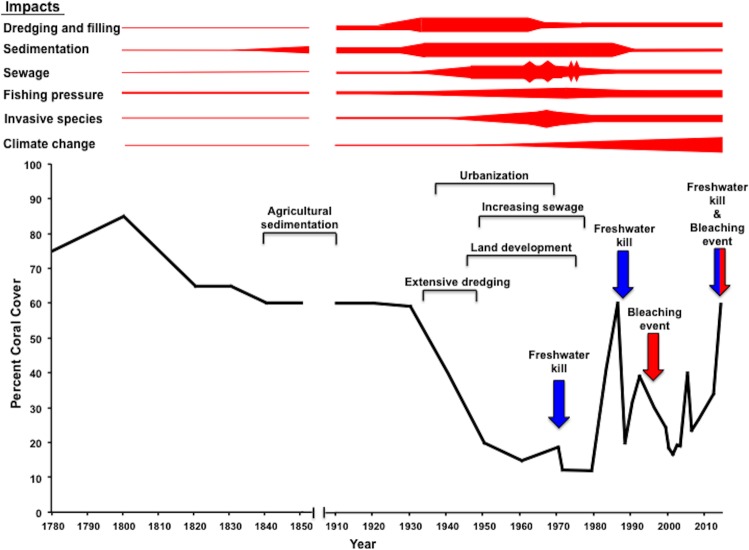
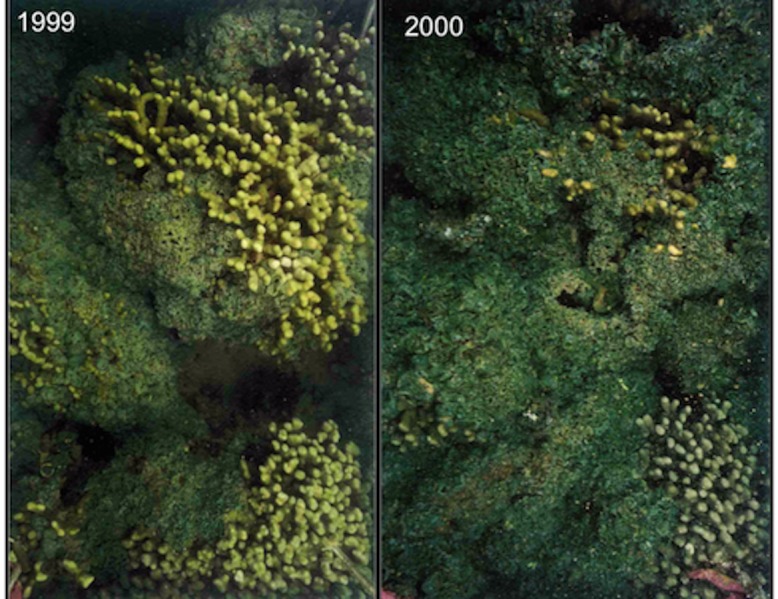
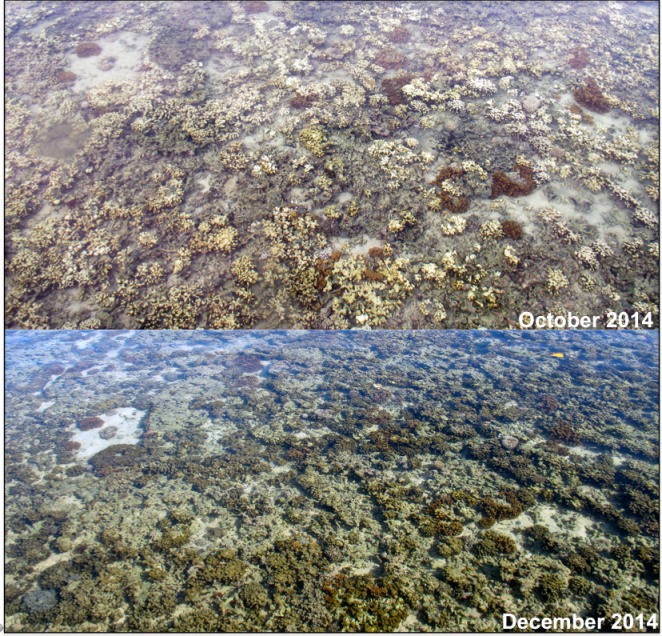
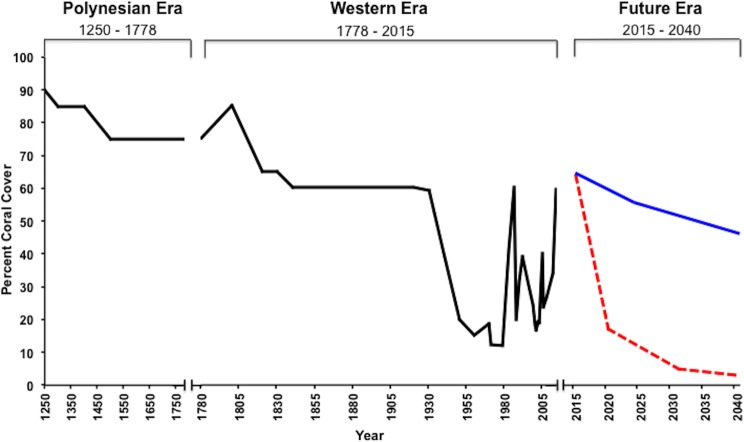
Kāne'ohe Bay, which is located on the on the NE coast of O'ahu, Hawai'i, represents one of the most intensively studied estuarine coral reef ecosystems in the world. Despite a long history of anthropogenic disturbance, from early settlement to post European contact, the coral reef ecosystem of Kāne'ohe Bay appears to be in better condition in comparison to other reefs around the world. The island of Moku o Lo'e (Coconut Island) in the southern region of the bay became home to the Hawai'i Institute of Marine Biology in 1947, where researchers have since documented the various aspects of the unique physical, chemical, and biological features of this coral reef ecosystem. The first human contact by voyaging Polynesians occurred at least 700 years ago. By A.D. 1250 Polynesians voyagers had settled inhabitable islands in the region which led to development of an intensive agricultural, fish pond and ocean resource system that supported a large human population. Anthropogenic disturbance initially involved clearing of land for agriculture, intentional or accidental introduction of alien species, modification of streams to supply water for taro culture, and construction of massive shoreline fish pond enclosures and extensive terraces in the valleys that were used for taro culture. The arrival by the first Europeans in 1778 led to further introductions of plants and animals that radically changed the landscape. Subsequent development of a plantation agricultural system led to increased human immigration, population growth and an end to traditional land and water management practices. The reefs were devastated by extensive dredge and fill operations as well as rapid growth of human population, which led to extensive urbanization of the watershed. By the 1960's the bay was severely impacted by increased sewage discharge along with increased sedimentation due to improper grading practices and stream channelization, resulting in extensive loss of coral cover. The reefs of Kāne'ohe Bay developed under estuarine conditions and thus have been subjected to multiple natural stresses. These include storm floods, a more extreme temperature range than more oceanic reefs, high rates of sedimentation, and exposure at extreme low tides. Deposition and degradation of organic materials carried into the bay from the watershed results in low pH conditions such that according to some ocean acidification projections the rich coral reefs in the bay should not exist. Increased global temperature due to anthropogenic fossil fuel emmisions is now impacting these reefs with the first "bleaching event" in 1996 and a second more severe event in 2014. The reefs of Kāne'ohe Bay have developed and persist under rather severe natural and anthropogenic perturbations. To date, these reefs have proved to be very resilient once the stressor has been removed. A major question remains to be answered concerning the limits of Kāne'ohe Bay reef resilience in the face of global climate change.
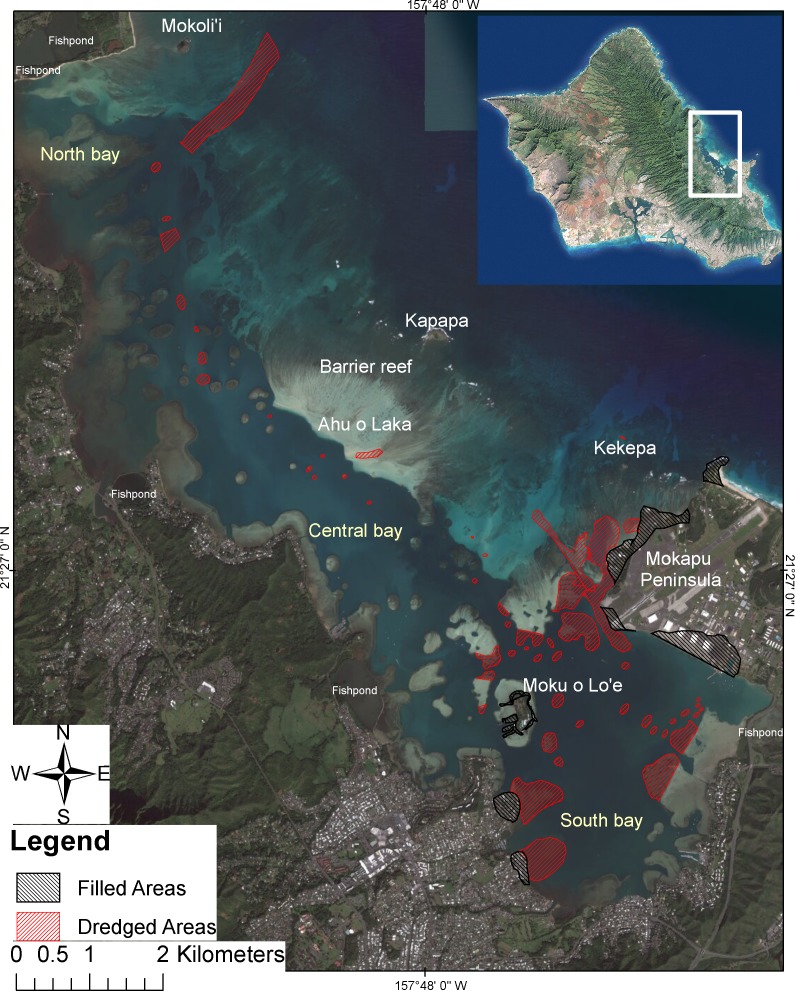
卡内奥赫湾位于夏威夷瓦胡岛的东北海岸,是世界上研究最深入的河口珊瑚礁生态系统之一。尽管从早期定居到欧洲人接触后,这里一直存在着长期的人为干扰,但与世界其他珊瑚礁相比,卡内奥赫湾的珊瑚礁生态系统状况似乎更好。1947年,位于该湾南部地区的莫库奥洛埃岛(椰子岛)成为了夏威夷海洋生物研究所的所在地,自那时起,研究人员记录了这个珊瑚礁生态系统独特的物理、化学和生物特征的各个方面。最早与波利尼西亚航海者的人类接触至少发生在700年前。到公元1250年,波利尼西亚航海者已经在该地区的宜居岛屿上定居,这导致了一个集约化的农业、鱼塘和海洋资源系统的发展,支撑了大量的人口。人为干扰最初包括为农业开垦土地、有意或无意引入外来物种、改造溪流以供应芋头种植用水,以及在山谷中建造大量的海岸线鱼塘围栏和用于芋头种植的广阔梯田。1778年第一批欧洲人的到来导致了更多动植物的引入,这从根本上改变了当地的地貌。随后种植园农业系统的发展导致了人类移民增加、人口增长以及传统土地和水资源管理方式的终结。珊瑚礁因大规模的疏浚和填埋作业以及人口的快速增长而遭到破坏,这导致了流域的广泛城市化。到20世纪60年代,该湾受到污水排放增加以及由于不当的分级作业和河道渠化导致的沉积物增加的严重影响,导致珊瑚覆盖率大幅下降。卡内奥赫湾的珊瑚礁是在河口条件下形成的,因此受到了多种自然压力的影响。这些压力包括风暴洪水、比更多大洋性珊瑚礁更极端的温度范围、高沉积率以及在极端低潮时的暴露。从流域带入湾内的有机物质的沉积和降解导致了低pH值条件,以至于根据一些海洋酸化预测,该湾丰富的珊瑚礁本不应存在。由于人为化石燃料排放导致的全球气温升高,现在正在影响这些珊瑚礁,1996年发生了第一次“白化事件”,2014年发生了第二次更严重的事件。卡内奥赫湾的珊瑚礁在相当严重的自然和人为干扰下形成并持续存在。迄今为止,一旦压力源被消除,这些珊瑚礁已被证明具有很强的恢复力。面对全球气候变化,关于卡内奥赫湾珊瑚礁恢复力的极限仍有一个主要问题有待回答。