Hawai'i Institute of Marine Biology, School of Ocean and Earth Science and Technology, University of Hawai'i at Mānoa, Kāne'ohe, HI, 96744, USA.
Pristine Seas, National Geographic Society, Washington, DC, 20036, USA.
Sci Rep. 2022 Sep 5;12(1):15093. doi: 10.1038/s41598-022-18856-8.
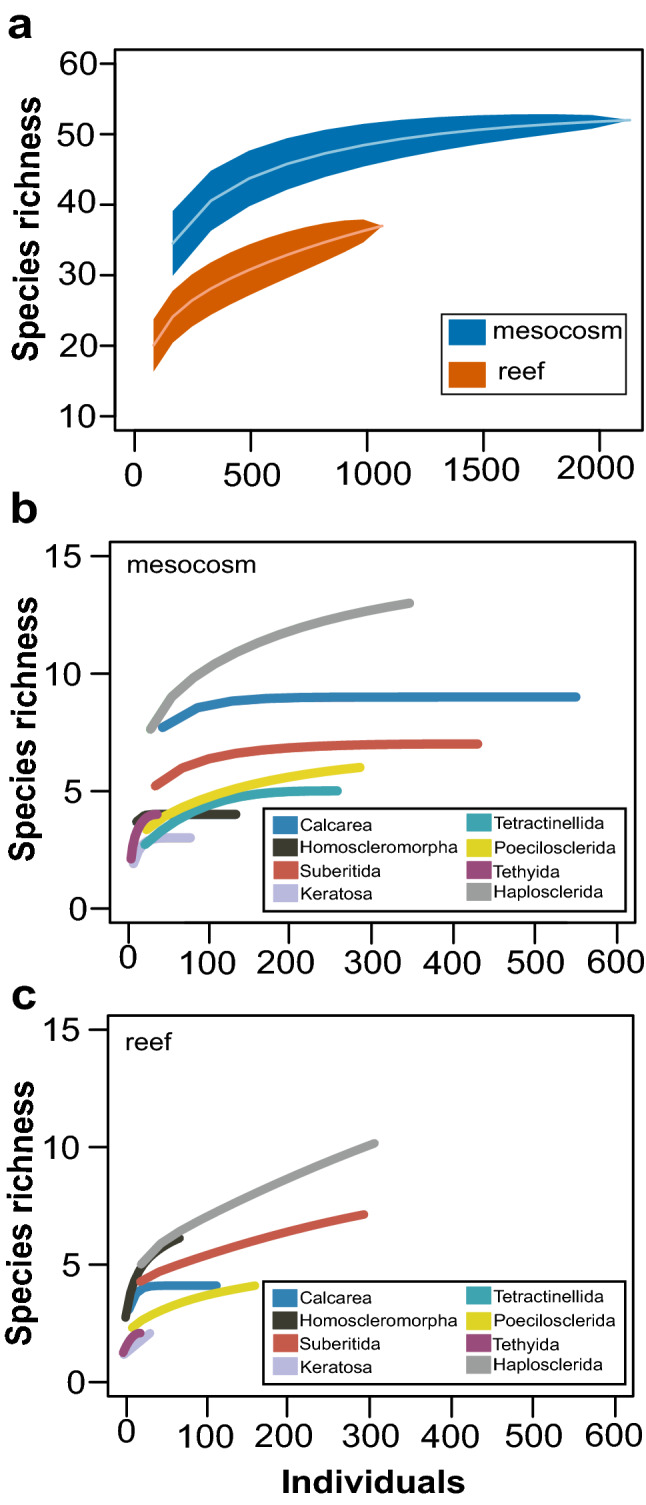
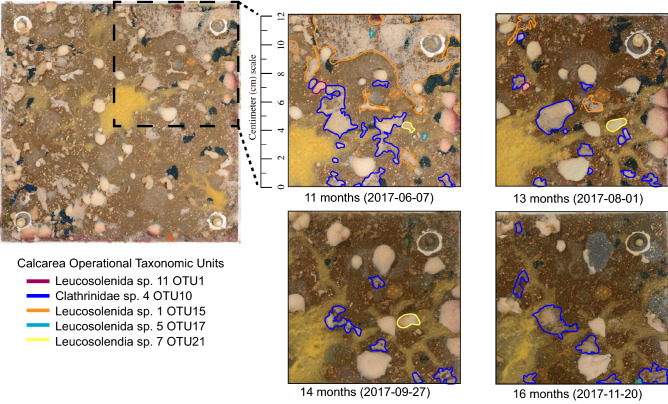
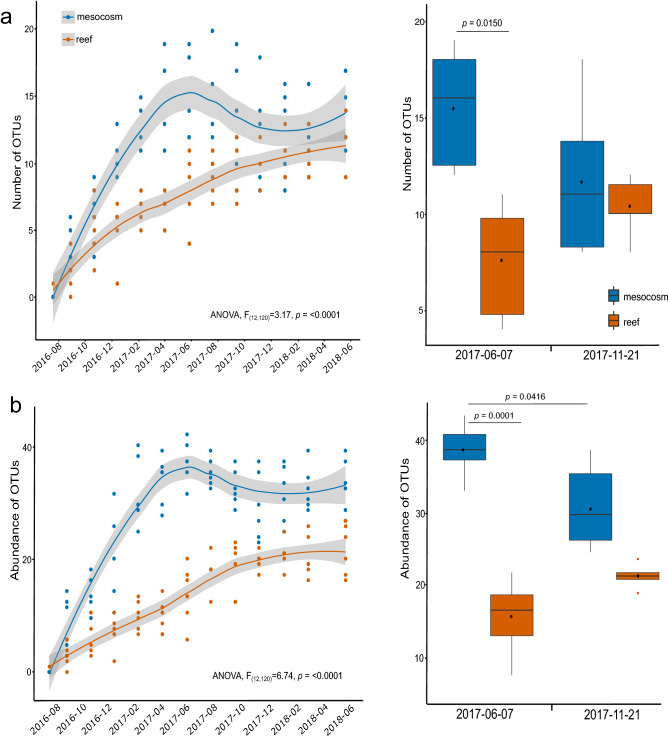
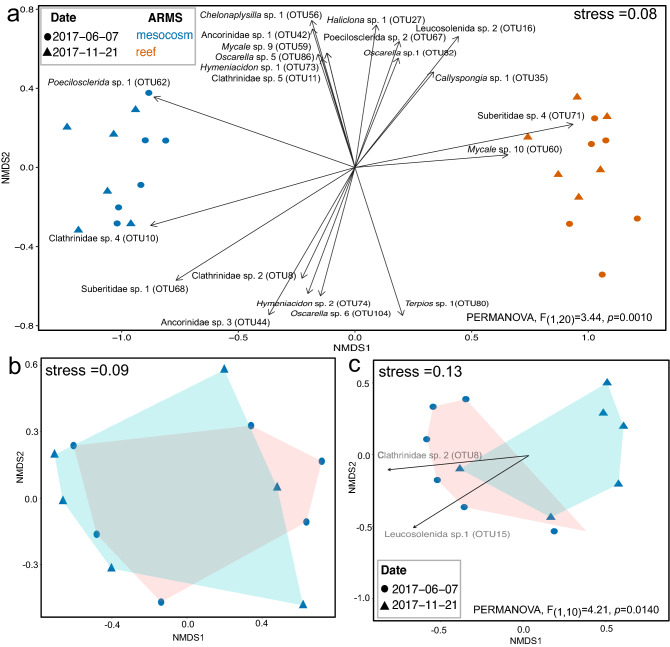
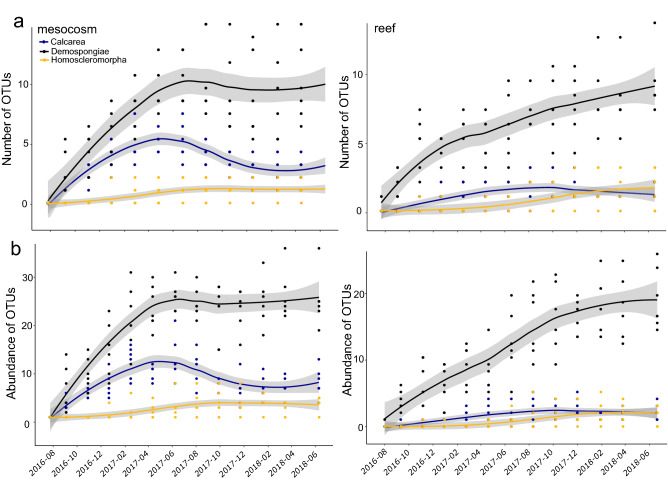
Successional theory proposes that fast growing and well dispersed opportunistic species are the first to occupy available space. However, these pioneering species have relatively short life cycles and are eventually outcompeted by species that tend to be longer-lived and have lower dispersal capabilities. Using Autonomous Reef Monitoring Structures (ARMS) as standardized habitats, we examine the assembly and stages of ecological succession among sponge species with distinctive life history traits and physiologies found on cryptic coral reef habitats of Kāne'ohe Bay, Hawai'i. Sponge recruitment was monitored bimonthly over 2 years on ARMS deployed within a natural coral reef habitat resembling the surrounding climax community and on ARMS placed in unestablished mesocosms receiving unfiltered seawater directly from the natural reef deployment site. Fast growing haplosclerid and calcareous sponges initially recruited to and dominated the mesocosm ARMS. In contrast, only slow growing long-lived species initially recruited to the reef ARMS, suggesting that despite available space, the stage of ecological succession in the surrounding habitat influences sponge community development in uninhabited space. Sponge composition and diversity between early summer and winter months within mesocosm ARMS shifted significantly as the initially recruited short-lived calcareous and haplosclerid species initially recruit and then died off. The particulate organic carbon contribution of dead sponge tissue from this high degree of competition-free community turnover suggests a possible new component to the sponge loop hypothesis which remains to be tested among these pioneering species. This source of detritus could be significant in early community development of young coastal habitats but less so on established coral reefs where the community is dominated by long-lived colonial sponges.
演替理论认为,快速生长和广泛扩散的机会主义物种是最先占据可用空间的物种。然而,这些先锋物种的生命周期相对较短,最终会被寿命更长、扩散能力更低的物种所竞争淘汰。我们使用自治式珊瑚礁监测结构 (ARMS) 作为标准化生境,研究了在夏威夷卡内奥赫湾隐蔽珊瑚礁生境中发现的具有独特生活史特征和生理学特征的海绵物种的组装和生态演替阶段。在类似于周围顶极群落的自然珊瑚礁生境中部署的 ARMS 上,以及在接收来自自然珊瑚礁部署点的未经过滤海水的未建立中观系统上的 ARMS 上,我们每两个月监测一次 ARMS 上的海绵定殖情况,共监测了 2 年。快速生长的硬骨海绵和钙质海绵最初在中观系统的 ARMS 上定殖并占据主导地位。相比之下,只有生长缓慢、寿命长的物种最初在珊瑚礁 ARMS 上定殖,这表明尽管有可用空间,但周围生境的生态演替阶段会影响无人居住空间中海绵群落的发展。在中观系统的 ARMS 内,从初夏到冬季,海绵的组成和多样性发生了显著变化,因为最初招募的短命钙质海绵和硬骨海绵最初招募并死亡。由于这种高度无竞争的群落更替,来自死海绵组织的颗粒有机碳贡献表明,海绵循环假说可能存在一个新的组成部分,这仍有待在这些先锋物种中进行测试。这种碎屑来源可能在年轻沿海生境的早期群落发展中非常重要,但在由寿命长的群体海绵主导的成熟珊瑚礁中则不那么重要。