Garchon H J, Loh E, Ho W Y, Amar L, Avner P, Davis M M
Department of Microbiology and Immunology, Stanford University School of Medicine, California.
Nucleic Acids Res. 1989 Dec 11;17(23):9871-88. doi: 10.1093/nar/17.23.9871.
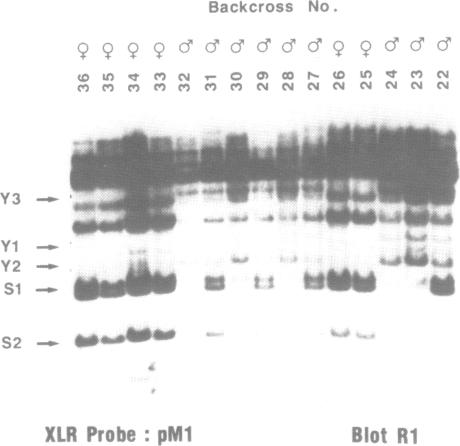
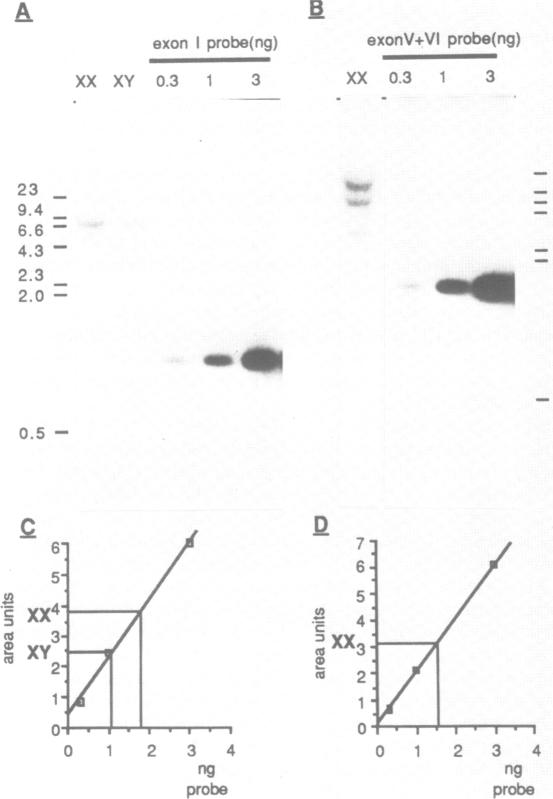
The XLR sequence family encodes RNA transcripts specific to late-stage T and B cells and their neoplasms. Only one apparently functional mRNA has been identified thus far and this encodes a novel 25 kDa nuclear protein. In this report, we find that the XLR gene family is composed of 50-75 copies per haploid genome which localize to at least two different portions of the mouse X chromosome. Neither of these locations are near the xid mutation that earlier work had correlated with XLR. In addition, some members of this family are also on the Y chromosome. Another surprising finding is that while the fourteen genomic clones examined to date have the same exon-intron structure and are closely related with respect to sequence conservation (90%), all appear (in most cases by multiple criteria) to be non-functional, raising the possibility that all but one of the members of this large semi-dispersed family are pseudogenes.
XLR序列家族编码晚期T细胞和B细胞及其肿瘤所特有的RNA转录本。到目前为止,仅鉴定出一种明显具有功能的mRNA,它编码一种新的25 kDa核蛋白。在本报告中,我们发现XLR基因家族在单倍体基因组中由50 - 75个拷贝组成,定位于小鼠X染色体的至少两个不同区域。这两个位置都不在早期研究中与XLR相关的xid突变附近。此外,该家族的一些成员也位于Y染色体上。另一个惊人的发现是,尽管迄今为止检测的14个基因组克隆具有相同的外显子 - 内含子结构,并且在序列保守性方面密切相关(90%),但所有克隆(在大多数情况下通过多种标准)似乎都无功能,这增加了这个大型半分散家族中除一个成员外其他所有成员都是假基因的可能性。