Kurnianingsih Yoanna A, Sim Sam K Y, Chee Michael W L, Mullette-Gillman O'Dhaniel A
Department of Psychology, Faculty of Arts and Sciences, National University of Singapore Singapore, Singapore.
Centre for Cognitive Neuroscience, Neuroscience and Behavioral Disorders Program, Duke-NUS Graduate Medical School Singapore, Singapore ; Centre for Ageing Studies, Temasek Polytechnic Singapore, Singapore.
Front Hum Neurosci. 2015 May 13;9:280. doi: 10.3389/fnhum.2015.00280. eCollection 2015.
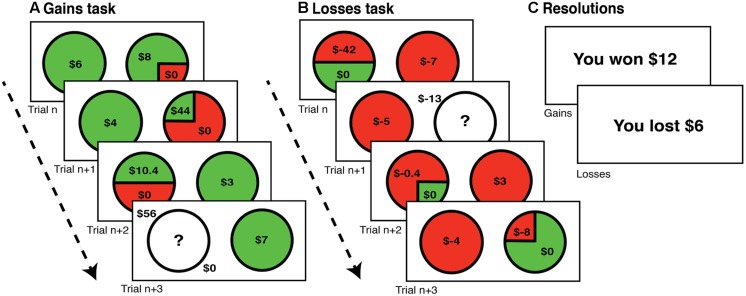
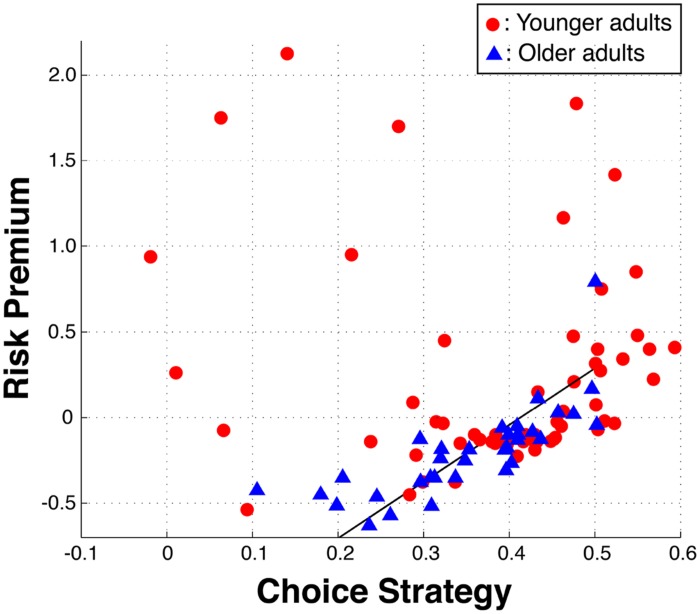
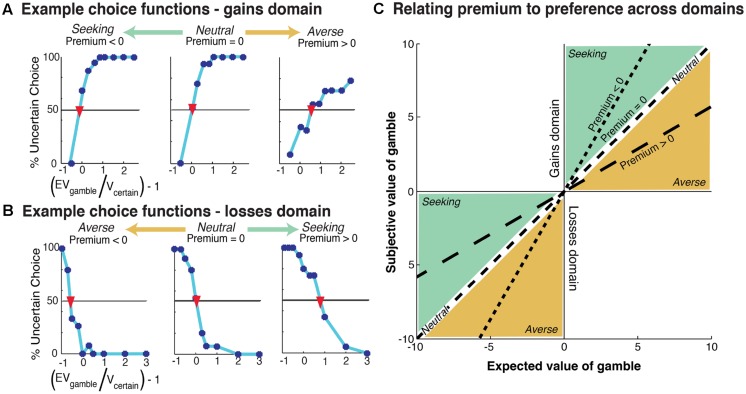
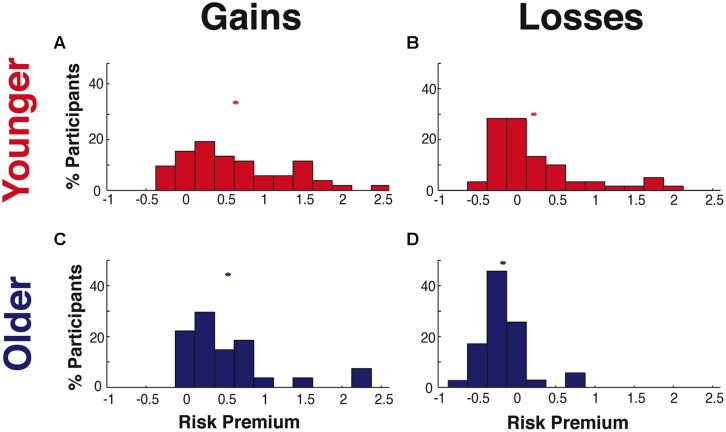
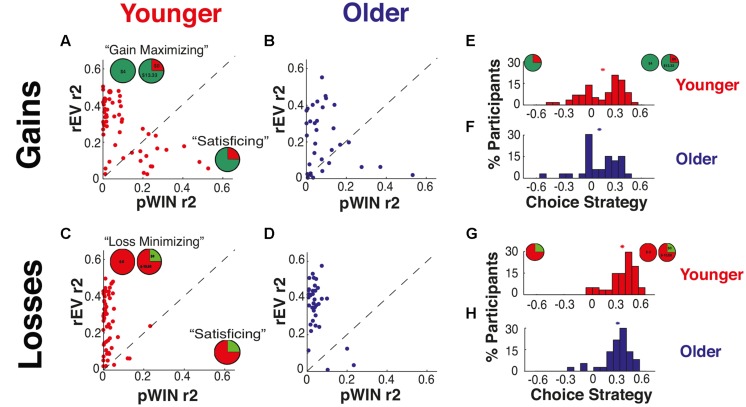
We investigated how adult aging specifically alters economic decision-making, focusing on examining alterations in uncertainty preferences (willingness to gamble) and choice strategies (what gamble information influences choices) within both the gains and losses domains. Within each domain, participants chose between certain monetary outcomes and gambles with uncertain outcomes. We examined preferences by quantifying how uncertainty modulates choice behavior as if altering the subjective valuation of gambles. We explored age-related preferences for two types of uncertainty, risk, and ambiguity. Additionally, we explored how aging may alter what information participants utilize to make their choices by comparing the relative utilization of maximizing and satisficing information types through a choice strategy metric. Maximizing information was the ratio of the expected value of the two options, while satisficing information was the probability of winning. We found age-related alterations of economic preferences within the losses domain, but no alterations within the gains domain. Older adults (OA; 61-80 years old) were significantly more uncertainty averse for both risky and ambiguous choices. OA also exhibited choice strategies with decreased use of maximizing information. Within OA, we found a significant correlation between risk preferences and choice strategy. This linkage between preferences and strategy appears to derive from a convergence to risk neutrality driven by greater use of the effortful maximizing strategy. As utility maximization and value maximization intersect at risk neutrality, this result suggests that OA are exhibiting a relationship between enhanced rationality and enhanced value maximization. While there was variability in economic decision-making measures within OA, these individual differences were unrelated to variability within examined measures of cognitive ability. Our results demonstrate that aging alters economic decision-making for losses through changes in both individual preferences and the strategies individuals employ.
我们研究了成年期衰老如何具体改变经济决策,重点关注收益和损失领域内不确定性偏好(赌博意愿)和选择策略(哪些赌博信息影响选择)的变化。在每个领域中,参与者在确定的货币结果和具有不确定结果的赌博之间进行选择。我们通过量化不确定性如何调节选择行为来检验偏好,就好像改变了赌博的主观价值一样。我们研究了与年龄相关的对两种不确定性类型(风险和模糊性)的偏好。此外,我们通过选择策略指标比较最大化和满意化信息类型的相对利用率,探索衰老如何改变参与者用于做出选择的信息。最大化信息是两个选项预期值的比率,而满意化信息是获胜的概率。我们发现损失领域内存在与年龄相关的经济偏好变化,但收益领域内没有变化。老年人(61 - 80岁)在风险和模糊选择中对不确定性的厌恶程度明显更高。老年人在选择策略上也减少了对最大化信息的使用。在老年人中,我们发现风险偏好与选择策略之间存在显著相关性。偏好与策略之间的这种联系似乎源于更多地使用费力的最大化策略所驱动的向风险中性的趋同。由于效用最大化和价值最大化在风险中性处相交,这一结果表明老年人在增强的理性与增强的价值最大化之间表现出一种关系。虽然老年人在经济决策测量中存在变异性,但这些个体差异与所检查的认知能力测量中的变异性无关。我们的结果表明,衰老通过个体偏好和个体采用的策略的变化改变了损失方面的经济决策。