An Hyun Jin, Kim Kyung Hyun, Lee Woo Ram, Kim Jung Yeon, Lee Sun Jae, Pak Sok Cheon, Han Sang Mi, Park Kwan Kyu
Department of Pathology, College of Medicine, Catholic University of Daegu, 3056-6, Daemyung-4-Dong, Nam-gu, Daegu 705-718, Korea.
School of Biomedical Sciences, Charles Sturt University, Panorama Avenue, Bathurst, NSW 2795, Australia.
Toxins (Basel). 2015 May 29;7(6):1917-28. doi: 10.3390/toxins7061917.
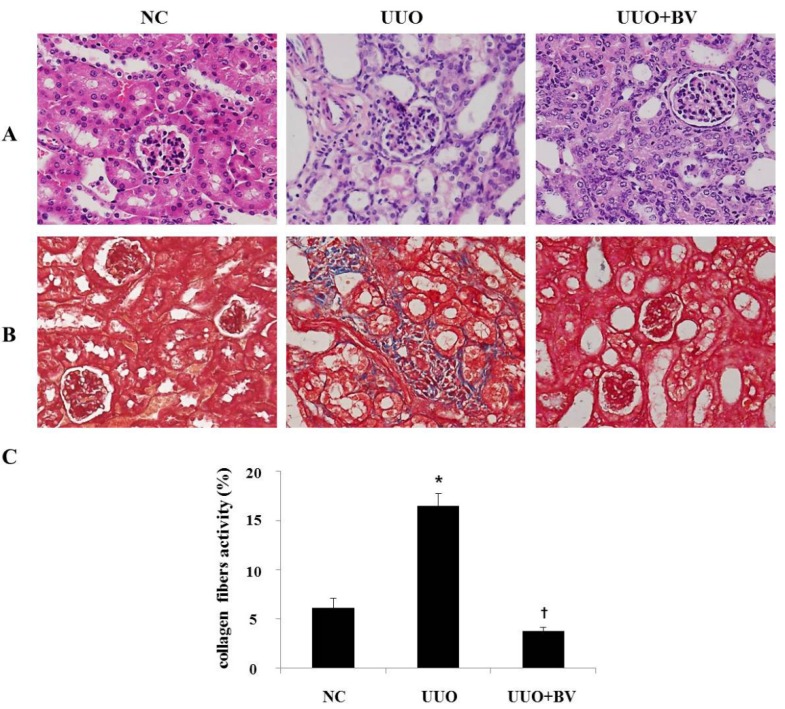
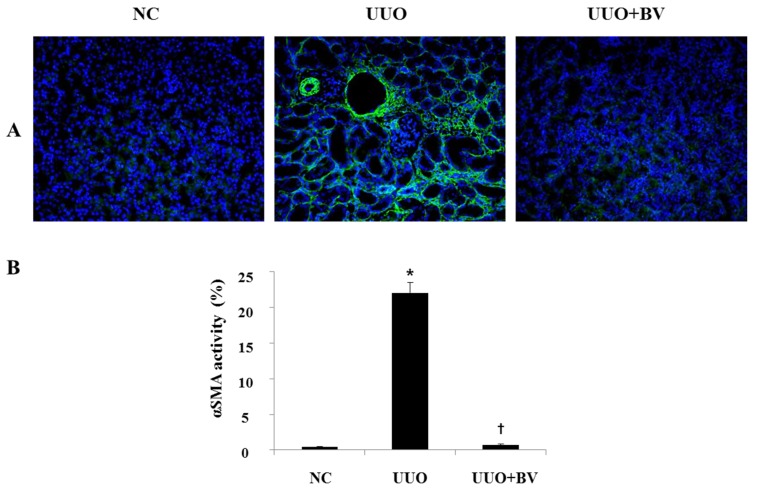
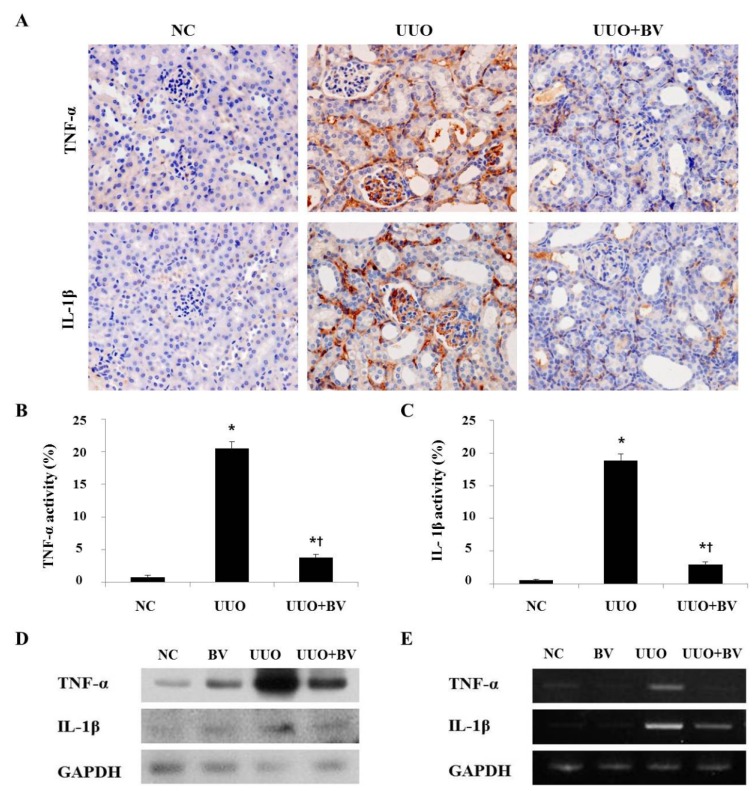
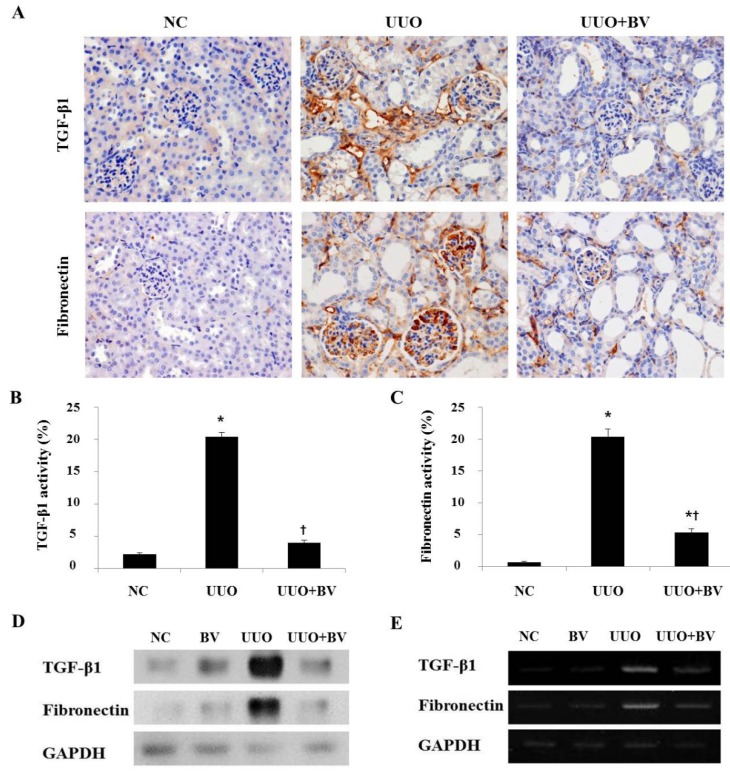
Progressive renal fibrosis is the final common pathway for all kidney diseases leading to chronic renal failure. Bee venom (BV) has been widely used as a traditional medicine for various diseases. However, the precise mechanism of BV in ameliorating the renal fibrosis is not fully understood. To investigate the therapeutic effects of BV against unilateral ureteral obstruction (UUO)-induced renal fibrosis, BV was given intraperitoneally after ureteral ligation. At seven days after UUO surgery, the kidney tissues were collected for protein analysis and histologic examination. Histological observation revealed that UUO induced a considerable increase in the number of infiltrated inflammatory cells. However, BV treatment markedly reduced these reactions compared with untreated UUO mice. The expression levels of TNF-α and IL-1β were significantly reduced in BV treated mice compared with UUO mice. In addition, treatment with BV significantly inhibited TGF-β1 and fibronectin expression in UUO mice. Moreover, the expression of α-SMA was markedly withdrawn after treatment with BV. These findings suggest that BV attenuates renal fibrosis and reduces inflammatory responses by suppression of multiple growth factor-mediated pro-fibrotic genes. In conclusion, BV may be a useful therapeutic agent for the prevention of fibrosis that characterizes progression of chronic kidney disease.
进行性肾纤维化是所有导致慢性肾衰竭的肾脏疾病的最终共同途径。蜂毒(BV)已被广泛用作治疗各种疾病的传统药物。然而,BV改善肾纤维化的确切机制尚未完全明确。为了研究BV对单侧输尿管梗阻(UUO)诱导的肾纤维化的治疗作用,在输尿管结扎后腹腔注射BV。UUO手术后7天,收集肾脏组织进行蛋白质分析和组织学检查。组织学观察显示,UUO导致浸润性炎症细胞数量显著增加。然而,与未治疗的UUO小鼠相比,BV治疗显著减轻了这些反应。与UUO小鼠相比,BV治疗小鼠中TNF-α和IL-1β的表达水平显著降低。此外,BV治疗显著抑制了UUO小鼠中TGF-β1和纤连蛋白的表达。而且,BV治疗后α-SMA的表达明显下调。这些发现表明,BV通过抑制多种生长因子介导的促纤维化基因来减轻肾纤维化并减少炎症反应。总之,BV可能是预防慢性肾病进展过程中特征性纤维化的有用治疗药物。