Department of Pharmaceutical Biochemistry, Poznan University of Medical Sciences, ul. Swiecickiego 4, 60-781 Poznan, Poland.
Cells. 2020 Mar 15;9(3):723. doi: 10.3390/cells9030723.
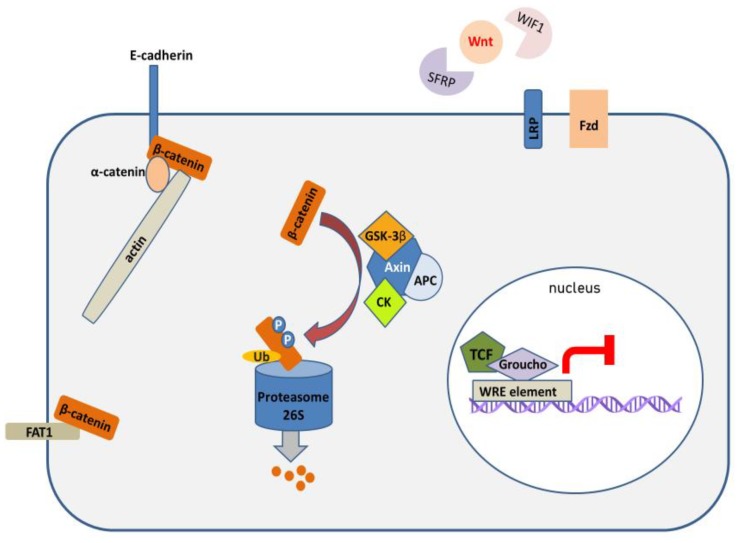
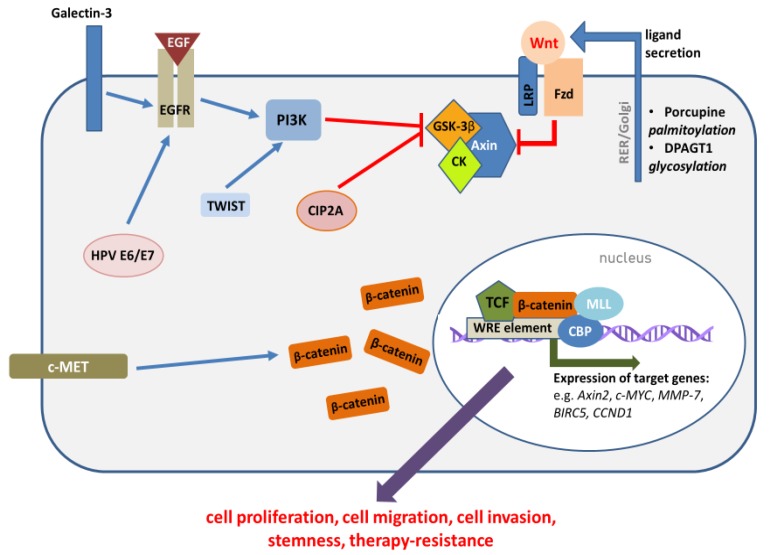
The knowledge about the molecular alterations which are found in head and neck squamous cell carcinomas (HNSCC) has much increased in recent years. However, we are still awaiting the translation of this knowledge to new diagnostic and therapeutic options. Among the many molecular changes that are detected in head and neck cancer, the abnormalities in several signaling pathways, which regulate cell proliferation, cell death and stemness, seem to be especially promising with regard to the development of targeted therapies. Canonical Wnt signaling is a pathway engaged in the formation of head and neck tissues, however it is not active in adult somatic mucosal cells. The aim of this review paper is to bring together significant data related to the current knowledge on the mechanisms and functional significance of the dysregulation of the Wnt/β-catenin pathway in head and neck tumors. Research evidence related to the role of Wnt signaling activation in the stimulation of cell proliferation, migration and inhibition of apoptosis in HNSCC is presented. Moreover, its role in promoting stemness traits in head and neck cancer stem-like cells is described. Evidence corroborating the hypothesis that the Wnt signaling pathway is a very promising target of novel therapeutic interventions in HNSCC is also discussed.
近年来,人们对头颈鳞状细胞癌(HNSCC)中发现的分子改变有了更多的了解。然而,我们仍在等待将这些知识转化为新的诊断和治疗选择。在头颈癌中检测到的许多分子变化中,调节细胞增殖、细胞死亡和干性的几个信号通路的异常似乎在开发靶向治疗方面特别有前途。经典 Wnt 信号通路参与头颈部组织的形成,但在成人黏膜体细胞中不活跃。本文综述的目的是汇集与 Wnt/β-catenin 通路在头颈部肿瘤中的失调的机制和功能意义相关的重要数据。介绍了 Wnt 信号激活在 HNSCC 中刺激细胞增殖、迁移和抑制细胞凋亡的作用。此外,还描述了它在促进头颈部癌症干细胞干性特征中的作用。还讨论了 Wnt 信号通路是 HNSCC 新型治疗干预的一个很有前途的靶点的假说。