Lacruz Maria E, Kluttig Alexander, Hartwig Saskia, Löer Markus, Tiller Daniel, Greiser Karin H, Werdan Karl, Haerting Johannes
From the Institute of Medical Epidemiology, Biostatistics, and Informatics, Martin-Luther-University Halle-Wittenberg (MEL, AK, SH, DT, JH), Evangelisches Diakonie-Krankenhaus, Halle (ML), Division of Cancer Epidemiology, German Cancer Research Centre, Heidelberg (KHG), and Department of Medicine III, Martin-Luther-University Halle-Wittenberg, Halle, Germany (KW).
Medicine (Baltimore). 2015 Jun;94(22):e952. doi: 10.1097/MD.0000000000000952.
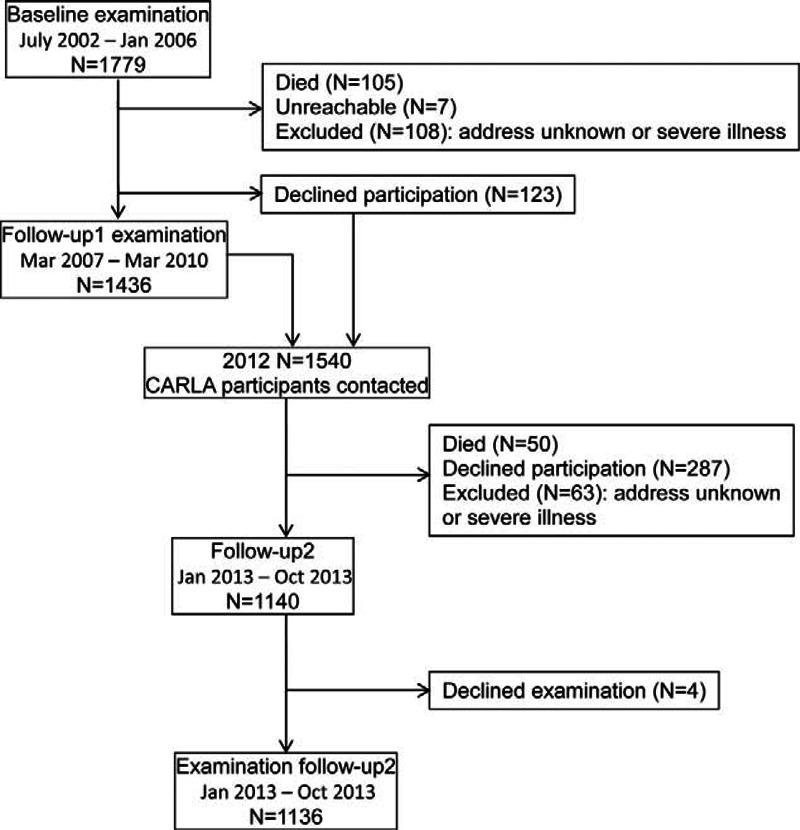
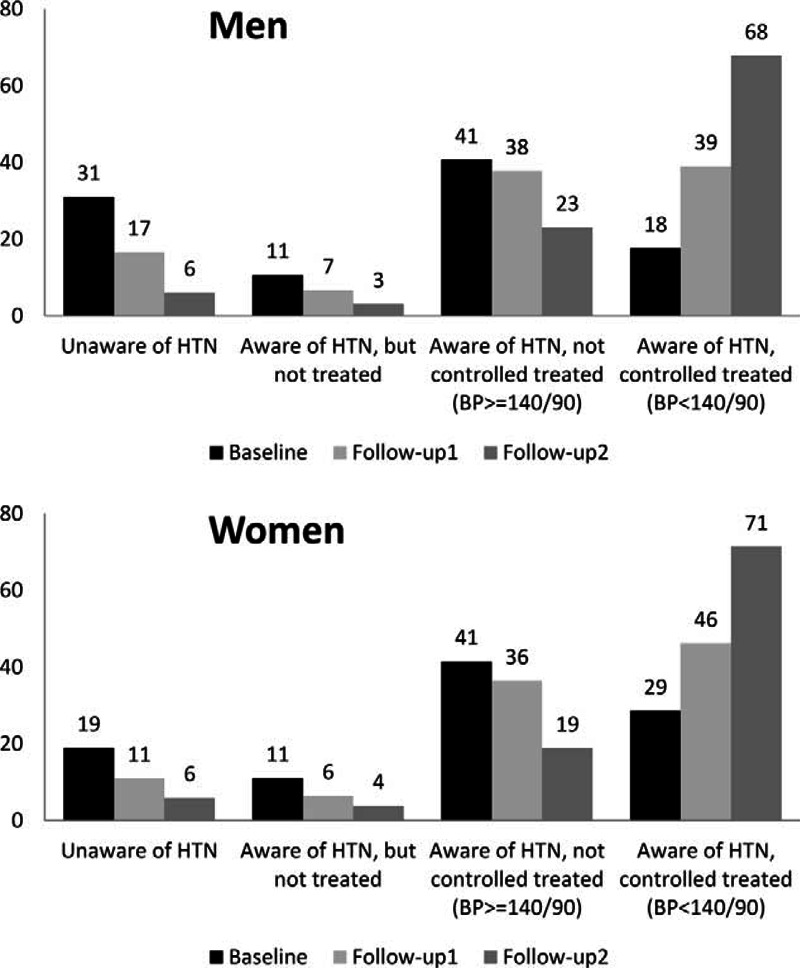
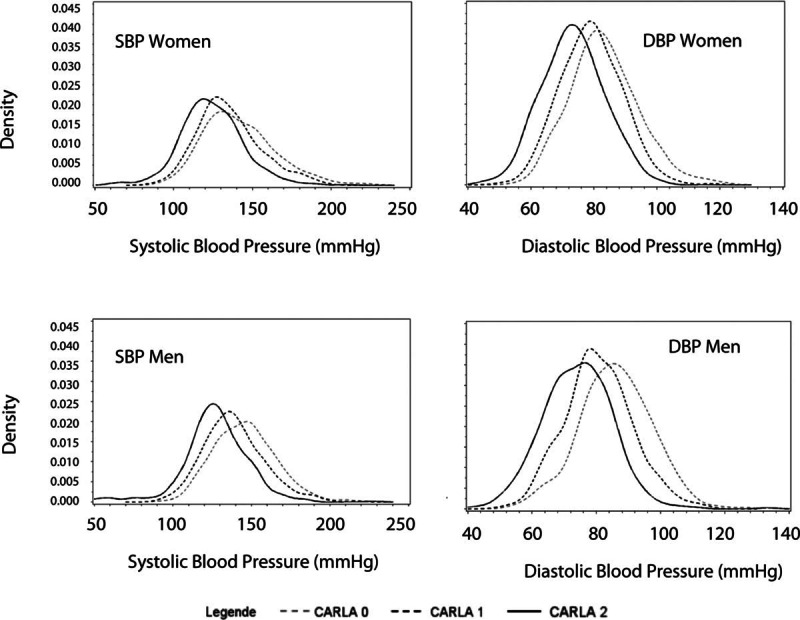
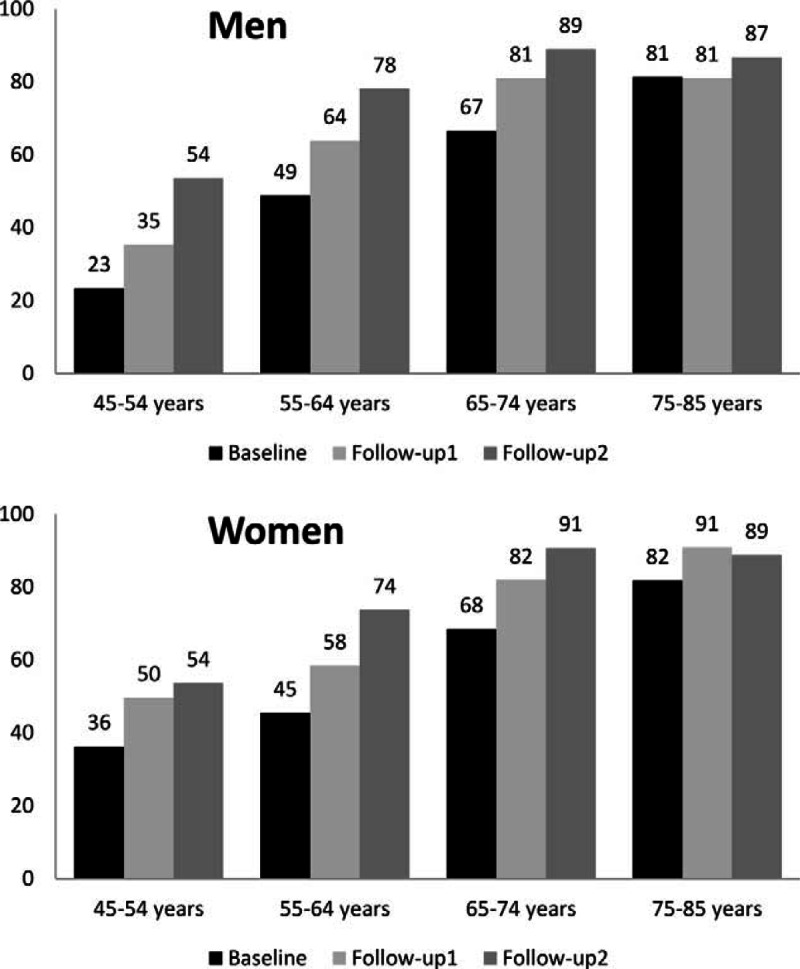
Hypertension is a leading cause of cardiovascular disease. There are very few studies dealing with the incidence of hypertension and changes in blood pressure (BP) over time. We aimed to evaluate the prevalence and incidence of hypertension within an adult population-based cohort.The sample included 967 men and 812 women aged 45 to 83 years at baseline, 1436 subjects completed follow-up1 after 4 years and 1079 completed follow-up2 after 9 years. BP was measured according to a standardized protocol with oscillometric devices and hypertension was defined as mean systolic BP (SBP) ≥140 mmHg and/or diastolic BP (DBP) ≥90 mmHg and/or use of antihypertensive medication if hypertension was known. We examined prevalence and incidence of hypertension, by age and sex.The age-standardized prevalence of hypertension at baseline was 74.3% for men and 70.2% for women. The age-standardized annual incidence rate of hypertension for men was 8.6 (95% confidence interval [95% CI] 4.3-12.9) for follow-up period1 and 5.4 (95% CI 2.8-10.6) for follow-up period2 and for women 8.2 (95% CI 3.6-12.8) for follow-up1 and 5.6 (95%CI 2.7-11.4) for follow-up2. A clear decrease in SBP and DBP between baseline and follow-up1 and follow-up2 was seen, accompanied by an increase in anti-hypertensive medication consumption and a higher awareness of the condition.Hypertension prevalence and incidence in the CARLA Study appear to be elevated compared with other studies. The decrease of BP over time seems to be caused by improved hypertension control due to interventional effects of our observational study and improved health care.
高血压是心血管疾病的主要病因。很少有研究涉及高血压的发病率以及血压随时间的变化情况。我们旨在评估以成年人群为基础的队列中高血压的患病率和发病率。样本包括967名男性和812名女性,基线时年龄在45至83岁之间,1436名受试者在4年后完成随访1,1079名受试者在9年后完成随访2。根据标准化方案使用示波装置测量血压,高血压定义为平均收缩压(SBP)≥140 mmHg和/或舒张压(DBP)≥90 mmHg,或者如果已知患有高血压则使用抗高血压药物。我们按年龄和性别检查了高血压的患病率和发病率。基线时男性高血压的年龄标准化患病率为74.3%,女性为70.2%。男性高血压的年龄标准化年发病率在随访期1为8.6(95%置信区间[95%CI] 4.3 - 12.9),随访期2为5.4(95%CI 2.8 - 10.6);女性在随访1为8.2(95%CI 3.6 - 12.8),随访2为5.6(95%CI 2.7 - 11.4)。在基线与随访1以及随访2之间,收缩压和舒张压明显下降,同时抗高血压药物的使用增加,且对病情的知晓率更高。与其他研究相比,CARLA研究中的高血压患病率和发病率似乎有所升高。血压随时间的下降似乎是由于我们观察性研究的干预作用以及医疗保健改善导致高血压控制得到改善所致。