Badouin Hélène, Hood Michael E, Gouzy Jérôme, Aguileta Gabriela, Siguenza Sophie, Perlin Michael H, Cuomo Christina A, Fairhead Cécile, Branca Antoine, Giraud Tatiana
Ecologie, Systématique et Evolution, Univ Paris-Sud, 91405 Orsay, France Centre National de la Recherche Scientifique, F-91405 Orsay, France.
Department of Biology, Amherst College, Amherst, Massachusetts 02142.
Genetics. 2015 Aug;200(4):1275-84. doi: 10.1534/genetics.115.177709. Epub 2015 Jun 3.
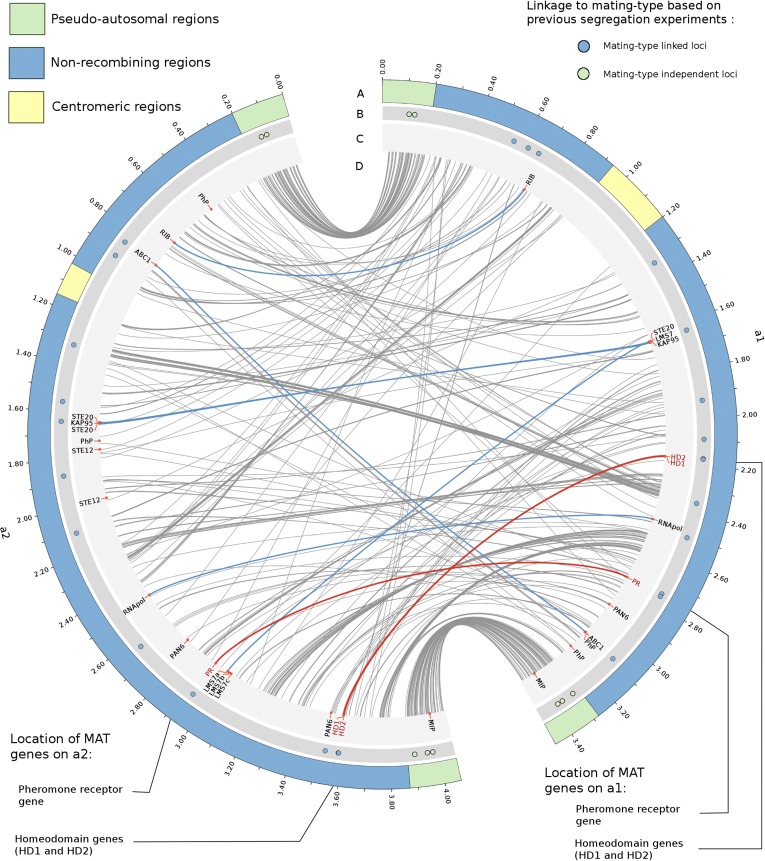
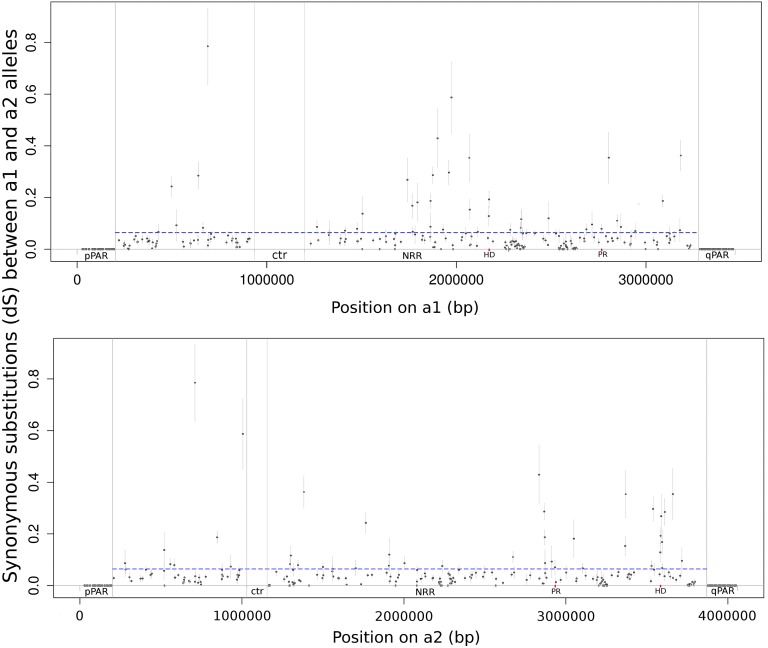
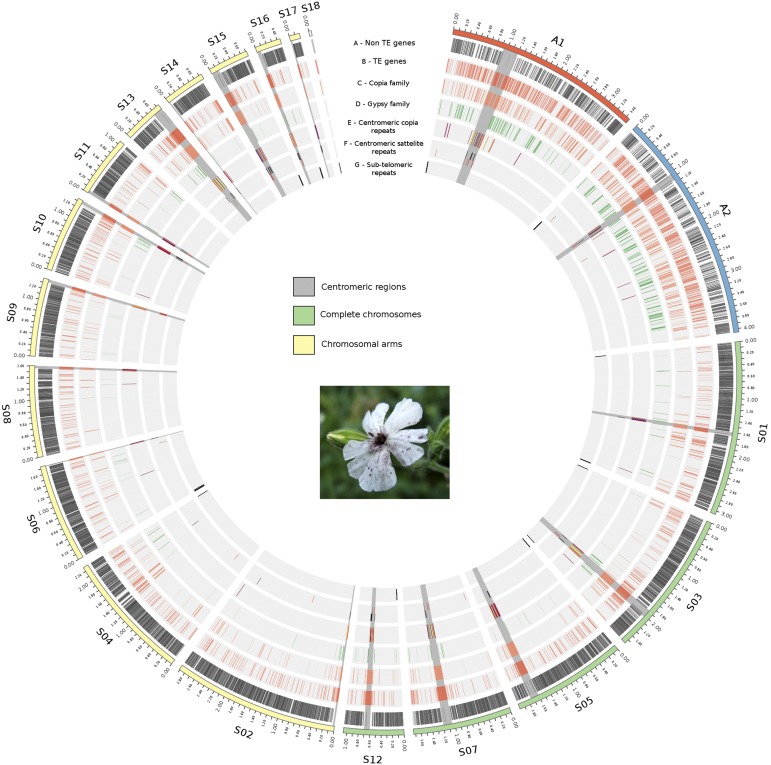
Sex chromosomes in plants and animals and fungal mating-type chromosomes often show exceptional genome features, with extensive suppression of homologous recombination and cytological differentiation between members of the diploid chromosome pair. Despite strong interest in the genetics of these chromosomes, their large regions of suppressed recombination often are enriched in transposable elements and therefore can be challenging to assemble. Here we show that the latest improvements of the PacBio sequencing yield assembly of the whole genome of the anther-smut fungus, Microbotryum lychnidis-dioicae (the pathogenic fungus causing anther-smut disease of Silene latifolia), into finished chromosomes or chromosome arms, even for the repeat-rich mating-type chromosomes and centromeres. Suppressed recombination of the mating-type chromosomes is revealed to span nearly 90% of their lengths, with extreme levels of rearrangements, transposable element accumulation, and differentiation between the two mating types. We observed no correlation between allelic divergence and physical position in the nonrecombining regions of the mating-type chromosomes. This may result from gene conversion or from rearrangements of ancient evolutionary strata, i.e., successive steps of suppressed recombination. Centromeres were found to be composed mainly of copia-like transposable elements and to possess specific minisatellite repeats identical between the different chromosomes. We also identified subtelomeric motifs. In addition, extensive signs of degeneration were detected in the nonrecombining regions in the form of transposable element accumulation and of hundreds of gene losses on each mating-type chromosome. Furthermore, our study highlights the potential of the latest breakthrough PacBio chemistry to resolve complex genome architectures.
植物、动物的性染色体以及真菌的交配型染色体通常呈现出特殊的基因组特征,二倍体染色体对的成员之间存在广泛的同源重组抑制和细胞学分化。尽管人们对这些染色体的遗传学有着浓厚兴趣,但它们大量的重组抑制区域往往富含转座元件,因此在组装时可能具有挑战性。在这里,我们表明,PacBio测序技术的最新改进能够将花药黑粉菌(Microbotryum lychnidis-dioicae,引起宽叶蝇子草花药黑粉病的致病真菌)的全基因组组装成完整的染色体或染色体臂,即使是对于富含重复序列的交配型染色体和着丝粒也是如此。结果显示,交配型染色体的重组抑制区域几乎占其长度的90%,在两个交配型之间存在极高水平的重排、转座元件积累和分化。我们在交配型染色体的非重组区域中未观察到等位基因分歧与物理位置之间的相关性。这可能是由于基因转换或古老进化层的重排所致,即连续的重组抑制步骤。研究发现,着丝粒主要由类copia转座元件组成,并且不同染色体之间拥有相同的特定小卫星重复序列。我们还鉴定出了亚端粒基序。此外,在非重组区域检测到了广泛的退化迹象,表现为转座元件积累以及每个交配型染色体上数百个基因的丢失。此外,我们的研究突出了最新的PacBio技术突破在解析复杂基因组结构方面的潜力。