Dulle Jennifer E, Fort Patrice E
Department of Ophthalmology and Visual Sciences, University of Michigan, Ann Arbor, MI, USA.
Department of Ophthalmology and Visual Sciences, University of Michigan, Ann Arbor, MI, USA.
Biochim Biophys Acta. 2016 Jan;1860(1 Pt B):278-86. doi: 10.1016/j.bbagen.2015.05.023. Epub 2015 Jun 3.
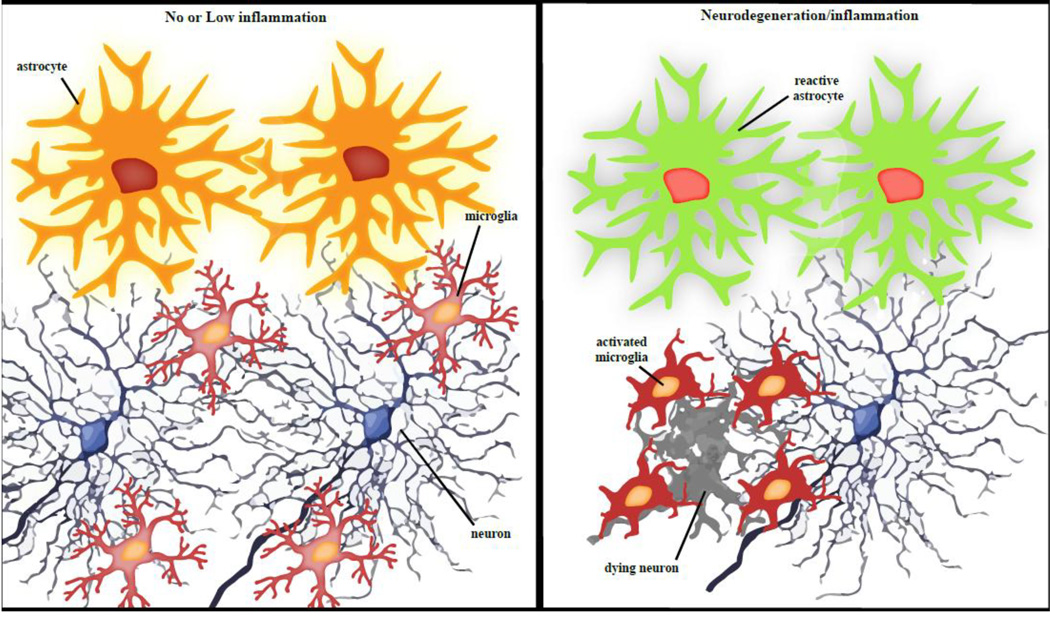
There is an abundance of evidence to support the association of damaging neuroinflammation and neurodegeneration across a multitude of diseases. One of the links between these pathological phenomena is the role of chaperone proteins as both neuroprotective and immune-regulatory agents.
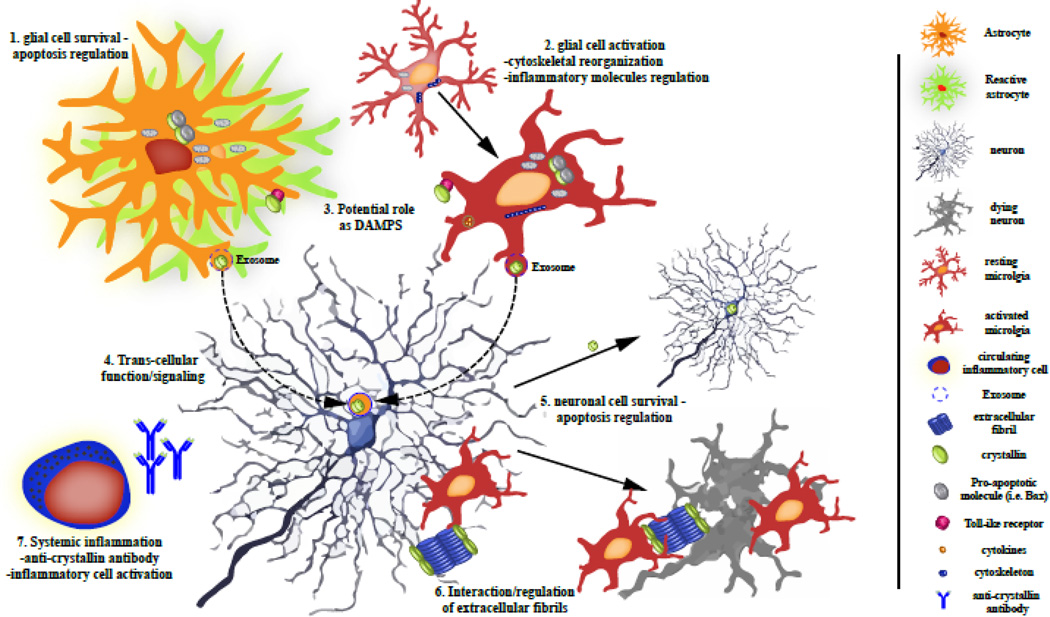
Chaperone proteins are highly expressed at sites of neuroinflammation both in glial cells and in the injured neurons that initiate the immune response. For this reason, the use of chaperones as treatment for various diseases associated with neuroinflammation is a highly active area of investigation. This review explores the various ways that the small heat shock protein chaperones, α-crystallins, can affect glial cell function with a specific focus on their implication in the inflammatory response associated with neurodegenerative disorders, and their potential as therapeutic treatment.
Although the mechanisms are still under investigation, a clear link has now been established between alpha-crystallins and neuroinflammation, especially through their roles in microglial and macroglial cells. Interestingly, similar to inflammation in itself, crystallins can have a beneficial or detrimental impact on the CNS based on the context and duration of the condition.
Overall this review points out the novel roles that chaperones such as alpha-crystallins can play outside of the classical protein folding pathways, and their potential in the development of new therapies for the treatment of neuroinflammatory/neurodegenerative diseases. This article is part of a Special Issue entitled Crystallin Biochemistry in Health and Disease.
有大量证据支持在多种疾病中,破坏性神经炎症与神经退行性变之间存在关联。这些病理现象之间的联系之一是伴侣蛋白作为神经保护剂和免疫调节剂所起的作用。
伴侣蛋白在引发免疫反应的神经胶质细胞和受损神经元中的神经炎症部位高度表达。因此,将伴侣蛋白用于治疗与神经炎症相关的各种疾病是一个非常活跃的研究领域。本综述探讨了小热休克蛋白伴侣α-晶状体蛋白影响神经胶质细胞功能的各种方式,特别关注它们在与神经退行性疾病相关的炎症反应中的作用及其作为治疗手段的潜力。
尽管机制仍在研究中,但现已明确α-晶状体蛋白与神经炎症之间存在联系,尤其是通过它们在小胶质细胞和大胶质细胞中的作用。有趣的是,与炎症本身类似,根据病情的背景和持续时间,晶状体蛋白对中枢神经系统可能产生有益或有害的影响。
总体而言,本综述指出了α-晶状体蛋白等伴侣蛋白在经典蛋白质折叠途径之外可以发挥的新作用,以及它们在开发治疗神经炎症/神经退行性疾病新疗法方面的潜力。本文是名为“健康与疾病中的晶状体生物化学”的特刊的一部分。