Jalilian Babak, Christiansen Stig Hill, Einarsson Halldór Bjarki, Pirozyan Mehdi Rasoli, Petersen Eskild, Vorup-Jensen Thomas
Biophysical Immunology Laboratory, Department of Biomedicine, Aarhus University, DK-8000 Aarhus, Denmark.
Biophysical Immunology Laboratory, Department of Biomedicine, Aarhus University, DK-8000 Aarhus, Denmark ; Department of Clinical Medicine, Aarhus University, Aarhus, Denmark.
Mol Cell Ther. 2013 Nov 6;1:2. doi: 10.1186/2052-8426-1-2. eCollection 2013.
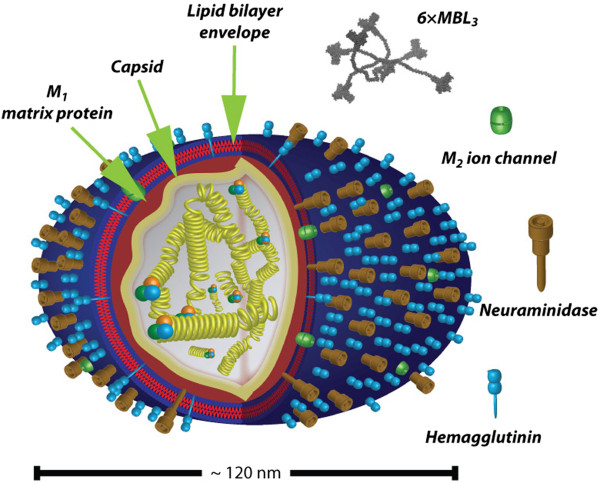
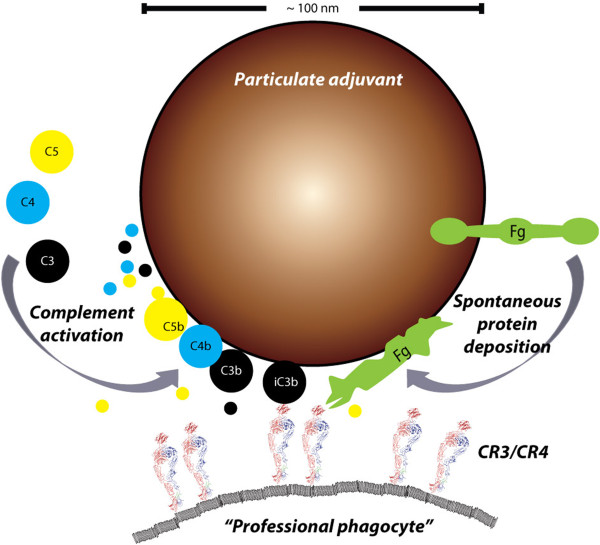
Influenza is a major challenge to healthcare systems world-wide. While prophylactic vaccination is largely efficient, long-lasting immunity has not been achieved in immunized populations, at least in part due to the challenges arising from the antigen variation between strains of influenza A virus as a consequence of genetic drift and shift. From progress in our understanding of the immune system, the mode-of-action of vaccines can be divided into the stimulation of the adaptive system through inclusion of appropriate vaccine antigens and of the innate immune system by the addition of adjuvant to the vaccine formulation. A shared property of many vaccine adjuvants is found in their nature of water-insoluble precipitates, for instance the particulate material made from aluminum salts. Previously, it was thought that embedding of vaccine antigens in these materials provided a "depot" of antigens enabling a long exposure of the immune system to the antigen. However, more recent work points to a role of particulate adjuvants in stimulating cellular parts of the innate immune system. Here, we briefly outline the infectious medicine and immune biology of influenza virus infection and procedures to provide sufficient and stably available amounts of vaccine antigen. This is followed by presentation of the many roles of adjuvants, which involve humoral factors of innate immunity, notably complement. In a perspective of the ultrastructural properties of these humoral factors, it becomes possible to rationalize why these insoluble precipitates or emulsions are such a provocation of the immune system. We propose that the biophysics of particulate material may hold opportunities that could aid the development of more efficient influenza vaccines.
流感是全球医疗系统面临的一项重大挑战。尽管预防性疫苗接种在很大程度上是有效的,但在接种人群中尚未实现持久免疫力,至少部分原因是由于甲型流感病毒株之间因基因漂移和基因重配导致的抗原变异所带来的挑战。根据我们对免疫系统认识的进展,疫苗的作用方式可分为通过包含适当的疫苗抗原刺激适应性免疫系统,以及通过在疫苗配方中添加佐剂刺激先天免疫系统。许多疫苗佐剂的一个共同特性在于它们不溶于水的沉淀性质,例如由铝盐制成的颗粒物质。以前,人们认为将疫苗抗原包埋在这些物质中可提供抗原“储存库”,使免疫系统能够长时间接触抗原。然而,最近的研究表明颗粒佐剂在刺激先天免疫系统的细胞部分中发挥作用。在此,我们简要概述流感病毒感染的传染病学和免疫生物学以及提供足够且稳定可用的疫苗抗原的程序。接下来介绍佐剂的多种作用,这涉及先天免疫的体液因子,尤其是补体。从这些体液因子的超微结构特性的角度来看,就有可能解释为什么这些不溶性沉淀物或乳剂会如此刺激免疫系统。我们认为颗粒物质的生物物理学可能带来有助于开发更有效流感疫苗的机会。