Zhang Wenjing, Shi Xinpeng, Peng Ying, Wu Meiyan, Zhang Pei, Xie Ruyi, Wu Yao, Yan Qingqing, Liu Side, Wang Jide
Guangdong Provincial Key Laboratory of Gastroenterology, Department of Gastroenterology, Nanfang Hospital, Southern Medical University, Guangzhou, China; Department of Medical Oncology, The First people's Hospital of Yunnan Province, Kunming University of Science and Technology, Kunming, China.
Guangdong Provincial Key Laboratory of Gastroenterology, Department of Gastroenterology, Nanfang Hospital, Southern Medical University, Guangzhou, China.
PLoS One. 2015 Jun 9;10(6):e0129603. doi: 10.1371/journal.pone.0129603. eCollection 2015.
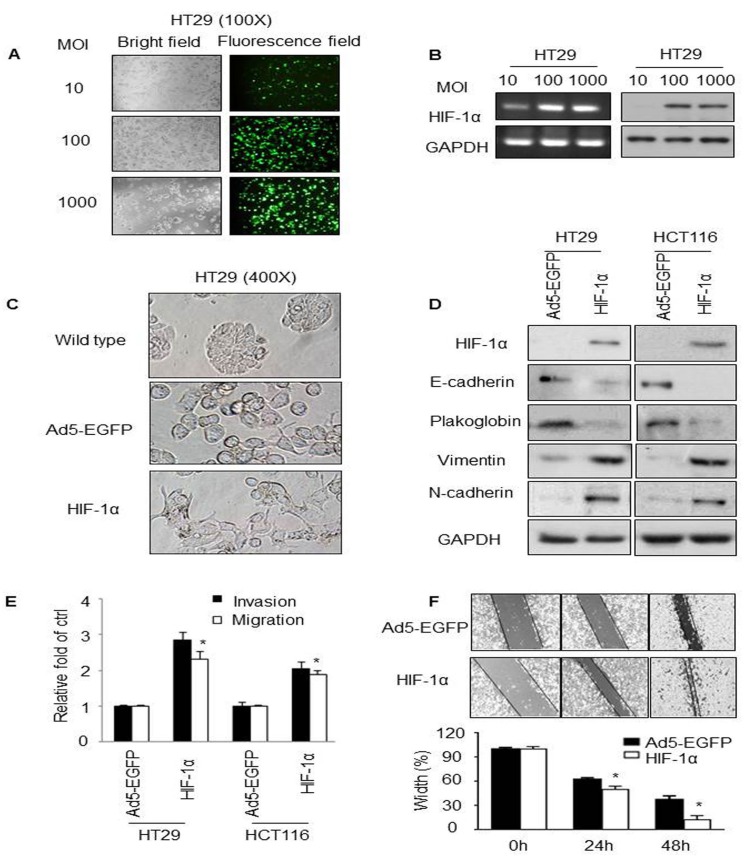
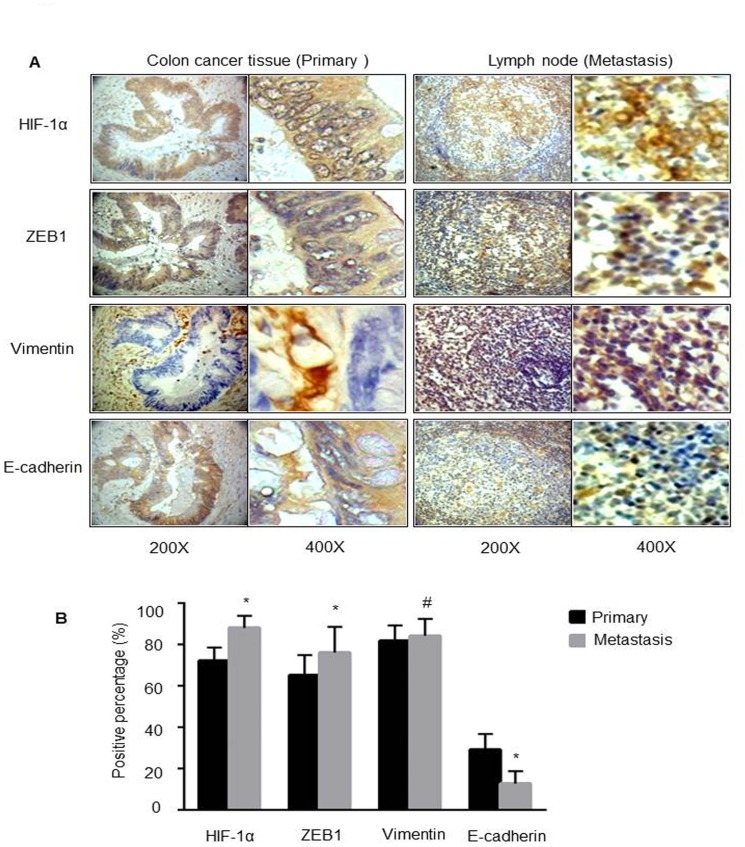
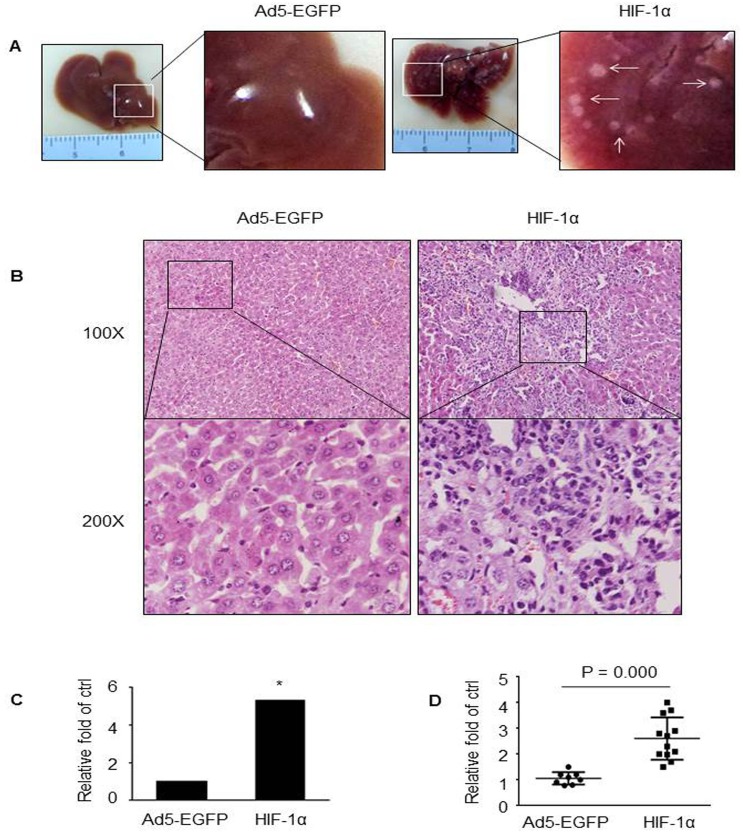
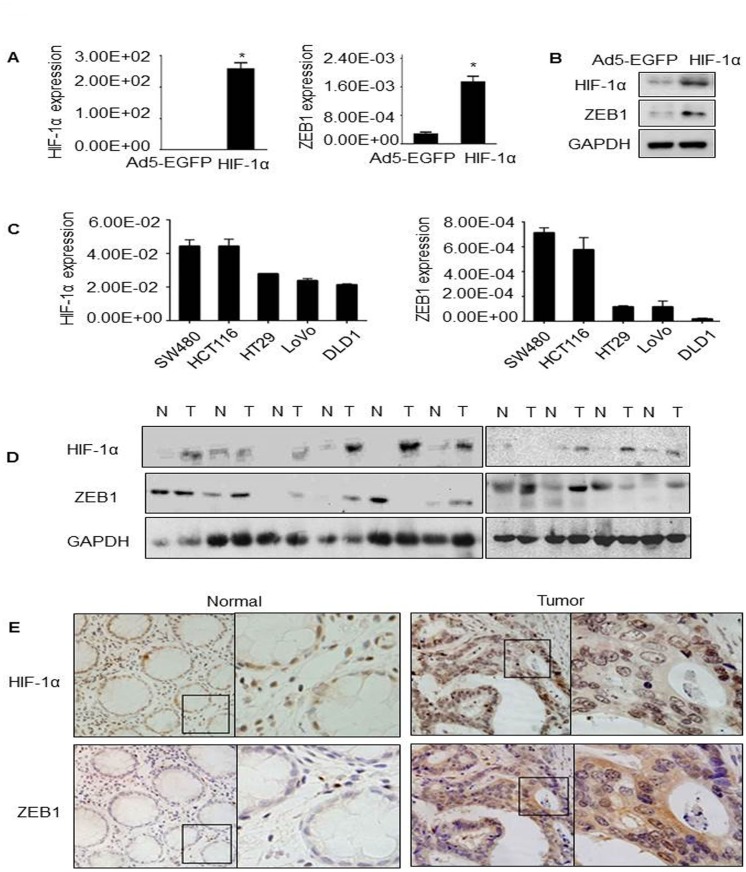
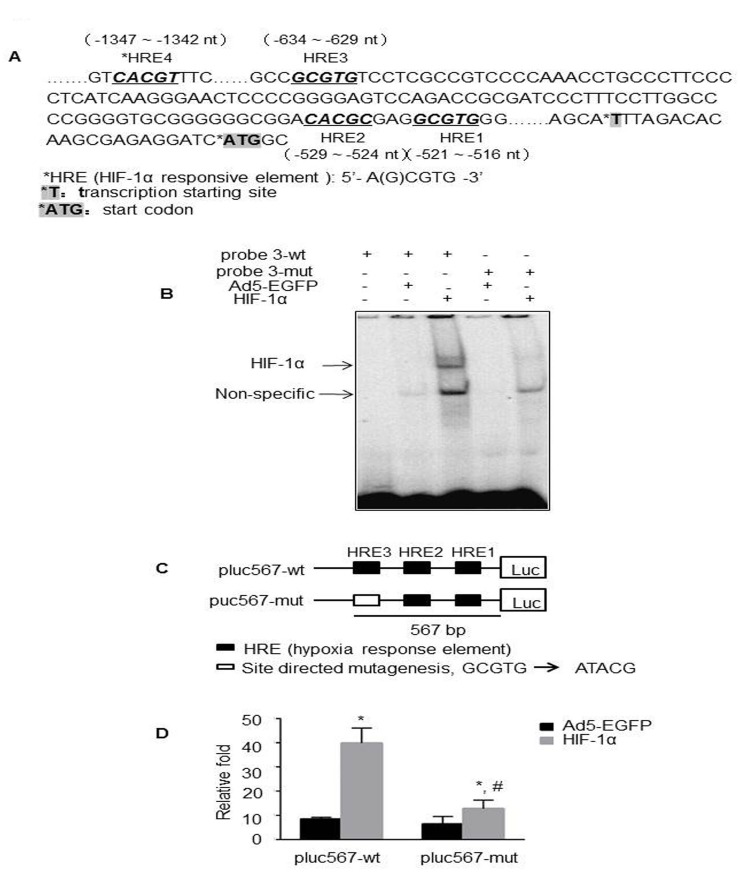
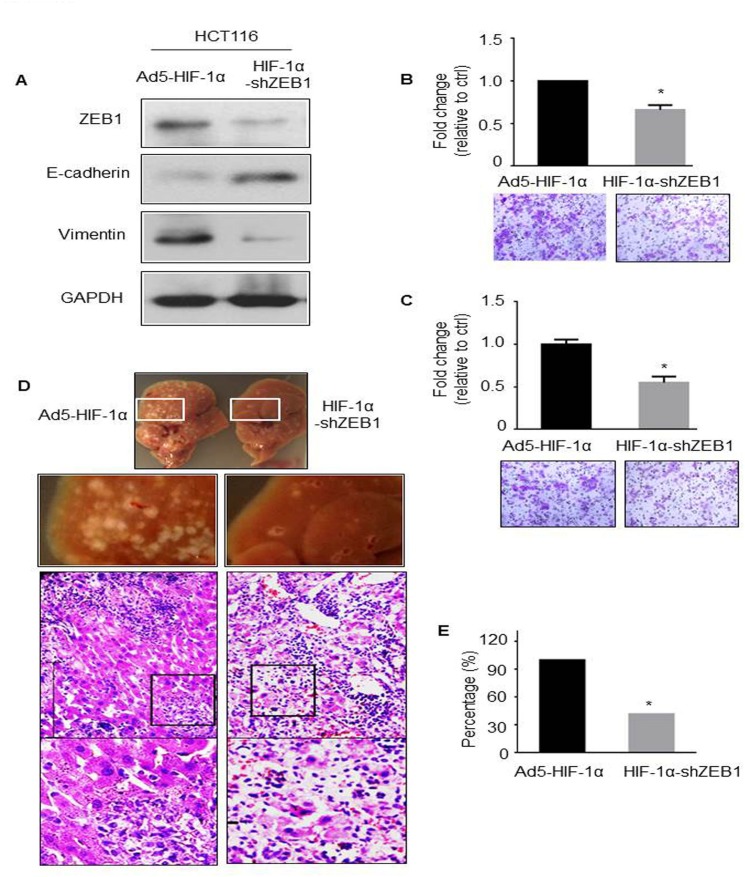
It is well recognized that hypoxia-inducible factor 1 alpha (HIF-1α) is involved in cancer metastasis, chemotherapy and poor prognosis. We previously found that deferoxamine, a hypoxia-mimetic agent, induces epithelial-mesenchymal transition (EMT) in colorectal cancer. Therefore, here we explored a new molecular mechanism for HIF-1α contributing to EMT and cancer metastasis through binding to ZEB1. In this study, we showed that overexpression of HIF-1α with adenovirus infection promoted EMT, cell invasion and migration in vitro and in vivo. On a molecular level, HIF-1α directly binding to the proximal promoter of ZEB1 via hypoxia response element (HRE) sites thus increasing the transactivity and expression of ZEB1. In addition, inhibition of ZEB1 was able to abrogate the HIF-1α-induced EMT and cell invasion. HIF-1α expression was highly correlated with the expression of ZEB1 in normal colorectal epithelium, primary and metastatic CRC tissues. Interestingly, both HIF-1α and ZEB1 were positively associated with Vimentin, an important mesenchymal marker of EMT, whereas negatively associated with E-cadherin expression. These findings suggest that HIF-1α enhances EMT and cancer metastasis by binding to ZEB1 promoter in CRC. HIF-1α and ZEB1 are both widely considered as tumor-initiating factors, but our results demonstrate that ZEB1 is a direct downstream of HIF-1α, suggesting a novel molecular mechanism for HIF-1α-inducing EMT and cancer metastasis.
众所周知,缺氧诱导因子1α(HIF-1α)与癌症转移、化疗及预后不良有关。我们之前发现,去铁胺,一种缺氧模拟剂,可诱导结直肠癌发生上皮-间质转化(EMT)。因此,在此我们探索了HIF-1α通过与锌指E盒结合蛋白1(ZEB1)结合促进EMT和癌症转移的新分子机制。在本研究中,我们发现腺病毒感染过表达HIF-1α可在体外和体内促进EMT、细胞侵袭和迁移。在分子水平上,HIF-1α通过缺氧反应元件(HRE)位点直接结合到ZEB1的近端启动子,从而增加ZEB1的转录活性和表达。此外,抑制ZEB1能够消除HIF-1α诱导的EMT和细胞侵袭。在正常结直肠上皮、原发性和转移性结直肠癌组织中,HIF-1α表达与ZEB1表达高度相关。有趣的是,HIF-1α和ZEB1均与波形蛋白呈正相关,波形蛋白是EMT的一种重要间质标志物,而与E-钙黏蛋白表达呈负相关。这些发现表明,在结直肠癌中,HIF-1α通过与ZEB1启动子结合增强EMT和癌症转移。HIF-1α和ZEB1均被广泛认为是肿瘤起始因子,但我们的结果表明ZEB1是HIF-1α的直接下游,提示了HIF-1α诱导EMT和癌症转移的一种新分子机制。