Duke Pauline, Godwin Marshall, Ratnam Samuel, Dawson Lesa, Fontaine Daniel, Lear Adrian, Traverso-Yepez Martha, Graham Wendy, Ravalia Mohamad, Mugford Gerry, Pike Andrea, Fortier Jacqueline, Peach Mandy
Primary Healthcare Research Unit, Memorial University, St John's, Canada.
Discipline of Family Medicine, Memorial University, Newfoundland & Labrador, Primary Healthcare Research Unit, Room 424, Janeway Hostel, 300 Prince Philip Drive, St. John's, A1B 3 V6, NL, Canada.
BMC Womens Health. 2015 Jun 10;15:47. doi: 10.1186/s12905-015-0206-1.
Cervical cancer is highly preventable and treatable if detected early through regular screening. Women in the Canadian province of Newfoundland & Labrador have relatively low rates of cervical cancer screening, with rates of around 40 % between 2007 and 2009. Persistent infection with oncogenic human papillomavirus (HPV) is a necessary cause for the development of cervical cancer, and HPV testing, including self-sampling, has been suggested as an alternative method of cervical cancer screening that may alleviate some barriers to screening. Our objective was to determine whether offering self-collected HPV testing screening increased cervical cancer screening rates in rural communities.
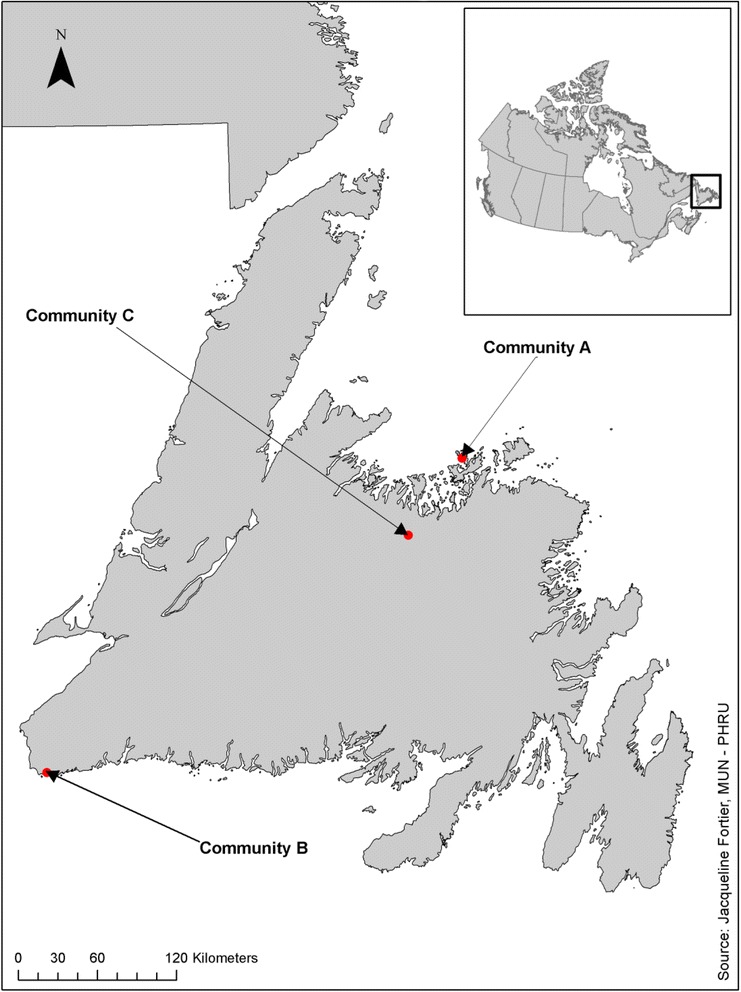
During the 2-year study, three community-based cohorts were assigned to receive either i) a cervical cancer education campaign with the option of HPV testing; ii) an educational campaign alone; iii) or no intervention. Self-collection kits were offered to eligible women at family medicine clinics and community centres, and participants were surveyed to determine their acceptance of the HPV self-collection kit. Paired proportions testing for before-after studies was used to determine differences in screening rates from baseline, and Chi Square analysis of three dimensional 2 × 2 × 2 tables compared the change between communities.
Cervical cancer screening increased by 15.2 % (p < 0.001) to 67.4 % in the community where self-collection was available, versus a 2.9 % increase (p = 0.07) in the community that received educational campaigns and 8.5 % in the community with no intervention (p = 0.193). The difference in change in rates was statistically significant between communities A and B (p < 0.001) but not between communities A and C (p = 0.193). The response rate was low, with only 9.5 % (168/1760) of eligible women opting to self-collect for HPV testing. Of the women who completed self-collection, 15.5 % (26) had not had a Pap smear in the last 3 years, and 88.7 % reported that they were somewhat or very satisfied with self-collection.
Offering self-collected HPV testing increased the cervical cancer screening rate in a rural NL community. Women who completed self-collection had generally positive feelings about the experience. Offering HPV self-collection may increase screening compliance, particularly among women who do not present for routine Pap smears.
宫颈癌如果通过定期筛查早期发现,是高度可预防和可治疗的。加拿大纽芬兰与拉布拉多省的女性宫颈癌筛查率相对较低,2007年至2009年期间的筛查率约为40%。致癌性人乳头瘤病毒(HPV)的持续感染是宫颈癌发生的必要原因,有人建议将包括自我采样在内的HPV检测作为宫颈癌筛查的替代方法,这可能会减少一些筛查障碍。我们的目标是确定提供自我采集的HPV检测筛查是否能提高农村社区的宫颈癌筛查率。
在为期两年的研究中,三个基于社区的队列被分配接受以下措施之一:i)开展宫颈癌教育活动并可选择进行HPV检测;ii)仅开展教育活动;iii)或不进行干预。在家庭医学诊所和社区中心向符合条件的女性提供自我采集试剂盒,并对参与者进行调查以确定她们对HPV自我采集试剂盒的接受程度。使用前后研究的配对比例检验来确定筛查率与基线的差异,并通过三维2×2×2表格的卡方分析比较各社区之间的变化。
在可进行自我采集的社区,宫颈癌筛查率提高了15.2%(p<0.001),达到67.4%,而接受教育活动的社区筛查率提高了2.9%(p=0.07),未进行干预的社区筛查率提高了8.5%(p=0.193)。社区A和B之间筛查率变化的差异具有统计学意义(p<0.001),但社区A和C之间无统计学意义(p=0.193)。响应率较低,只有9.5%(168/1760)符合条件的女性选择自我采集进行HPV检测。在完成自我采集的女性中,15.5%(26人)在过去3年中未进行过巴氏涂片检查,88.7%的女性报告她们对自我采集的体验有些满意或非常满意。
提供自我采集的HPV检测提高了纽芬兰与拉布拉多省一个农村社区的宫颈癌筛查率。完成自我采集的女性对该体验总体上有积极的感受。提供HPV自我采集可能会提高筛查的依从性,特别是对于那些未进行常规巴氏涂片检查的女性。