Gray Casey, Gibbons Rebecca, Larouche Richard, Sandseter Ellen Beate Hansen, Bienenstock Adam, Brussoni Mariana, Chabot Guylaine, Herrington Susan, Janssen Ian, Pickett William, Power Marlene, Stanger Nick, Sampson Margaret, Tremblay Mark S
Healthy Active Living and Obesity Research Group, Children's Hospital of Eastern Ontario Research Institute, 401 Smyth Road, Ottawa, ON K1H 8L1, Canada.
School of Population & Public Health, University of British Columbia, 2206 East Mall, Vancouver, BC V6H 3V4, Canada.
Int J Environ Res Public Health. 2015 Jun 8;12(6):6455-74. doi: 10.3390/ijerph120606455.
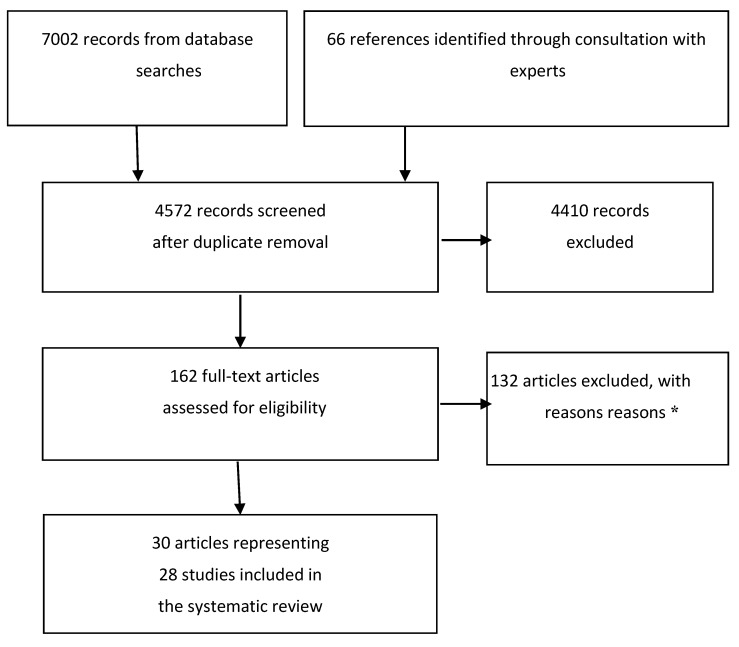
The objective of this systematic review was to examine the relationship between outdoor time and: (1) physical activity, (2) cardiorespiratory fitness, (3) musculoskeletal fitness, (4) sedentary behaviour; or (5) motor skill development in children aged 3-12 years. We identified 28 relevant studies that were assessed for quality using the GRADE framework. The systematic review revealed overall positive effects of outdoor time on physical activity, sedentary behaviour, and cardiorespiratory fitness, although causality could not be assumed due to a lack of RCTs. Motor skill development was unrelated to outdoor time; however, this relationship was only examined in a single study of preschool children. No studies were found that examined associations between outdoor time and musculoskeletal fitness.
(1)身体活动;(2)心肺适能;(3)肌肉骨骼适能;(4)久坐行为;或(5)3至12岁儿童的运动技能发展。我们确定了28项相关研究,并使用GRADE框架对其质量进行了评估。该系统评价显示,户外活动时间对身体活动、久坐行为和心肺适能总体上有积极影响,不过由于缺乏随机对照试验,无法确定因果关系。运动技能发展与户外活动时间无关;然而,这种关系仅在一项针对学龄前儿童的研究中进行了考察。未发现有研究探讨户外活动时间与肌肉骨骼适能之间的关联。