Milewska Malgorzata, Romano David, Herrero Ana, Guerriero Maria Luisa, Birtwistle Marc, Quehenberger Franz, Hatzl Stefan, Kholodenko Boris N, Segatto Oreste, Kolch Walter, Zebisch Armin
Systems Biology Ireland, University College Dublin, Dublin, Ireland.
Icahn School of Medicine at Mount Sinai, New York, New York, United States of America.
PLoS One. 2015 Jun 12;10(6):e0129859. doi: 10.1371/journal.pone.0129859. eCollection 2015.
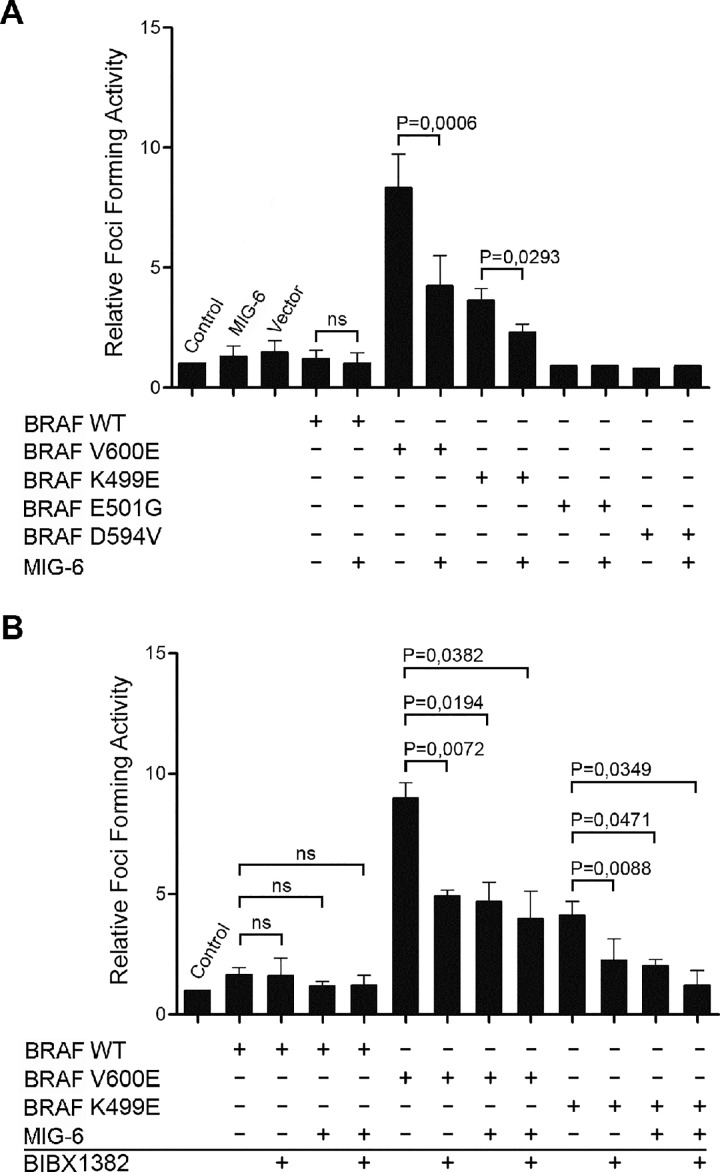
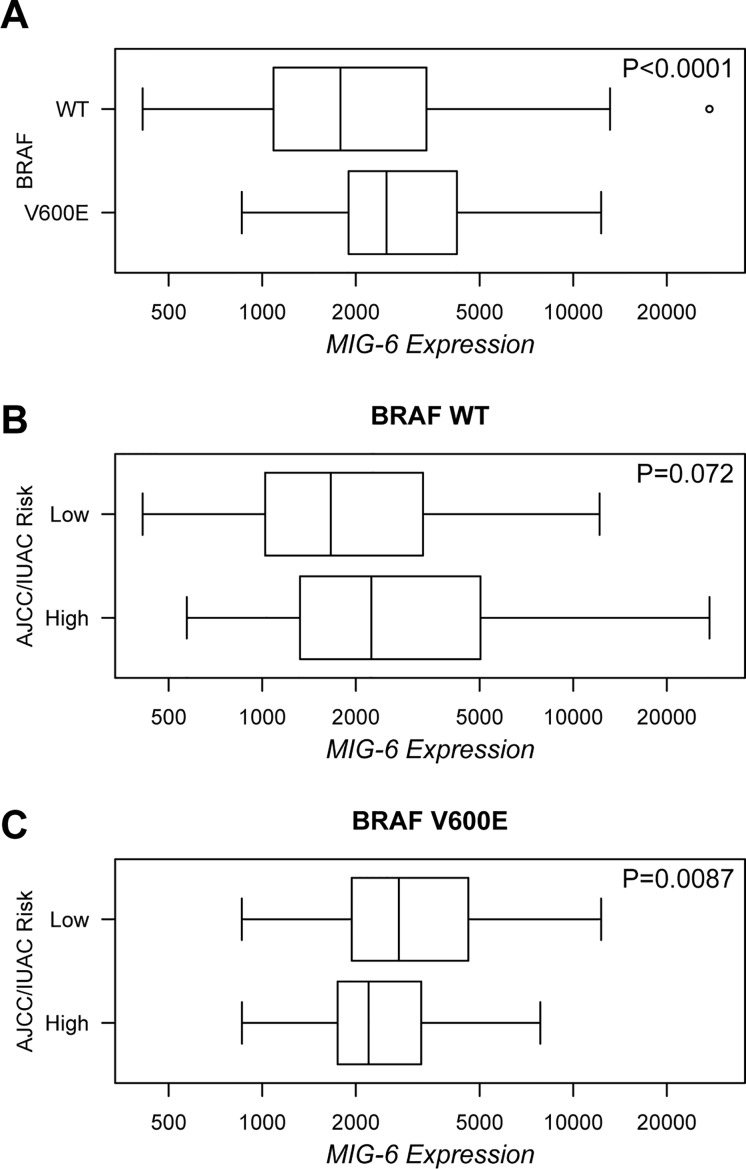
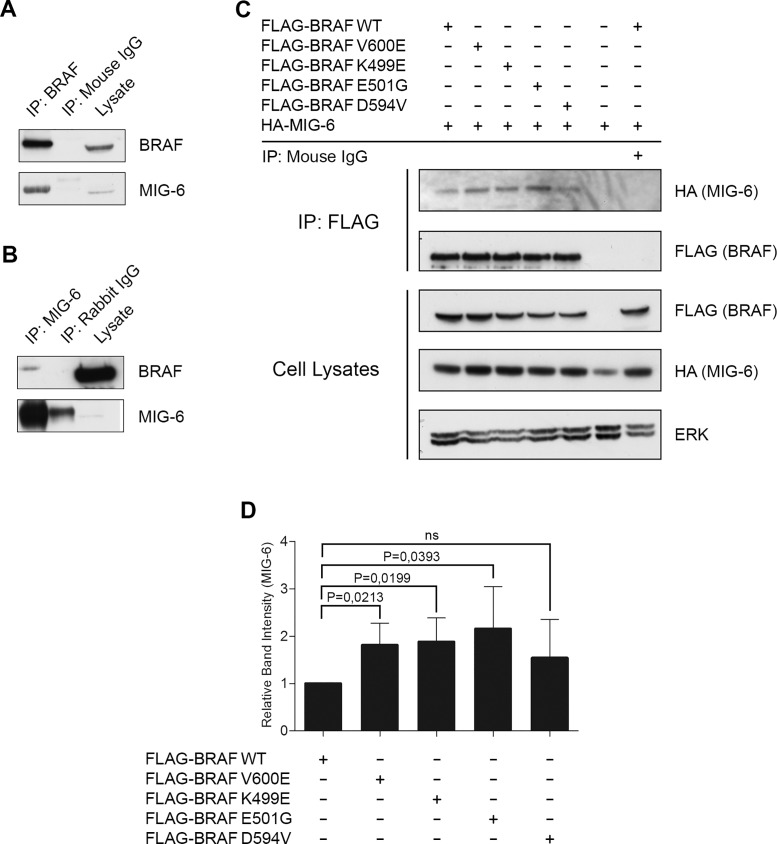
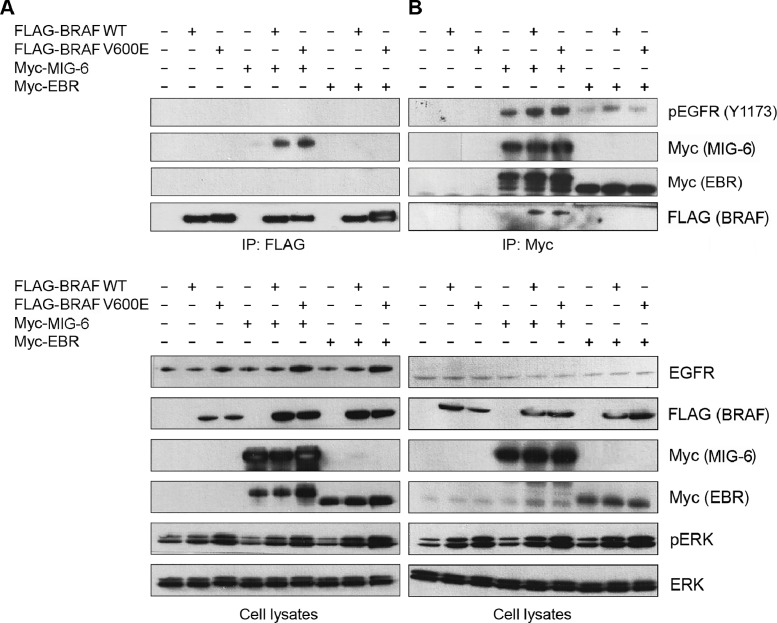
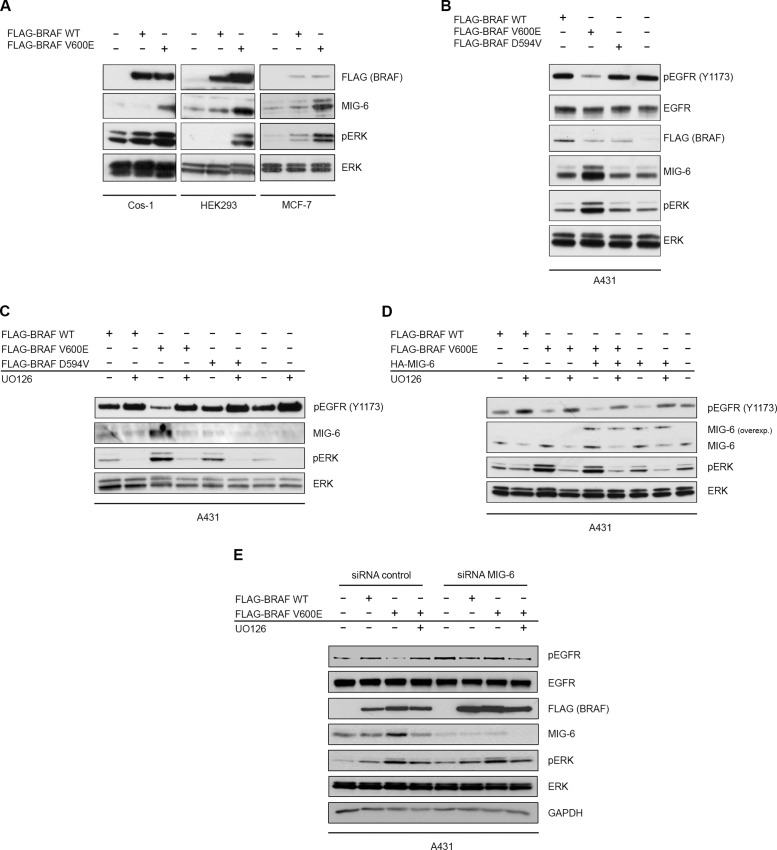
BRAF functions in the RAS-extracellular signal-regulated kinase (ERK) signaling cascade. Activation of this pathway is necessary to mediate the transforming potential of oncogenic BRAF, however, it may also cause a negative feedback that inhibits the epidermal growth factor receptor (EGFR). Mitogen-inducible gene-6 (MIG-6) is a potent inhibitor of the EGFR and has been demonstrated to function as a tumor suppressor. As MIG-6 can be induced via RAS-ERK signaling, we investigated its potential involvement in this negative regulatory loop. Focus formation assays were performed and demonstrated that MIG-6 significantly reduces malignant transformation induced by oncogenic BRAF. Although this genetic interaction was mirrored by a physical interaction between MIG-6 and BRAF, we did not observe a direct regulation of BRAF kinase activity by MIG-6. Interestingly, a selective chemical EGFR inhibitor suppressed transformation to a similar degree as MIG-6, whereas combining these approaches had no synergistic effect. By analyzing a range of BRAF mutated and wildtype cell line models, we could show that BRAF V600E causes a strong upregulation of MIG-6, which was mediated at the transcriptional level via the RAS-ERK pathway and resulted in downregulation of EGFR activation. This feedback loop is operational in tumors, as shown by the analysis of almost 400 patients with papillary thyroid cancer (PTC). Presence of BRAF V600E correlated with increased MIG-6 expression on the one hand, and with inactivation of the EGFR and of PI3K/AKT signaling on the other hand. Importantly, we also observed a more aggressive disease phenotype when BRAF V600E coexisted with low MIG-6 expression. Finally, analysis of methylation data was performed and revealed that higher methylation of MIG-6 correlated to its decreased expression. Taken together, we demonstrate that MIG-6 efficiently reduces cellular transformation driven by oncogenic BRAF by orchestrating a negative feedback circuit directed towards the EGFR.
BRAF在RAS-细胞外信号调节激酶(ERK)信号级联反应中发挥作用。该信号通路的激活对于介导致癌性BRAF的转化潜能是必需的,然而,它也可能引发负反馈,抑制表皮生长因子受体(EGFR)。丝裂原诱导基因6(MIG-6)是EGFR的一种有效抑制剂,已被证明具有肿瘤抑制功能。由于MIG-6可通过RAS-ERK信号传导诱导产生,我们研究了其在这一负调控回路中的潜在作用。进行了集落形成试验,结果表明MIG-6能显著降低致癌性BRAF诱导的恶性转化。尽管这种基因相互作用通过MIG-6与BRAF之间的物理相互作用得以体现,但我们并未观察到MIG-6对BRAF激酶活性的直接调控。有趣的是,一种选择性化学EGFR抑制剂与MIG-6对转化的抑制程度相似,而将这两种方法联合使用却没有协同效应。通过分析一系列BRAF突变和野生型细胞系模型,我们发现BRAF V600E会导致MIG-6的强烈上调,这是通过RAS-ERK途径在转录水平介导的,并导致EGFR激活的下调。对近400例甲状腺乳头状癌(PTC)患者的分析表明,这种反馈回路在肿瘤中发挥作用。一方面,BRAF V600E的存在与MIG-6表达增加相关,另一方面,与EGFR以及PI3K/AKT信号传导的失活相关。重要的是,当BRAF V600E与低水平的MIG-6表达共存时,我们还观察到了更具侵袭性的疾病表型。最后,对甲基化数据进行分析,结果显示MIG-6的高甲基化与其表达降低相关。综上所述,我们证明MIG-6通过精心编排针对EGFR的负反馈回路,有效降低了致癌性BRAF驱动的细胞转化。