Orthopaedic Arthroscopic Surgery International, Bioresearch Foundation, Milan, Italy.
Residency Program in Orthopaedics and Traumatology, University of Milan, Milan, Italy.
Cartilage. 2011 Jul;2(3):286-99. doi: 10.1177/1947603510392023.
The purpose of our study was to determine the effectiveness of cartilage repair utilizing 1-step surgery with bone marrow aspirate concentrate (BMAC) and a collagen I/III matrix (Chondro-Gide, Geistlich, Wolhusen, Switzerland).
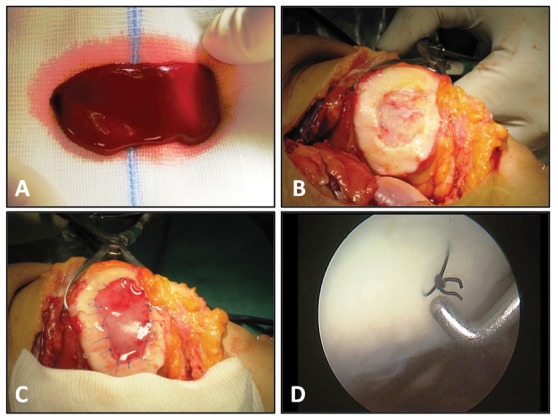
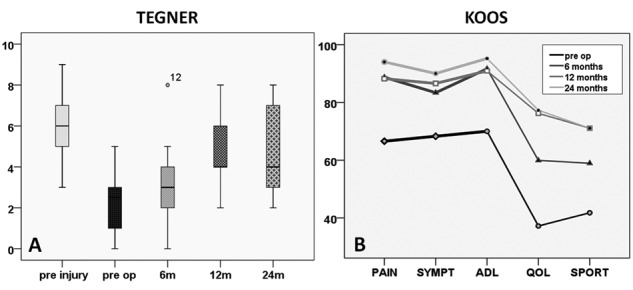
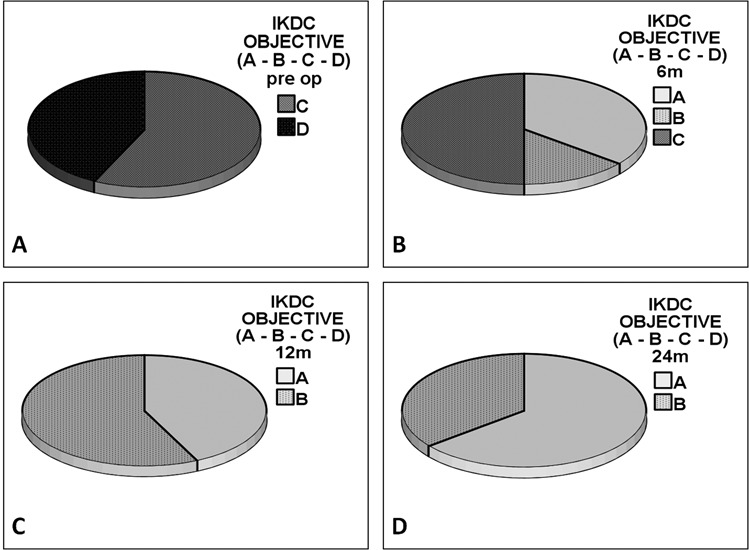
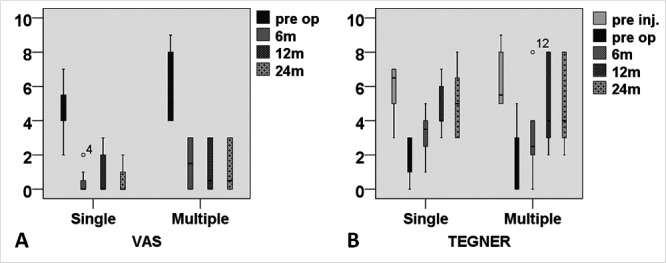
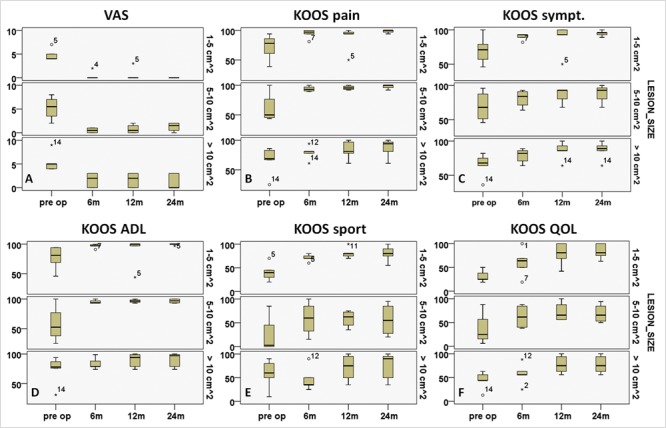
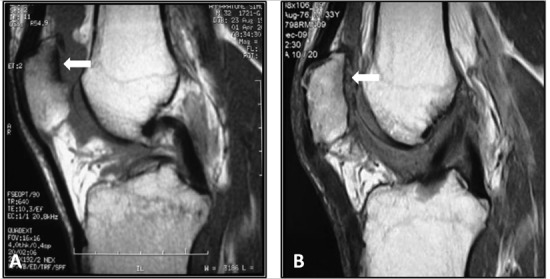
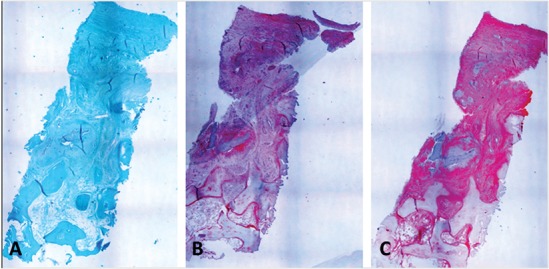
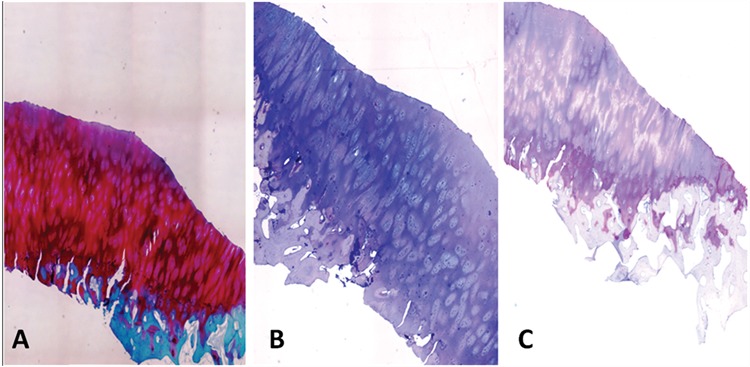
We prospectively followed up for 2 years 15 patients (mean age, 48 years) who were operated for grade IV cartilage lesions of the knee. Six of the patients had multiple chondral lesions; the average size of the lesions was 9.2 cm(2). All patients underwent a mini-arthrotomy and concomitant transplantation with BMAC covered with the collagen matrix. Coexisting pathologies were treated before or during the same surgery. X-rays and MRI were collected preoperatively and at 1 and 2 years' follow-up. Visual analog scale (VAS), International Knee Documentation Committee (IKDC), Knee injury and Osteoarthritis Outcome Score (KOOS), Lysholm, Marx, SF-36 (physical/mental), and Tegner scores were collected preoperatively and at 6, 12, and 24 months' follow-up. Four patients gave their consent for second-look arthroscopy and 3 of them for a concomitant biopsy.
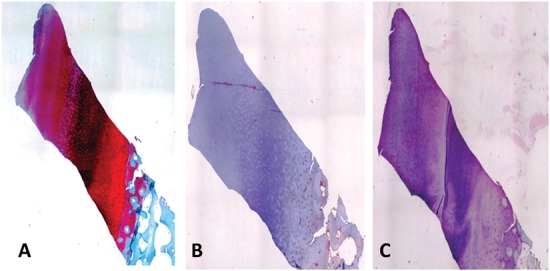
Patients showed significant improvement in all scores at final follow-up (P < 0.005). Patients presenting single lesions and patients with small lesions showed higher improvement. MRI showed coverage of the lesion with hyaline-like tissue in all patients in accordance with clinical results. Hyaline-like histological findings were also reported for all the specimens analyzed. No adverse reactions or postoperative complications were noted.
This study showed that 1-step surgery with BMAC and collagen I/III matrix could be a viable technique in the treatment of grade IV knee chondral lesions.
我们研究的目的是确定利用骨髓抽吸浓缩物(BMAC)和 I/III 型胶原基质(Chondro-Gide,Geistlich,Wolhusen,瑞士)一步手术进行软骨修复的效果。
我们前瞻性地随访了 15 名(平均年龄 48 岁)接受膝关节 IV 级软骨病变手术的患者,随访时间为 2 年。其中 6 例患者有多发性软骨病变;病变平均大小为 9.2cm²。所有患者均接受微创关节切开术和 BMAC 联合胶原基质移植。同时治疗并存的病理情况。术前、术后 1 年和 2 年采集 X 线和 MRI。术前和术后 6、12 和 24 个月采集视觉模拟量表(VAS)、国际膝关节文献委员会(IKDC)、膝关节损伤和骨关节炎结果评分(KOOS)、Lysholm、Marx、SF-36(身体/精神)和 Tegner 评分。4 例患者同意进行二次关节镜检查,其中 3 例患者同意进行同时活检。
患者在最终随访时所有评分均有显著改善(P<0.005)。单一病变和小病变患者的改善更为明显。MRI 显示所有患者的病变均被类似透明软骨的组织覆盖,与临床结果相符。对所有分析的标本也报告了透明样组织学发现。未观察到不良反应或术后并发症。
本研究表明,BMAC 和 I/III 型胶原基质一步手术可能是治疗 IV 级膝关节软骨病变的可行技术。