
毒力基因的全基因组比较分析揭示了内生菌与其他共生细菌之间的异同。
Whole-genome comparative analysis of virulence genes unveils similarities and differences between endophytes and other symbiotic bacteria.
作者信息
Lòpez-Fernàndez Sebastiàn, Sonego Paolo, Moretto Marco, Pancher Michael, Engelen Kristof, Pertot Ilaria, Campisano Andrea
机构信息
Research and Innovation Center, Fondazione Edmund Mach Trento, Italy.
出版信息
Front Microbiol. 2015 May 26;6:419. doi: 10.3389/fmicb.2015.00419. eCollection 2015.
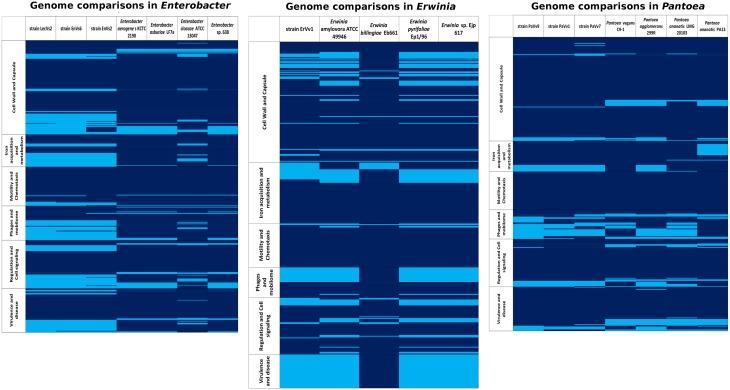
Plant pathogens and endophytes co-exist and often interact with the host plant and within its microbial community. The outcome of these interactions may lead to healthy plants through beneficial interactions, or to disease through the inducible production of molecules known as virulence factors. Unravelling the role of virulence in endophytes may crucially improve our understanding of host-associated microbial communities and their correlation with host health. Virulence is the outcome of a complex network of interactions, and drawing the line between pathogens and endophytes has proven to be conflictive, as strain-level differences in niche overlapping, ecological interactions, state of the host's immune system and environmental factors are seldom taken into account. Defining genomic differences between endophytes and plant pathogens is decisive for understanding the boundaries between these two groups. Here we describe the major differences at the genomic level between seven grapevine endophytic test bacteria, and 12 reference strains. We describe the virulence factors detected in the genomes of the test group, as compared to endophytic and non-endophytic references, to better understand the distribution of these traits in endophytic genomes. To do this, we adopted a comparative whole-genome approach, encompassing BLAST-based searches through the GUI-based tools Mauve and BRIG as well as calculating the core and accessory genomes of three genera of enterobacteria. We outline divergences in metabolic pathways of these endophytes and reference strains, with the aid of the online platform RAST. We present a summary of the major differences that help in the drawing of the boundaries between harmless and harmful bacteria, in the spirit of contributing to a microbiological definition of endophyte.
植物病原体和内生菌共存,并且常常与宿主植物及其微生物群落相互作用。这些相互作用的结果可能通过有益的相互作用使植物健康生长,或者通过诱导产生被称为毒力因子的分子而导致疾病。阐明内生菌中毒力的作用可能会极大地增进我们对宿主相关微生物群落及其与宿主健康相关性的理解。毒力是一个复杂的相互作用网络的结果,事实证明,区分病原体和内生菌具有争议性,因为生态位重叠、生态相互作用、宿主免疫系统状态和环境因素等菌株水平的差异很少被考虑在内。定义内生菌和植物病原体之间的基因组差异对于理解这两组之间的界限至关重要。在这里,我们描述了七种葡萄内生测试细菌与12种参考菌株在基因组水平上的主要差异。我们描述了测试组基因组中检测到的毒力因子,并与内生和非内生参考菌株进行比较,以更好地了解这些特征在内生基因组中的分布。为此,我们采用了比较全基因组方法,包括通过基于图形用户界面的工具Mauve和BRIG进行基于BLAST的搜索,以及计算三种肠杆菌属的核心基因组和辅助基因组。我们借助在线平台RAST概述了这些内生菌和参考菌株代谢途径的差异。我们总结了主要差异,有助于划分无害细菌和有害细菌的界限,旨在为内生菌的微生物学定义做出贡献。


 Zotero 插件