Tong Xin, Zhang Deqiang, Arthurs Blake, Li Pei, Durudogan Leigh, Gupta Neil, Yin Lei
Department of Molecular & Integrative Physiology, University of Michigan Medical School, Ann Arbor, Michigan, United States of America.
PLoS One. 2015 Jun 15;10(6):e0130047. doi: 10.1371/journal.pone.0130047. eCollection 2015.
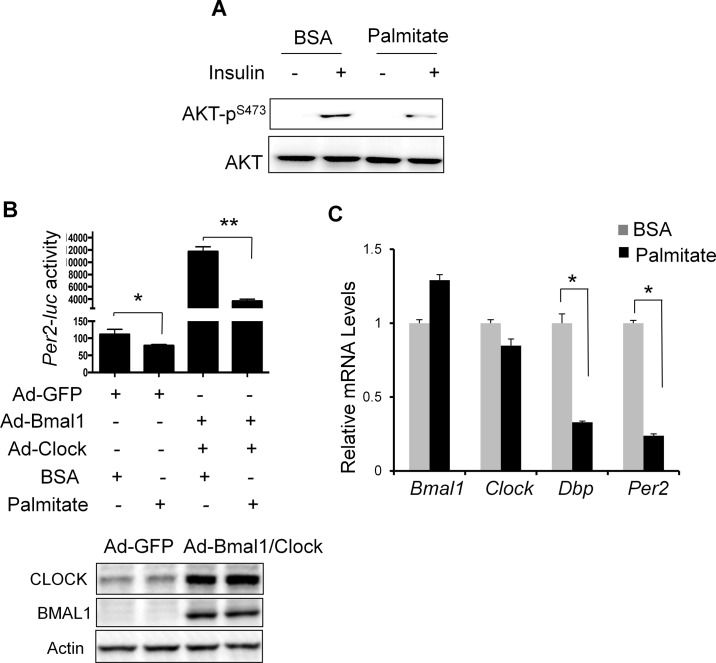
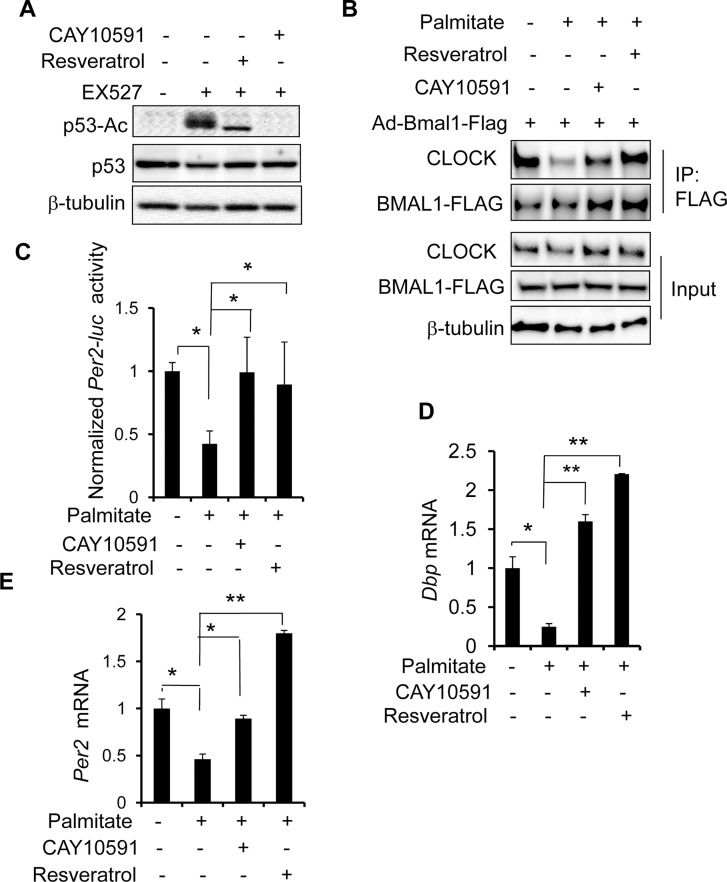
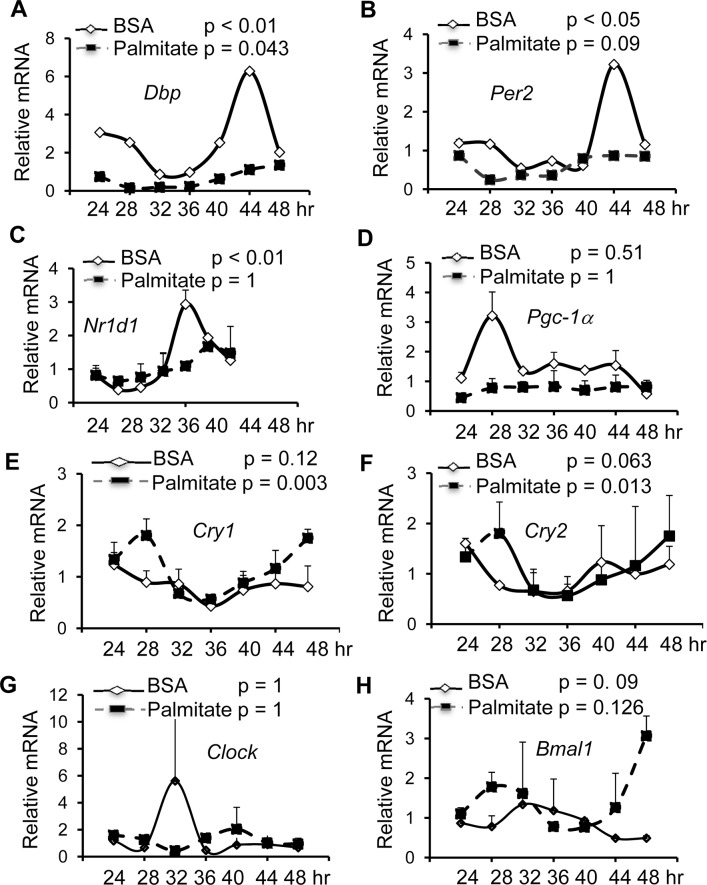
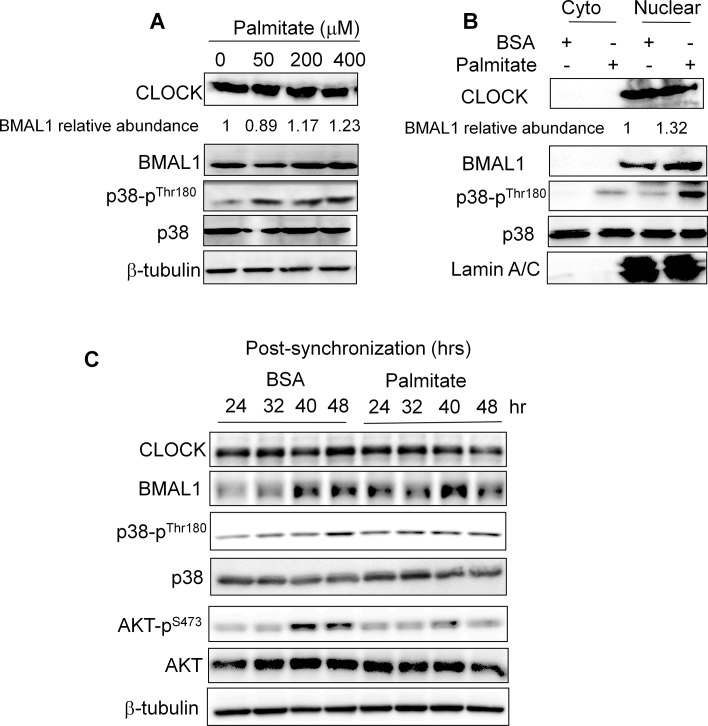
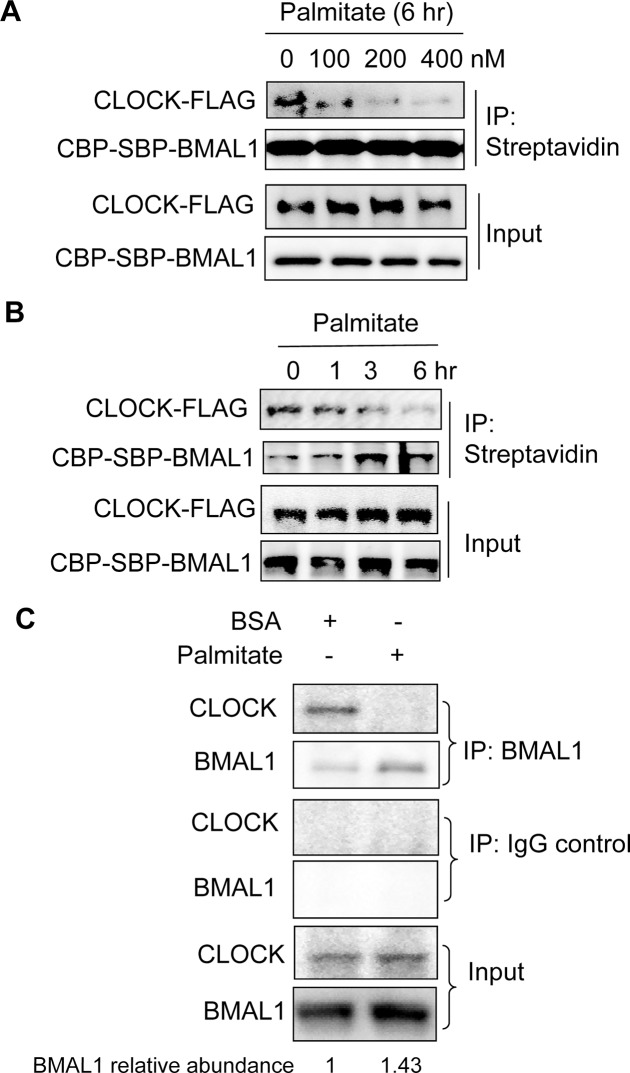
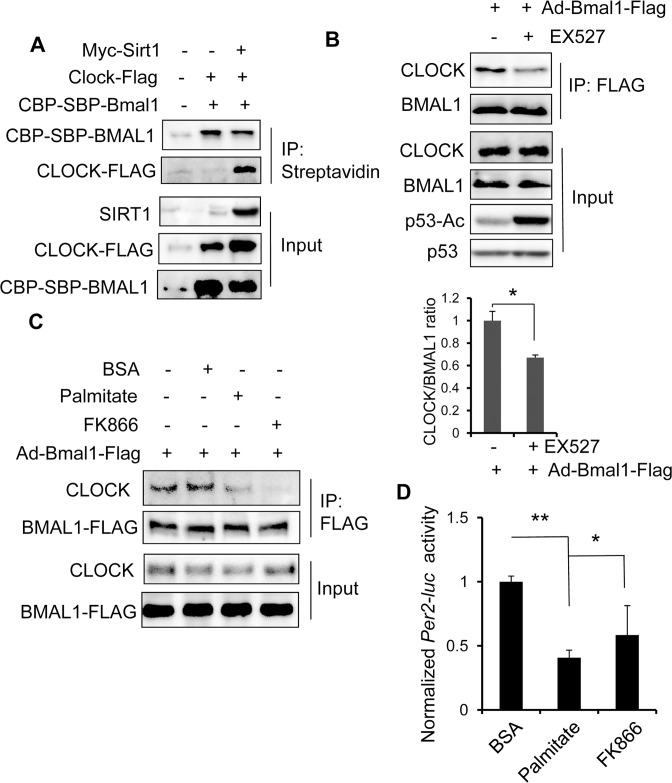
Elevated levels of serum saturated fatty acid palmitate have been shown to promote insulin resistance, increase cellular ROS production, and trigger cell apoptosis in hepatocytes during the development of obesity. However, it remains unclear whether palmitate directly impacts the circadian clock in hepatocytes, which coordinates nutritional inputs and hormonal signaling with downstream metabolic outputs. Here we presented evidence that the molecular clock is a novel target of palmitate in hepatocytes. Palmitate exposure at low dose inhibits the molecular clock activity and suppresses the cyclic expression of circadian targets including Dbp, Nr1d1 and Per2 in hepatocytes. Palmitate treatment does not seem to alter localization or reduce protein expression of BMAL1 and CLOCK, the two core components of the molecular clock in hepatocytes. Instead, palmitate destabilizes the protein-protein interaction between BMAL1-CLOCK in a dose and time-dependent manner. Furthermore, we showed that SIRT1 activators could reverse the inhibitory action of palmitate on BMAL1-CLOCK interaction and the clock gene expression, whereas inhibitors of NAD synthesis mimic the palmitate effects on the clock function. In summary, our findings demonstrated that palmitate inhibits the clock function by suppressing SIRT1 function in hepatocytes.
血清饱和脂肪酸棕榈酸水平升高已被证明在肥胖症发展过程中会促进胰岛素抵抗、增加肝细胞中的细胞活性氧生成并引发细胞凋亡。然而,尚不清楚棕榈酸是否直接影响肝细胞中的生物钟,生物钟可协调营养输入和激素信号与下游代谢输出。在此,我们提供证据表明分子生物钟是棕榈酸在肝细胞中的一个新靶点。低剂量棕榈酸暴露会抑制分子生物钟活性,并抑制肝细胞中包括Dbp、Nr1d1和Per2在内的生物钟靶点的周期性表达。棕榈酸处理似乎不会改变肝细胞中分子生物钟的两个核心成分BMAL1和CLOCK的定位或降低其蛋白表达。相反,棕榈酸以剂量和时间依赖性方式破坏BMAL1-CLOCK之间的蛋白质-蛋白质相互作用。此外,我们表明SIRT1激活剂可逆转棕榈酸对BMAL1-CLOCK相互作用和生物钟基因表达的抑制作用,而NAD合成抑制剂则模拟棕榈酸对生物钟功能的影响。总之,我们的研究结果表明,棕榈酸通过抑制肝细胞中的SIRT1功能来抑制生物钟功能。