Yvon Camille, Ramsden Conor M, Lane Amelia, Powner Michael B, da Cruz Lyndon, Coffey Peter J, Carr Amanda-Jayne F
The London Project to Cure Blindness, Division of ORBIT, Institute of Ophthalmology, University College London, 11-43 Bath Street, London EC1V 9EL, UK.
The London Project to Cure Blindness, Division of ORBIT, Institute of Ophthalmology, University College London, 11-43 Bath Street, London EC1V 9EL, UK ; NIHR Biomedical Research Centre at Moorfields Eye Hospital NHS Foundation Trust, UCL Institute of Ophthalmology, London, EC1V 2PD, UK.
Comput Struct Biotechnol J. 2015 May 6;13:382-9. doi: 10.1016/j.csbj.2015.05.001. eCollection 2015.
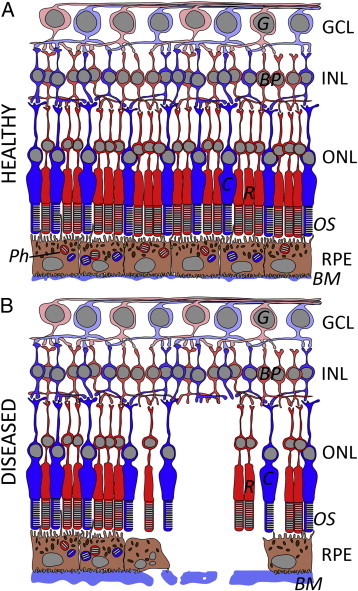
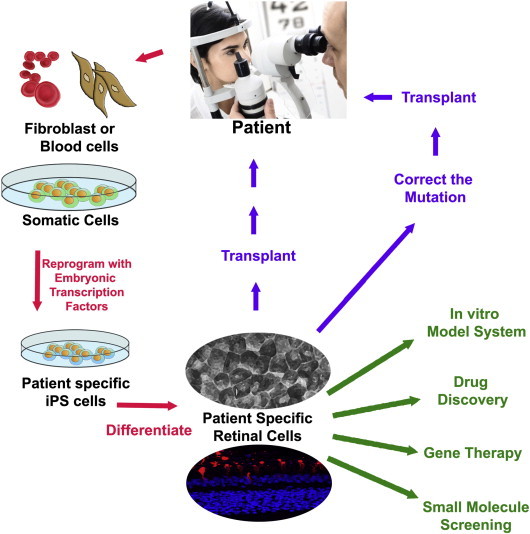
Retinal degeneration arises from the loss of photoreceptors or retinal pigment epithelium (RPE). It is one of the leading causes of irreversible blindness worldwide with limited effective treatment options. Generation of induced pluripotent stem cell (IPSC)-derived retinal cells and tissues from individuals with retinal degeneration is a rapidly evolving technology that holds a great potential for its use in disease modelling. IPSCs provide an ideal platform to investigate normal and pathological retinogenesis, but also deliver a valuable source of retinal cell types for drug screening and cell therapy. In this review, we will provide some examples of the ways in which IPSCs have been used to model diseases of the outer retina including retinitis pigmentosa (RP), Usher syndrome (USH), Leber congenital amaurosis (LCA), gyrate atrophy (GA), juvenile neuronal ceroid lipofuscinosis (NCL), Best vitelliform macular dystrophy (BVMD) and age related macular degeneration (AMD).
视网膜变性源于光感受器或视网膜色素上皮(RPE)的丧失。它是全球不可逆失明的主要原因之一,有效治疗选择有限。从患有视网膜变性的个体中生成诱导多能干细胞(iPSC)衍生的视网膜细胞和组织是一项快速发展的技术,在疾病建模方面具有巨大潜力。iPSC为研究正常和病理性视网膜发生提供了理想平台,同时也为药物筛选和细胞治疗提供了宝贵的视网膜细胞类型来源。在本综述中,我们将提供一些例子,说明iPSC如何被用于模拟外视网膜疾病,包括色素性视网膜炎(RP)、Usher综合征(USH)、莱伯先天性黑蒙(LCA)、回旋状萎缩(GA)、青少年神经元蜡样脂褐质沉积症(NCL)、Best卵黄样黄斑营养不良(BVMD)和年龄相关性黄斑变性(AMD)。