Chen Colleen P, Keown Christopher L, Jahedi Afrooz, Nair Aarti, Pflieger Mark E, Bailey Barbara A, Müller Ralph-Axel
Department of Psychology, Brain Development Imaging Laboratory, San Diego State University, San Diego, CA, USA ; Computational Science Research Center, San Diego State University, San Diego, CA, USA.
Department of Psychology, Brain Development Imaging Laboratory, San Diego State University, San Diego, CA, USA ; Department of Cognitive Science, University of California, San Diego, CA, USA.
Neuroimage Clin. 2015 Apr 9;8:238-45. doi: 10.1016/j.nicl.2015.04.002. eCollection 2015.
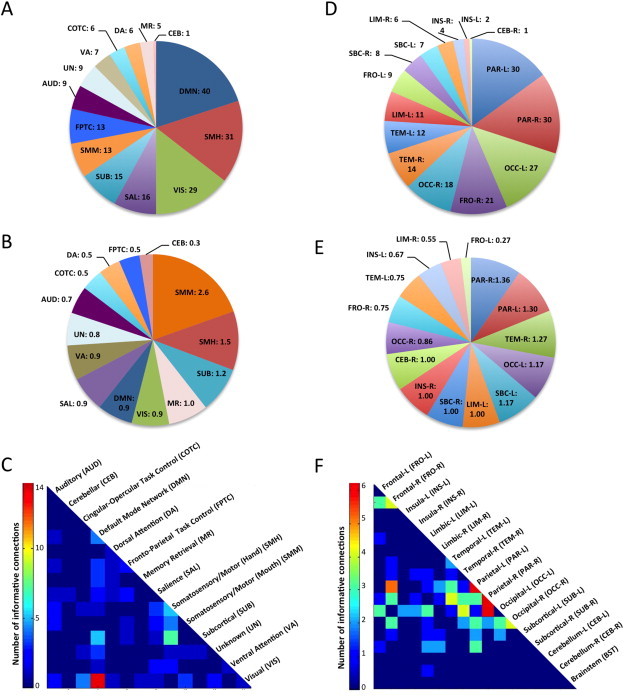
Despite consensus on the neurological nature of autism spectrum disorders (ASD), brain biomarkers remain unknown and diagnosis continues to be based on behavioral criteria. Growing evidence suggests that brain abnormalities in ASD occur at the level of interconnected networks; however, previous attempts using functional connectivity data for diagnostic classification have reached only moderate accuracy. We selected 252 low-motion resting-state functional MRI (rs-fMRI) scans from the Autism Brain Imaging Data Exchange (ABIDE) including typically developing (TD) and ASD participants (n = 126 each), matched for age, non-verbal IQ, and head motion. A matrix of functional connectivities between 220 functionally defined regions of interest was used for diagnostic classification, implementing several machine learning tools. While support vector machines in combination with particle swarm optimization and recursive feature elimination performed modestly (with accuracies for validation datasets <70%), diagnostic classification reached a high accuracy of 91% with random forest (RF), a nonparametric ensemble learning method. Among the 100 most informative features (connectivities), for which this peak accuracy was achieved, participation of somatosensory, default mode, visual, and subcortical regions stood out. Whereas some of these findings were expected, given previous findings of default mode abnormalities and atypical visual functioning in ASD, the prominent role of somatosensory regions was remarkable. The finding of peak accuracy for 100 interregional functional connectivities further suggests that brain biomarkers of ASD may be regionally complex and distributed, rather than localized.
尽管人们对自闭症谱系障碍(ASD)的神经学本质已达成共识,但大脑生物标志物仍不明确,诊断仍基于行为标准。越来越多的证据表明,ASD中的大脑异常发生在相互连接的网络层面;然而,以往利用功能连接数据进行诊断分类的尝试仅达到中等准确率。我们从自闭症脑成像数据交换库(ABIDE)中选取了252例低运动静息态功能磁共振成像(rs-fMRI)扫描数据,包括典型发育(TD)和ASD参与者(各126例),在年龄、非言语智商和头部运动方面进行了匹配。使用220个功能定义的感兴趣区域之间的功能连接矩阵进行诊断分类,应用了几种机器学习工具。虽然支持向量机结合粒子群优化和递归特征消除的表现一般(验证数据集的准确率<70%),但使用非参数集成学习方法随机森林(RF)进行诊断分类的准确率达到了91%。在实现这一最高准确率的100个最具信息量的特征(连接)中,体感区域、默认模式区域、视觉区域和皮层下区域的参与尤为突出。鉴于之前关于ASD中默认模式异常和非典型视觉功能的研究结果,这些发现中有一些是预期的,但体感区域的突出作用值得注意。100个区域间功能连接达到最高准确率的这一发现进一步表明,ASD的大脑生物标志物可能在区域上是复杂且分布广泛的,而非局限于某一部位。