Xing Kailin, Gu Bingxin, Zhang Ping, Wu Xianghua
Department of Medical Oncology, Fudan University Shanghai Cancer Center, 270 Dong-An Road, Shanghai, 200032, China.
Department of Oncology, Shanghai Medical College, Fudan University, 130 Dong-An Road, Shanghai, 200032, China.
BMC Immunol. 2015 Jun 26;16:39. doi: 10.1186/s12865-015-0103-2.
Programmed cell death 1 (PD-1) is a key cell-surface receptor of CD28 superfamily that triggers inhibitory pathways to attenuate T-cell responses and promote T-cell tolerance. As a crucial role in tumor immunity, PD-1 has been a focus of studies in anti-cancer therapy. It has been approved that tumors could exploit PD-1-dependent immune suppression for immune evasion. Considering the wide use of glucocorticoids (GCs) in anti-cancer therapy and their immunosuppressive effects, we explored whether GCs could influence the expression of PD-1.
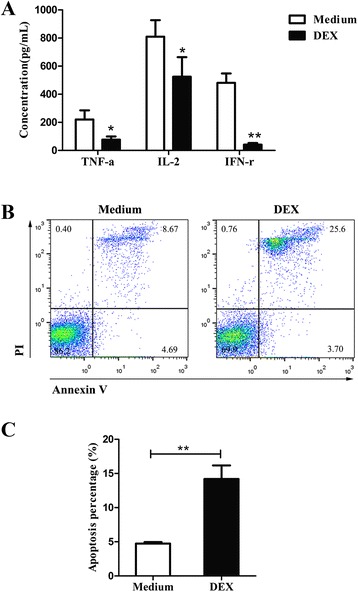
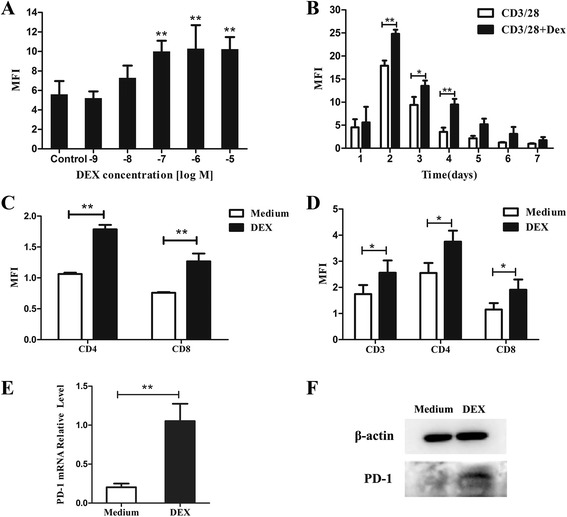
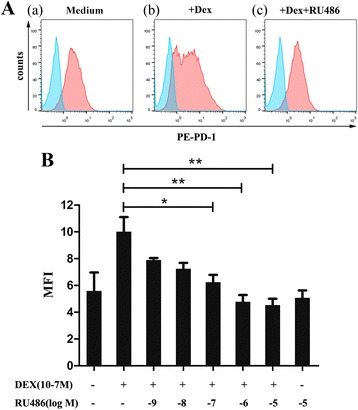
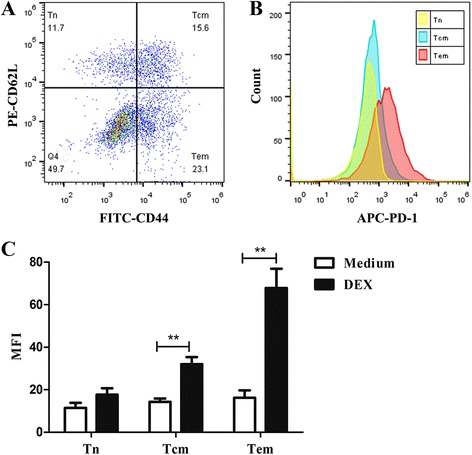
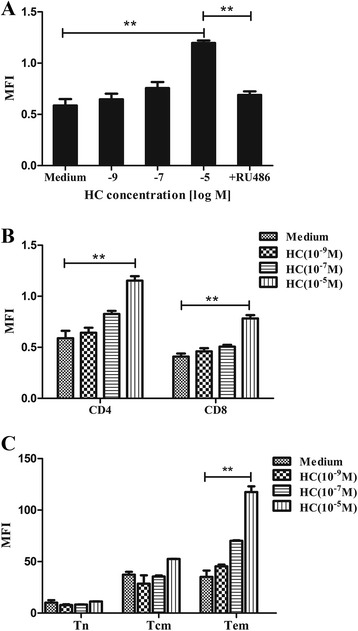
In our study, we used dexamethasone (DEX) as a model glucocorticoid and demonstrated that DEX could enhance PD-1 expression in a dose-dependent manner. The effects were completely inhibited by the glucocorticoid receptor (GR) antagonist mifepristone (RU486), indicating that the effect of DEX on PD-1 is mediated through GR. We further found the sensitivity to DEX-induced upregulation of PD-1 expression had a significant difference between different T cell subsets, with memory T cells more susceptible to this effect. We also showed that DEX could suppress T cell functions via inhibition of cytokines production such as IL-2, IFN-γ, TNF-α and induction of apoptosis of T cells.
Our findings suggest a novel way by which DEX suppress the function of activated T lymphocytes by enhancing expression of PD-1 and provide an insight into the optimum clinical application of GCs.
程序性细胞死亡蛋白1(PD-1)是CD28超家族的关键细胞表面受体,可触发抑制性通路以减弱T细胞反应并促进T细胞耐受。作为肿瘤免疫中的关键角色,PD-1一直是抗癌治疗研究的焦点。肿瘤可利用PD-1依赖性免疫抑制进行免疫逃逸,这一点已得到证实。鉴于糖皮质激素(GCs)在抗癌治疗中的广泛应用及其免疫抑制作用,我们探讨了GCs是否会影响PD-1的表达。
在我们的研究中,我们使用地塞米松(DEX)作为糖皮质激素模型,证明DEX可呈剂量依赖性地增强PD-1表达。糖皮质激素受体(GR)拮抗剂米非司酮(RU486)可完全抑制该作用,表明DEX对PD-1的作用是通过GR介导的。我们进一步发现,不同T细胞亚群对DEX诱导的PD-1表达上调的敏感性存在显著差异,记忆T细胞对此作用更敏感。我们还表明,DEX可通过抑制细胞因子如IL-2、IFN-γ、TNF-α的产生以及诱导T细胞凋亡来抑制T细胞功能。
我们的研究结果提示了一种新的方式,即DEX通过增强PD-1表达来抑制活化T淋巴细胞的功能,并为GCs的最佳临床应用提供了见解。