Heimann Emilia, Nyman Margareta, Degerman Eva
Department of Experimental Medical Science; Lund University ; Lund, Sweden.
Department of Applied Nutrition and Food Chemistry; Lund University ; Lund, Sweden.
Adipocyte. 2014 Nov 14;4(2):81-8. doi: 10.4161/21623945.2014.960694. eCollection 2015 Apr-Jun.
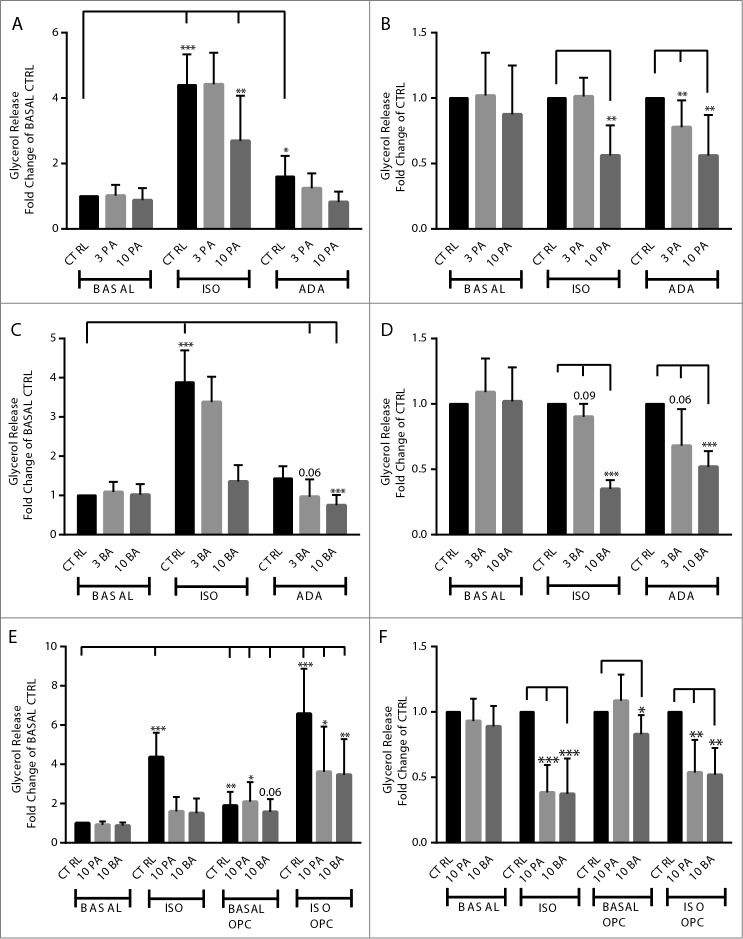
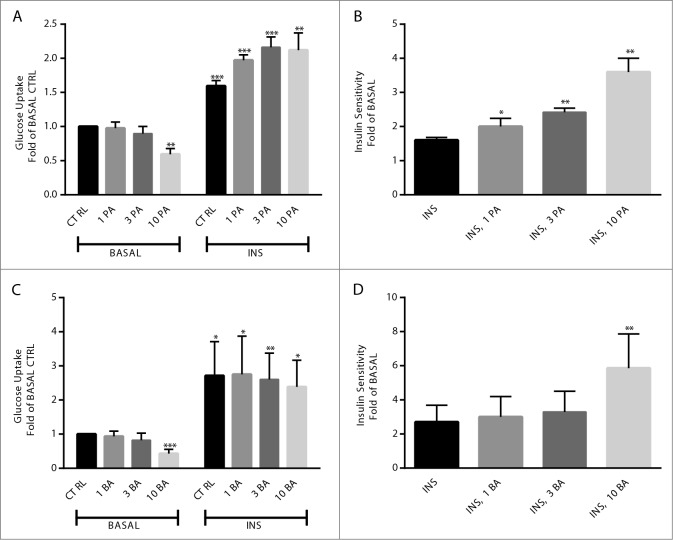
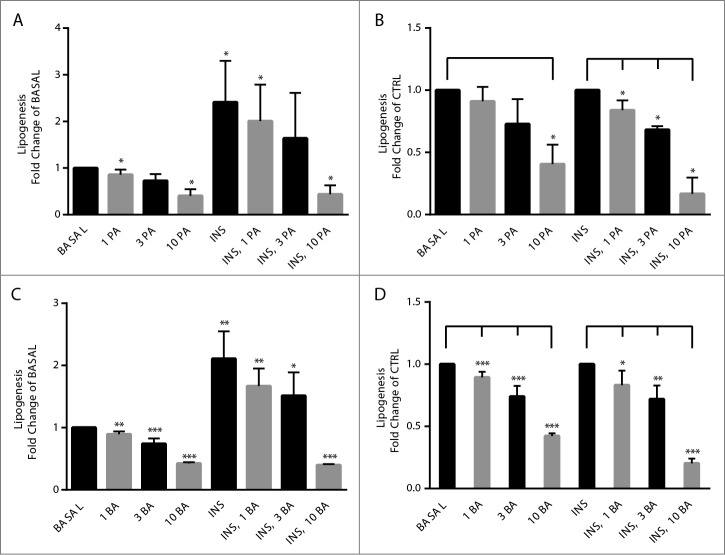
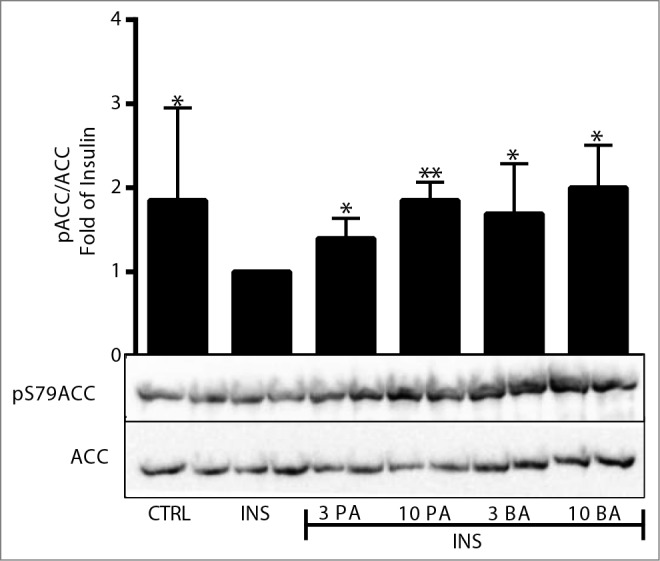
Fermentation of dietary fibers by colonic microbiota generates short-chain fatty acids (SCFAs), e.g., propionic acid and butyric acid, which have been described to have "anti-obesity properties" by ameliorating fasting glycaemia, body weight and insulin tolerance in animal models. In the present study, we therefore investigate if propionic acid and butyric acid have effects on lipolysis, de novo lipogenesis and glucose uptake in primary rat adipocytes. We show that both propionic acid and butyric acid inhibit isoproterenol- and adenosine deaminase-stimulated lipolysis as well as isoproterenol-stimulated lipolysis in the presence of a phosphodiesterase (PDE3) inhibitor. In addition, we show that propionic acid and butyric acid inhibit basal and insulin-stimulated de novo lipogenesis, which is associated with increased phosphorylation and thus inhibition of acetyl CoA carboxylase, a rate-limiting enzyme in fatty acid synthesis. Furthermore, we show that propionic acid and butyric acid increase insulin-stimulated glucose uptake. To conclude, our study shows that SCFAs have effects on fat storage and mobilization as well as glucose uptake in rat primary adipocytes. Thus, the SCFAs might contribute to healthier adipocytes and subsequently also to improved energy metabolism with for example less circulating free fatty acids, which is beneficial in the context of obesity and type 2 diabetes.
结肠微生物群对膳食纤维的发酵产生短链脂肪酸(SCFAs),例如丙酸和丁酸,在动物模型中,它们通过改善空腹血糖、体重和胰岛素耐受性而被描述为具有“抗肥胖特性”。因此,在本研究中,我们调查了丙酸和丁酸对原代大鼠脂肪细胞的脂肪分解、从头脂肪生成和葡萄糖摄取是否有影响。我们发现,在磷酸二酯酶(PDE3)抑制剂存在的情况下,丙酸和丁酸均抑制异丙肾上腺素和腺苷脱氨酶刺激的脂肪分解以及异丙肾上腺素刺激的脂肪分解。此外,我们发现丙酸和丁酸抑制基础和胰岛素刺激的从头脂肪生成,这与磷酸化增加从而抑制乙酰辅酶A羧化酶有关,乙酰辅酶A羧化酶是脂肪酸合成中的限速酶。此外,我们发现丙酸和丁酸增加胰岛素刺激的葡萄糖摄取。总之,我们的研究表明,短链脂肪酸对大鼠原代脂肪细胞的脂肪储存和动员以及葡萄糖摄取有影响。因此,短链脂肪酸可能有助于形成更健康的脂肪细胞,进而也有助于改善能量代谢,例如减少循环游离脂肪酸,这在肥胖和2型糖尿病的情况下是有益的。