Wang Jinhui, Wang Xindi, Xia Mingrui, Liao Xuhong, Evans Alan, He Yong
State Key Laboratory of Cognitive Neuroscience and Learning and IDG/McGovern Institute for Brain Research, Beijing Normal University Beijing, China ; Center for Cognition and Brain Disorders, Hangzhou Normal University Hangzhou, China ; Zhejiang Key Laboratory for Research in Assessment of Cognitive Impairments Hangzhou, China.
State Key Laboratory of Cognitive Neuroscience and Learning and IDG/McGovern Institute for Brain Research, Beijing Normal University Beijing, China.
Front Hum Neurosci. 2015 Jun 30;9:386. doi: 10.3389/fnhum.2015.00386. eCollection 2015.
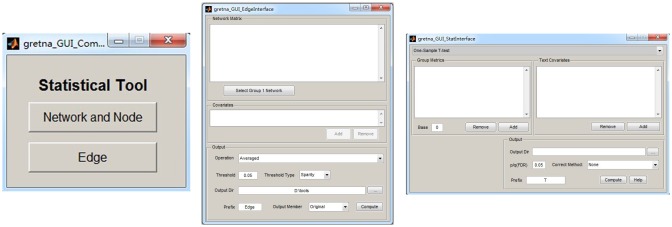
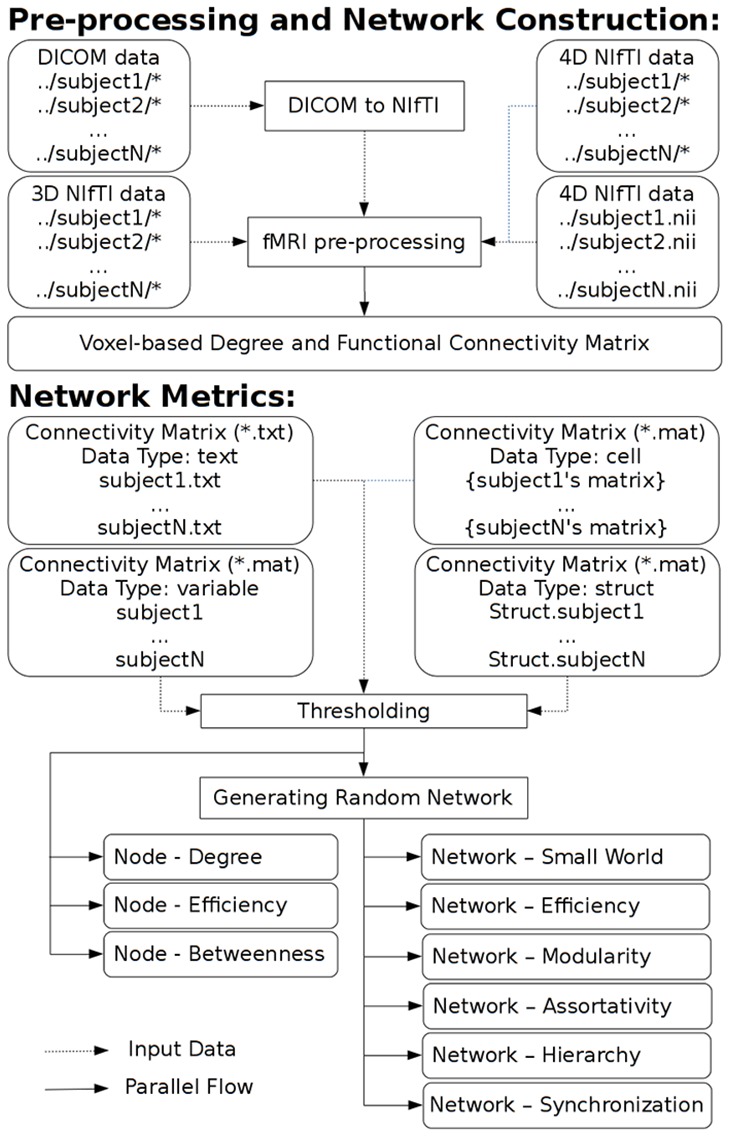
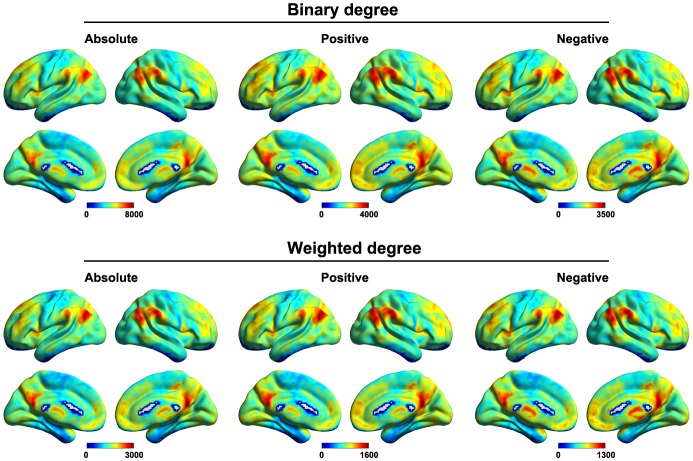
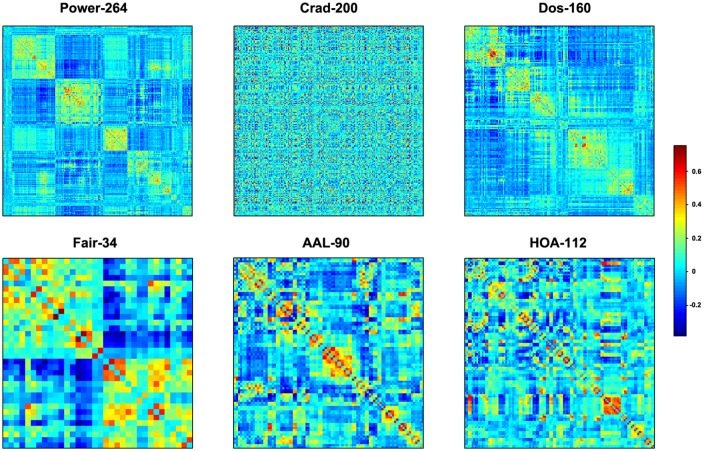
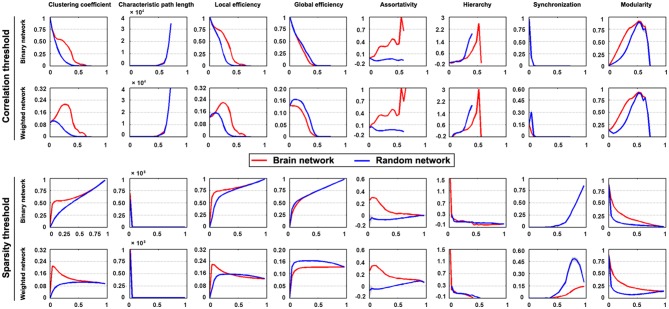
Recent studies have suggested that the brain's structural and functional networks (i.e., connectomics) can be constructed by various imaging technologies (e.g., EEG/MEG; structural, diffusion and functional MRI) and further characterized by graph theory. Given the huge complexity of network construction, analysis and statistics, toolboxes incorporating these functions are largely lacking. Here, we developed the GRaph thEoreTical Network Analysis (GRETNA) toolbox for imaging connectomics. The GRETNA contains several key features as follows: (i) an open-source, Matlab-based, cross-platform (Windows and UNIX OS) package with a graphical user interface (GUI); (ii) allowing topological analyses of global and local network properties with parallel computing ability, independent of imaging modality and species; (iii) providing flexible manipulations in several key steps during network construction and analysis, which include network node definition, network connectivity processing, network type selection and choice of thresholding procedure; (iv) allowing statistical comparisons of global, nodal and connectional network metrics and assessments of relationship between these network metrics and clinical or behavioral variables of interest; and (v) including functionality in image preprocessing and network construction based on resting-state functional MRI (R-fMRI) data. After applying the GRETNA to a publicly released R-fMRI dataset of 54 healthy young adults, we demonstrated that human brain functional networks exhibit efficient small-world, assortative, hierarchical and modular organizations and possess highly connected hubs and that these findings are robust against different analytical strategies. With these efforts, we anticipate that GRETNA will accelerate imaging connectomics in an easy, quick and flexible manner. GRETNA is freely available on the NITRC website.
最近的研究表明,大脑的结构和功能网络(即连接组学)可以通过各种成像技术(如脑电图/脑磁图;结构、扩散和功能磁共振成像)构建,并通过图论进一步表征。鉴于网络构建、分析和统计的巨大复杂性,很大程度上缺乏包含这些功能的工具箱。在此,我们开发了用于成像连接组学的图论网络分析(GRETNA)工具箱。GRETNA具有以下几个关键特性:(i)一个基于Matlab的开源、跨平台(Windows和UNIX操作系统)软件包,带有图形用户界面(GUI);(ii)允许对全局和局部网络属性进行拓扑分析,具有并行计算能力,独立于成像模态和物种;(iii)在网络构建和分析的几个关键步骤中提供灵活操作,包括网络节点定义、网络连通性处理、网络类型选择和阈值处理程序选择;(iv)允许对全局、节点和连接网络指标进行统计比较,并评估这些网络指标与感兴趣的临床或行为变量之间的关系;以及(v)包括基于静息态功能磁共振成像(R-fMRI)数据的图像预处理和网络构建功能。将GRETNA应用于公开发布的54名健康年轻成年人的R-fMRI数据集后,我们证明人类大脑功能网络呈现出高效的小世界、 assortative、分层和模块化组织,并拥有高度连接的枢纽,并且这些发现对于不同的分析策略具有稳健性。通过这些努力,我们预计GRETNA将以简单、快速和灵活的方式加速成像连接组学的发展。GRETNA可在NITRC网站上免费获取。