Moreno-García Miguel, Vargas Valeria, Ramírez-Bello Inci, Hernández-Martínez Guadalupe, Lanz-Mendoza Humberto
Centro de Investigaciones Sobre Enfermedades Infecciosas, Instituto Nacional de Salud Pública, Av. Universidad 655. Sta. María Ahuacatitlán, 62100, Cuernavaca, Morelos, México.
Centro de Investigaciones Sobre Enfermedades Infecciosas, Instituto Nacional de Salud Pública, Av. Universidad 655. Sta. María Ahuacatitlán, 62100, Cuernavaca, Morelos, México; Posgrado en Ciencias Biológicas, Universidad Nacional Autónoma de México, Edificio B, 1° Piso, Circuito de Posgrados, Ciudad Universitaria, Coyoacán 04510, México D.F.
PLoS One. 2015 Jul 16;10(7):e0133240. doi: 10.1371/journal.pone.0133240. eCollection 2015.
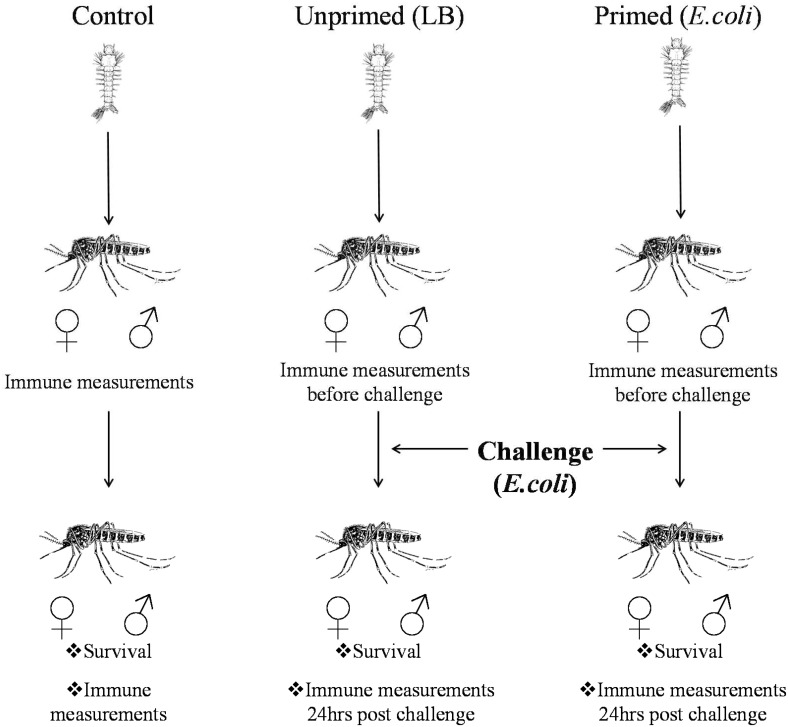
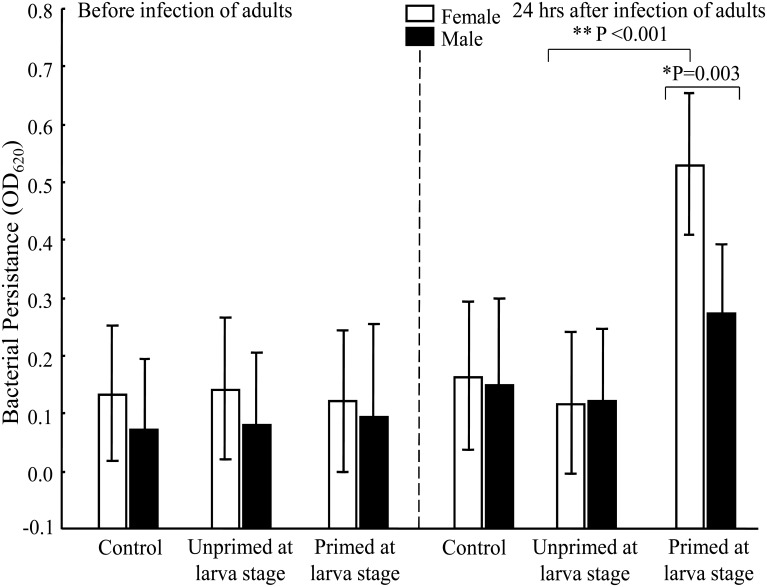
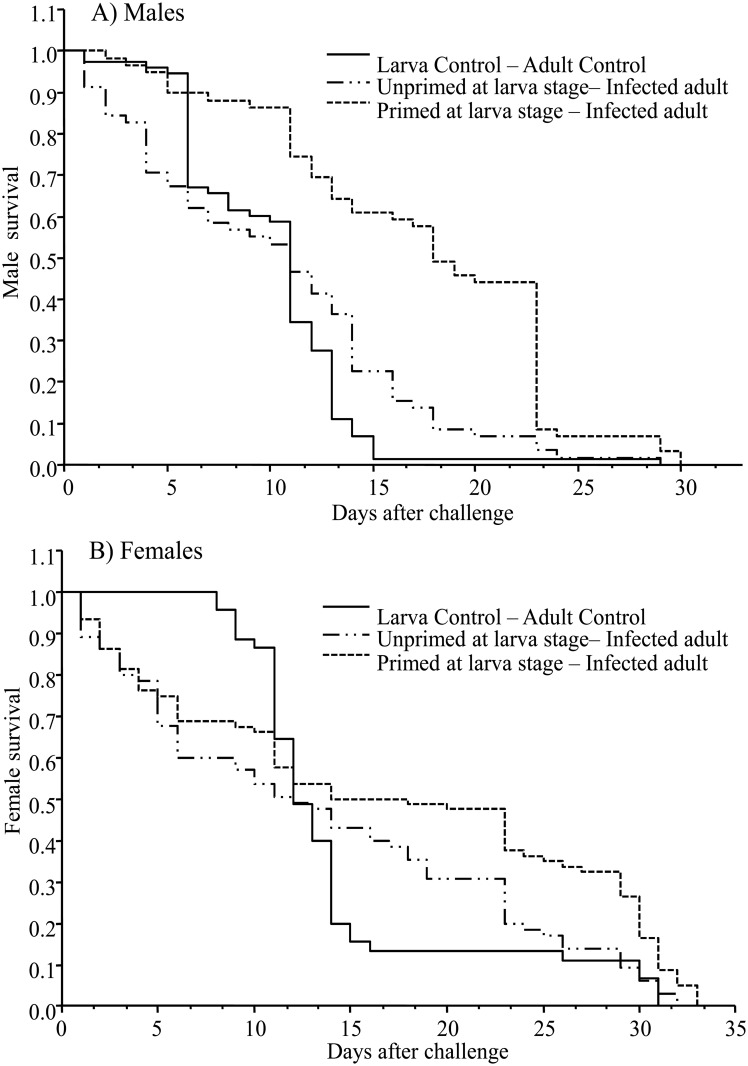
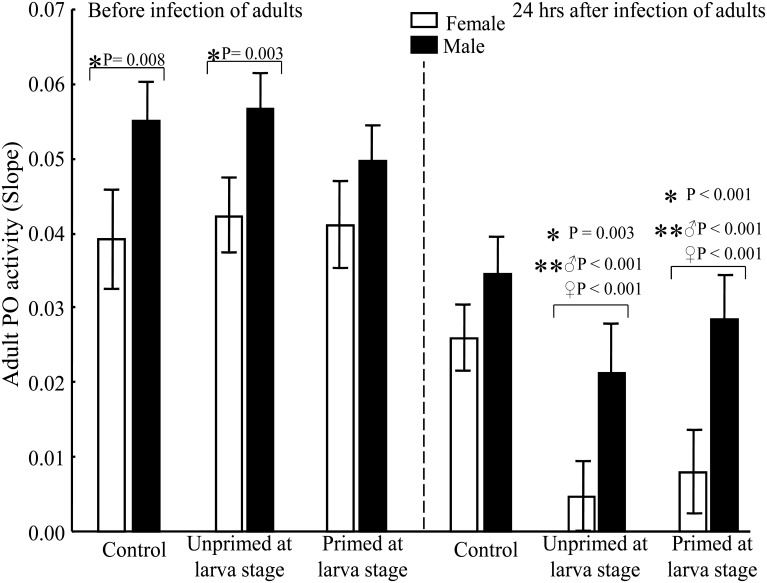
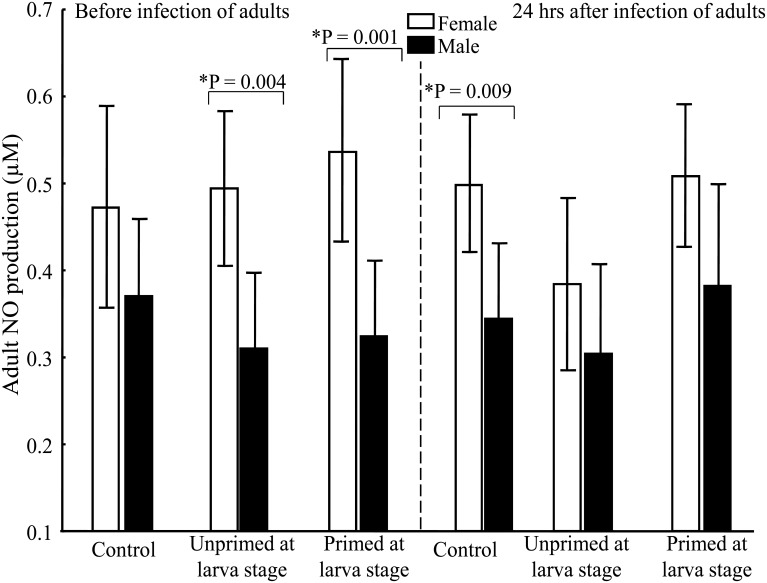
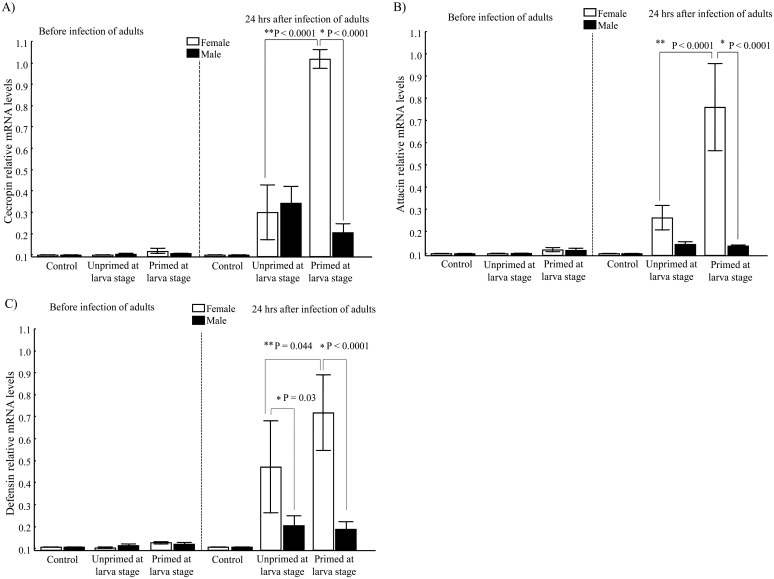
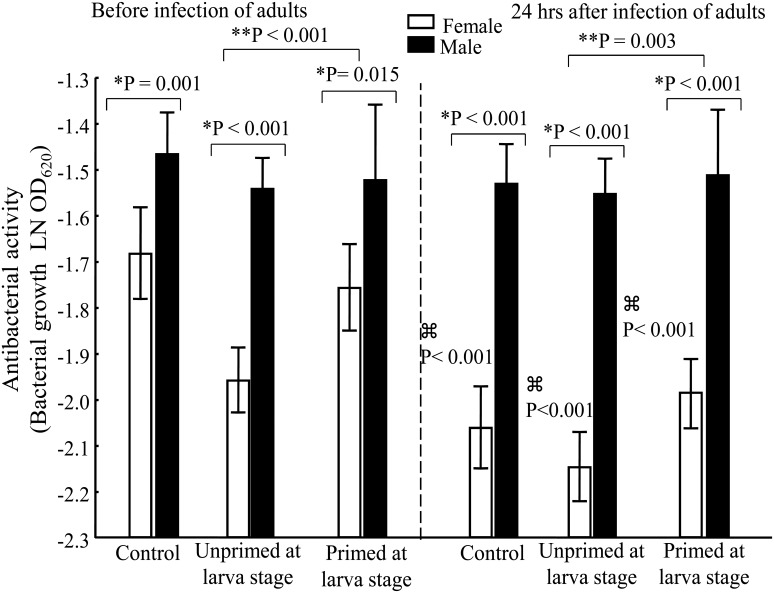
Gender differences in the immune response of insects are driven by natural selection for females and sexual selection for males. These natural forces entail a multitude of extrinsic and intrinsic factors involved in a genotype-environment interaction that results in sex-biased expression of the genes shared by males and females. However, little is known about how an infection at a particular ontogenetic stage may influence later stages, or how it may impact sexual immune dimorphism. Using Aedes aegypti mosquitoes, the aim of the present study was to analyze the effect of a bacterial exposure at the larval stage on adult immunity in males and females. The parameters measured were phenoloxidase activity, nitric oxide production, antimicrobial activity, and the antimicrobial peptide transcript response. As a measure of the immune response success, the persistence of injected bacteria was also evaluated. The results show that males, as well as females, were able to enhance survival in the adult stage as a result of being exposed at the larval stage, which indicates a priming effect. Moreover, there was a differential gender immune response, evidenced by higher PO activity in males as well as higher NO production and greater antimicrobial activity in females. The greater bacterial persistence in females suggests a gender-specific strategy for protection after a previous experience with an elicitor. Hence, this study provides a primary characterization of the complex and gender-specific immune response of male and female adults against a bacterial challenge in mosquitoes primed at an early ontogenetic stage.
昆虫免疫反应中的性别差异是由雌性的自然选择和雄性的性选择驱动的。这些自然力量涉及众多外在和内在因素,它们参与了基因型与环境的相互作用,导致雄性和雌性共有的基因出现性别偏向性表达。然而,对于特定个体发育阶段的感染如何影响后期阶段,或者它如何影响性免疫二态性,人们知之甚少。本研究以埃及伊蚊为对象,旨在分析幼虫期接触细菌对成年雄性和雌性蚊子免疫力的影响。所测量的参数包括酚氧化酶活性、一氧化氮产生量、抗菌活性以及抗菌肽转录反应。作为免疫反应成功与否的衡量指标,还评估了注射细菌的持久性。结果表明,雄性和雌性蚊子在幼虫期接触细菌后,成年期的存活率均有所提高,这表明存在一种启动效应。此外,存在性别差异的免疫反应,表现为雄性的酚氧化酶活性较高,而雌性的一氧化氮产生量较高且抗菌活性更强。雌性体内细菌的持久性更强,这表明在经历过诱导物刺激后,雌性采取了一种性别特异性的保护策略。因此,本研究初步刻画了在个体发育早期受到启动的成年雄性和雌性蚊子针对细菌挑战的复杂且具有性别特异性的免疫反应。