
汗孔角化症中甲羟戊酸途径的基因组变异
Genomic variations of the mevalonate pathway in porokeratosis.
作者信息
Zhang Zhenghua, Li Caihua, Wu Fei, Ma Ruixiao, Luan Jing, Yang Feng, Liu Weida, Wang Li, Zhang Shoumin, Liu Yan, Gu Jun, Hua Wenlian, Fan Min, Peng Hua, Meng Xuemei, Song Ningjing, Bi Xinling, Gu Chaoying, Zhang Zhen, Huang Qiong, Chen Lianjun, Xiang Leihong, Xu Jinhua, Zheng Zhizhong, Jiang Zhengwen
机构信息
Department of Dermatology, Huashan Hospital, Shanghai Medical College of Fudan University, Shanghai, China.
School of Life Sciences, Fudan University, Shanghai, China.
出版信息
Elife. 2015 Jul 23;4:e06322. doi: 10.7554/eLife.06322.
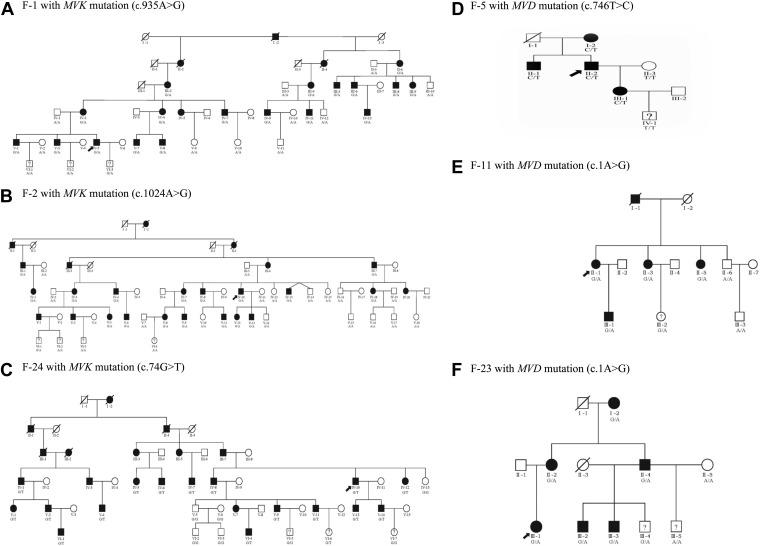
Porokeratosis (PK) is a heterogeneous group of keratinization disorders. No causal genes except MVK have been identified, even though the disease was linked to several genomic loci. Here, we performed massively parallel sequencing and exonic CNV screening of 12 isoprenoid genes in 134 index PK patients (61 familial and 73 sporadic) and identified causal mutations in three novel genes (PMVK, MVD, and FDPS) in addition to MVK in the mevalonate pathway. Allelic expression imbalance (AEI) assays were performed in 13 lesional tissues. At least one mutation in one of the four genes in the mevalonate pathway was found in 60 (98%) familial and 53 (73%) sporadic patients, which suggests that isoprenoid biosynthesis via the mevalonate pathway may play a role in the pathogenesis of PK. Significantly reduced expression of the wild allele was common in lesional tissues due to gene conversion or some other unknown mechanism. A G-to-A RNA editing was observed in one lesional tissue without AEI. In addition, we observed correlations between the mutations in the four mevalonate pathway genes and clinical manifestations in the PK patients, which might support a new and simplified classification of PK under the guidance of genetic testing.
斑状汗孔角化症(PK)是一组异质性角化障碍疾病。尽管该疾病与多个基因组位点相关,但除了甲羟戊酸激酶(MVK)外,尚未确定其他致病基因。在此,我们对134例PK患者(61例家族性和73例散发性)的12个类异戊二烯基因进行了大规模平行测序和外显子拷贝数变异(CNV)筛查,除了甲羟戊酸途径中的MVK外,还在三个新基因(磷酸甲羟戊酸激酶(PMVK)、甲羟戊酸脱羧酶(MVD)和法尼基焦磷酸合酶(FDPS))中鉴定出致病突变。在13个病变组织中进行了等位基因表达失衡(AEI)检测。在60例(98%)家族性和53例(73%)散发性患者中发现甲羟戊酸途径的四个基因中至少有一个发生突变,这表明通过甲羟戊酸途径的类异戊二烯生物合成可能在PK的发病机制中起作用。由于基因转换或其他未知机制,野生等位基因的表达在病变组织中显著降低很常见。在一个没有AEI的病变组织中观察到了从鸟嘌呤(G)到腺嘌呤(A)的RNA编辑。此外,我们观察到甲羟戊酸途径四个基因的突变与PK患者临床表现之间的相关性,这可能支持在基因检测指导下对PK进行新的简化分类。




 Zotero 插件