Cebola Inês, Custodio Joaquin, Muñoz Mar, Díez-Villanueva Anna, Paré Laia, Prieto Patricia, Aussó Susanna, Coll-Mulet Llorenç, Boscá Lisardo, Moreno Victor, Peinado Miguel A
Institute of Predictive and Personalized Medicine of Cancer (IMPPC, Ctra Can Ruti, Cami de les Escoles, Badalona, 08916 Spain ; Current address: Department of Medicine, Imperial College London, London, UK.
Institute of Predictive and Personalized Medicine of Cancer (IMPPC, Ctra Can Ruti, Cami de les Escoles, Badalona, 08916 Spain ; Current address: Science for Life Laboratory, Department of Medical Biochemistry and Biophysics, Karolinska Institutet, Stockholm, Sweden.
Clin Epigenetics. 2015 Jul 24;7(1):74. doi: 10.1186/s13148-015-0110-4. eCollection 2015.
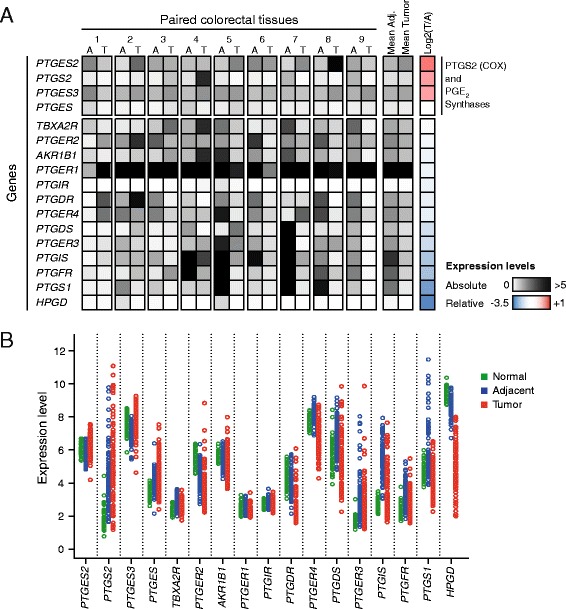
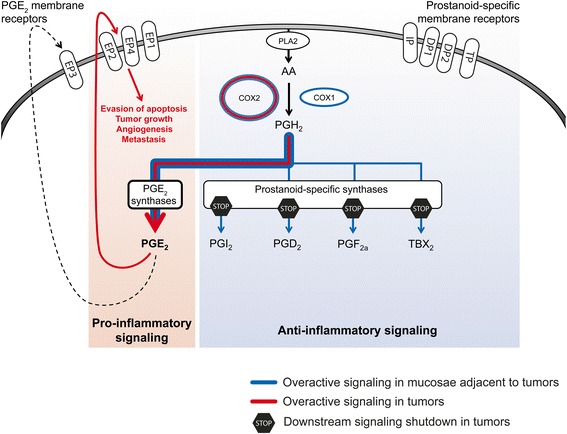
Misregulation of the PTGS (prostaglandin endoperoxide synthase, also known as cyclooxygenase or COX) pathway may lead to the accumulation of pro-inflammatory signals, which constitutes a hallmark of cancer. To get insight into the role of this signaling pathway in colorectal cancer (CRC), we have characterized the transcriptional and epigenetic landscapes of the PTGS pathway genes in normal and cancer cells.
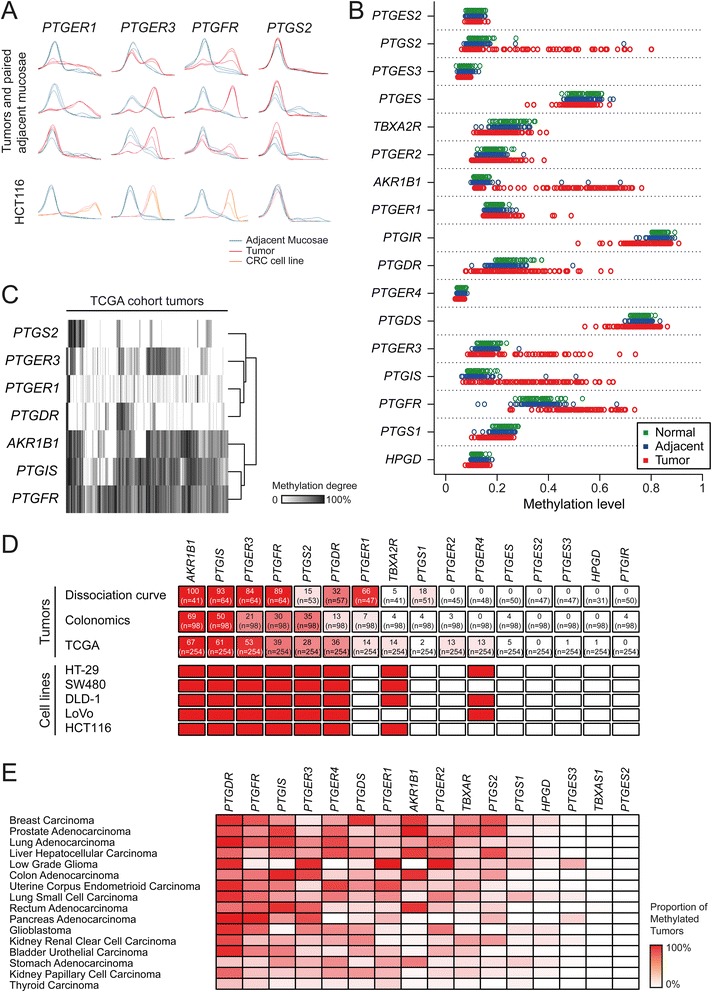
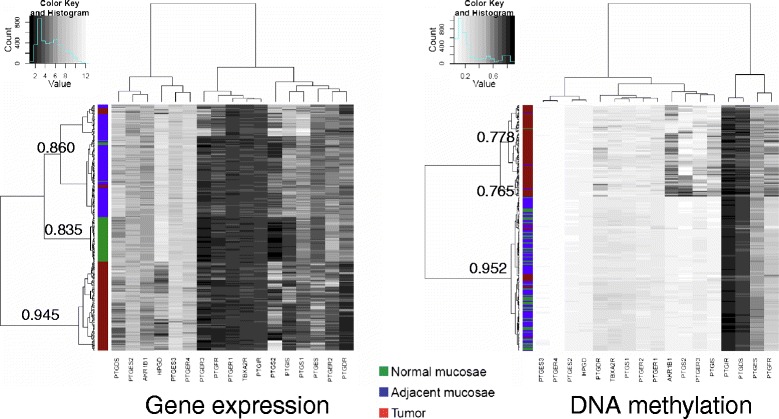
Data from four independent series of CRC patients (502 tumors including adenomas and carcinomas and 222 adjacent normal tissues) and two series of colon mucosae from 69 healthy donors have been included in the study. Gene expression was analyzed by real-time PCR and Affymetrix U219 arrays. DNA methylation was analyzed by bisulfite sequencing, dissociation curves, and HumanMethylation450K arrays. Most CRC patients show selective transcriptional deregulation of the enzymes involved in the synthesis of prostanoids and their receptors in both tumor and its adjacent mucosa. DNA methylation alterations exclusively affect the tumor tissue (both adenomas and carcinomas), redirecting the transcriptional deregulation to activation of prostaglandin E2 (PGE2) function and blockade of other biologically active prostaglandins. In particular, PTGIS, PTGER3, PTGFR, and AKR1B1 were hypermethylated in more than 40 % of all analyzed tumors.
The transcriptional and epigenetic profiling of the PTGS pathway provides important clues on the biology of the tumor and its microenvironment. This analysis renders candidate markers with potential clinical applicability in risk assessment and early diagnosis and for the design of new therapeutic strategies.
前列腺素内过氧化物合酶(PTGS,也称为环氧化酶或COX)信号通路失调可能导致促炎信号积累,这是癌症的一个标志。为深入了解该信号通路在结直肠癌(CRC)中的作用,我们对正常细胞和癌细胞中PTGS通路基因的转录和表观遗传图谱进行了表征。
本研究纳入了来自四个独立系列的CRC患者(502个肿瘤,包括腺瘤和癌以及222个相邻正常组织)和来自69名健康供体的两个系列结肠黏膜的数据。通过实时PCR和Affymetrix U219芯片分析基因表达。通过亚硫酸氢盐测序、解离曲线和HumanMethylation450K芯片分析DNA甲基化。大多数CRC患者在肿瘤及其相邻黏膜中均表现出参与前列腺素合成的酶及其受体的选择性转录失调。DNA甲基化改变仅影响肿瘤组织(腺瘤和癌),将转录失调转向前列腺素E2(PGE2)功能激活和其他生物活性前列腺素的阻断。特别是,在所有分析的肿瘤中,超过40%的肿瘤中PTGIS、PTGER3、PTGFR和AKR1B1发生了高甲基化。
PTGS通路的转录和表观遗传谱为肿瘤及其微环境的生物学提供了重要线索。该分析产生了在风险评估、早期诊断以及新治疗策略设计中具有潜在临床适用性的候选标志物。