Sprague William W, Cooper Emily A, Tošić Ivana, Banks Martin S
Vision Science Graduate Group, University of California, Berkeley, Berkeley, CA 94720, USA. ; School of Optometry, University of California, Berkeley, Berkeley, CA 94720, USA.
Helen Wills Neuroscience Institute, University of California, Berkeley, Berkeley, CA 94720, USA.
Sci Adv. 2015 May;1(4). doi: 10.1126/sciadv.1400254.
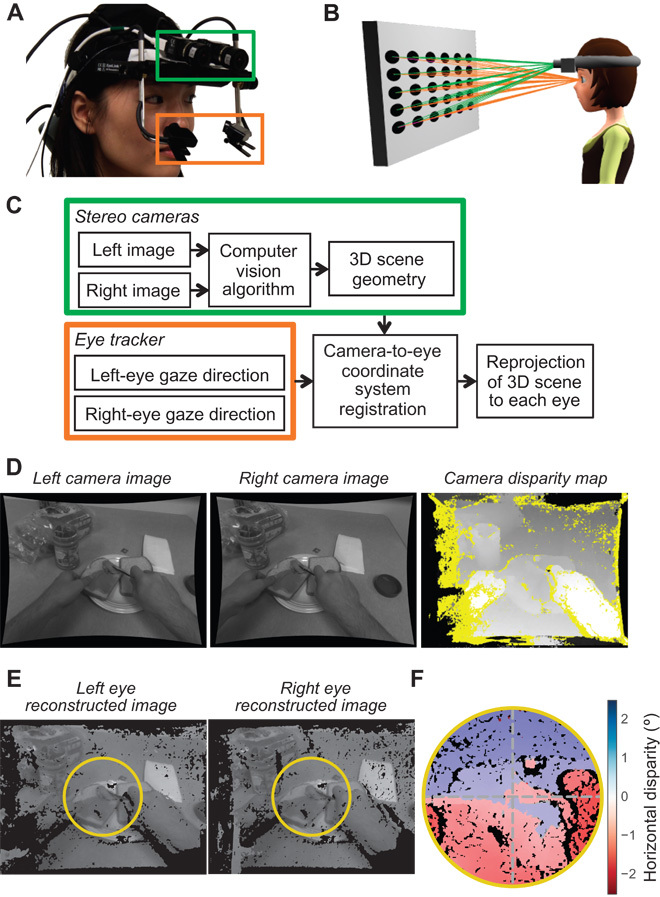
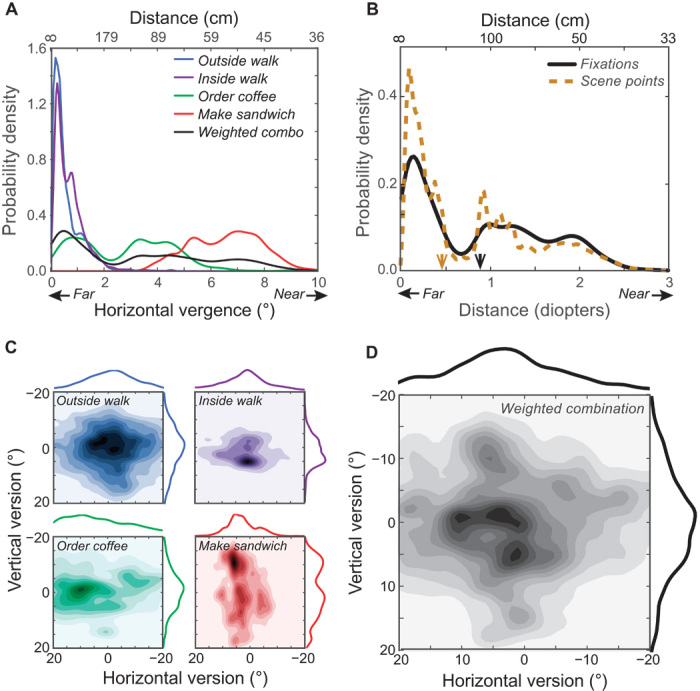
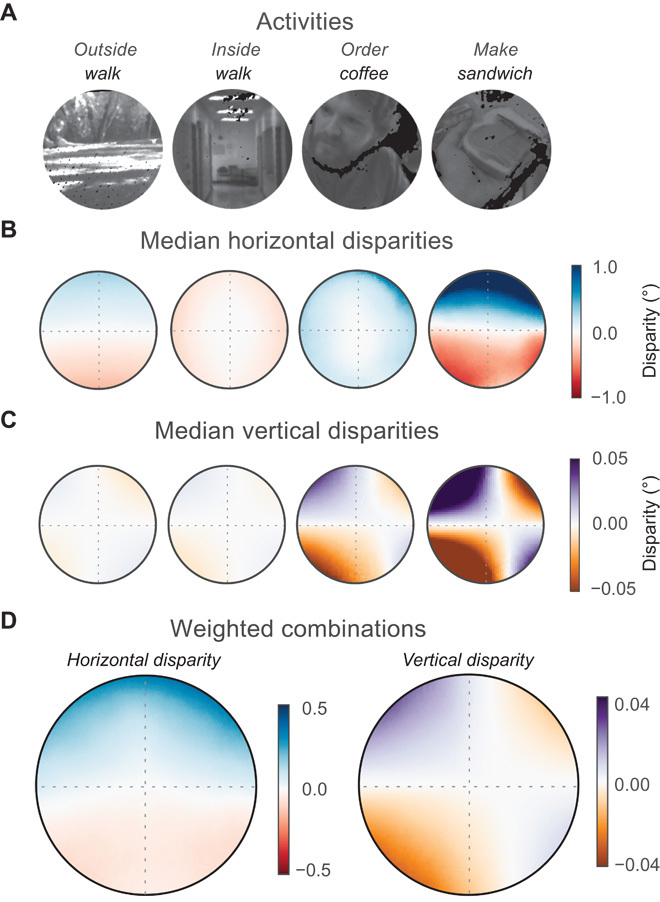
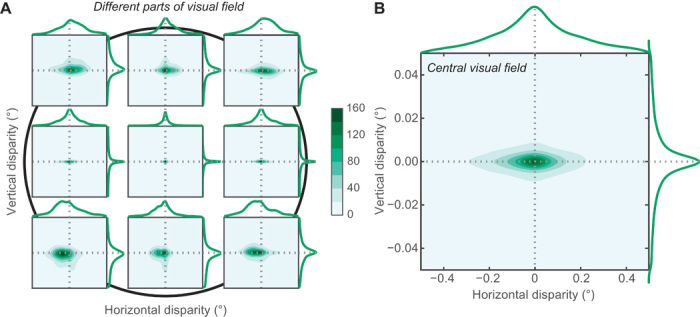
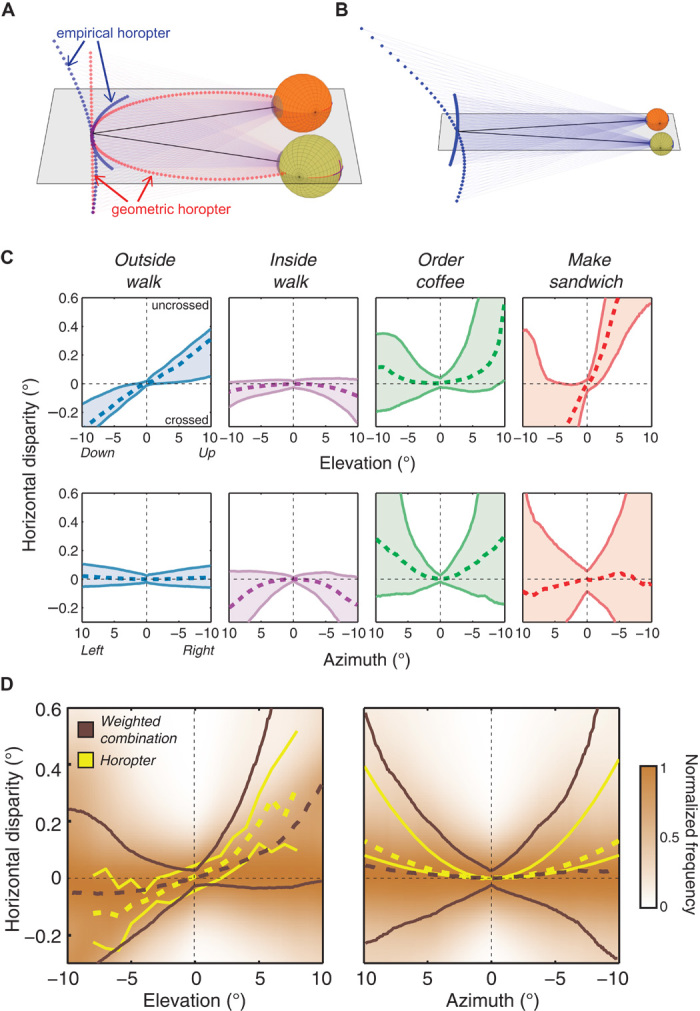
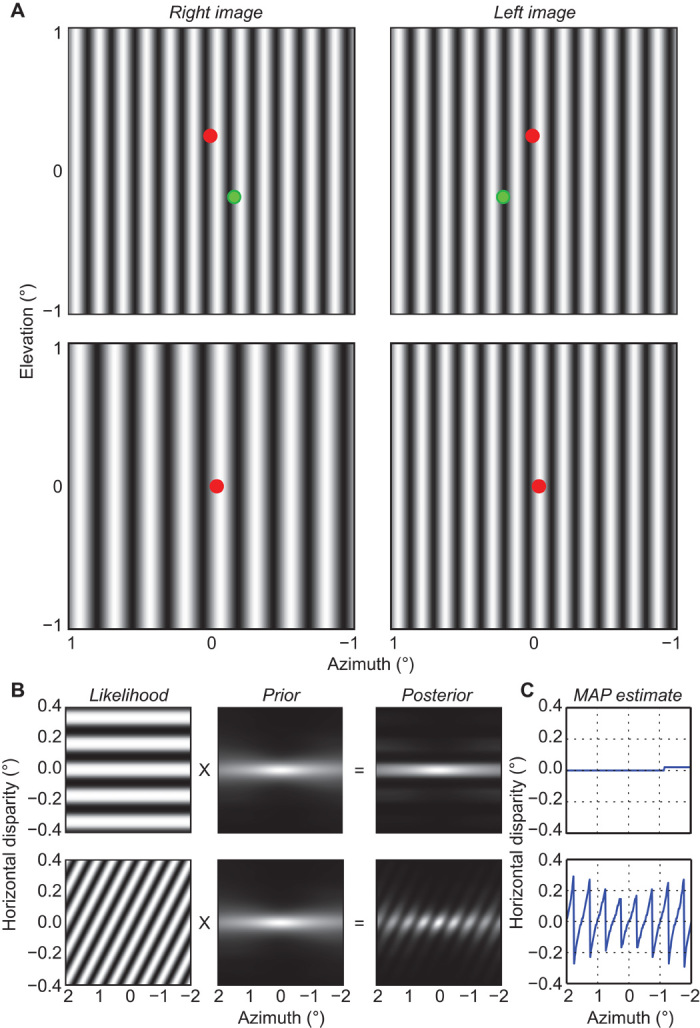
Humans and many animals have forward-facing eyes providing different views of the environment. Precise depth estimates can be derived from the resulting binocular disparities, but determining which parts of the two retinal images correspond to one another is computationally challenging. To aid the computation, the visual system focuses the search on a small range of disparities. We asked whether the disparities encountered in the natural environment match that range. We did this by simultaneously measuring binocular eye position and three-dimensional scene geometry during natural tasks. The natural distribution of disparities is indeed matched to the smaller range of correspondence search. Furthermore, the distribution explains the perception of some ambiguous stereograms. Finally, disparity preferences of macaque cortical neurons are consistent with the natural distribution.
人类和许多动物的眼睛朝前,能提供对环境的不同视角。通过由此产生的双眼视差可以得出精确的深度估计,但确定两个视网膜图像的哪些部分相互对应在计算上具有挑战性。为了辅助计算,视觉系统将搜索集中在一小范围的视差上。我们询问自然环境中遇到的视差是否与该范围匹配。我们通过在自然任务期间同时测量双眼眼位和三维场景几何形状来做到这一点。视差的自然分布确实与对应搜索的较小范围相匹配。此外,该分布解释了一些模糊立体图的感知。最后,猕猴皮层神经元的视差偏好与自然分布一致。