MacGregor Joseph A, Fahnestock Mark A, Catania Ginny A, Paden John D, Prasad Gogineni S, Young S Keith, Rybarski Susan C, Mabrey Alexandria N, Wagman Benjamin M, Morlighem Mathieu
Institute for Geophysics, The University of Texas at Austin Austin, Texas, USA.
Geophysical Institute, University of Alaska Fairbanks Fairbanks, Alaska, USA.
J Geophys Res Earth Surf. 2015 Feb;120(2):212-241. doi: 10.1002/2014JF003215. Epub 2015 Feb 13.
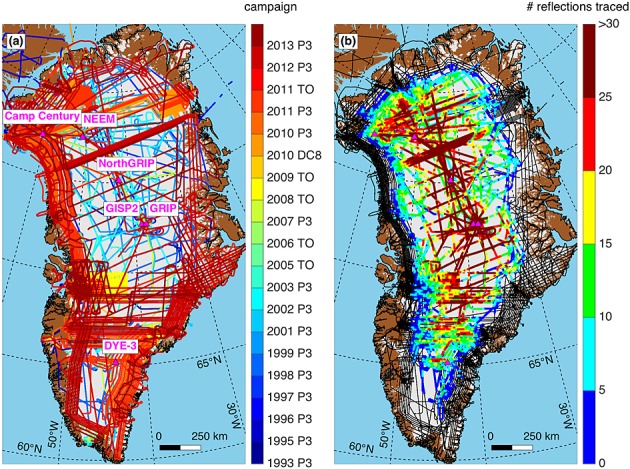
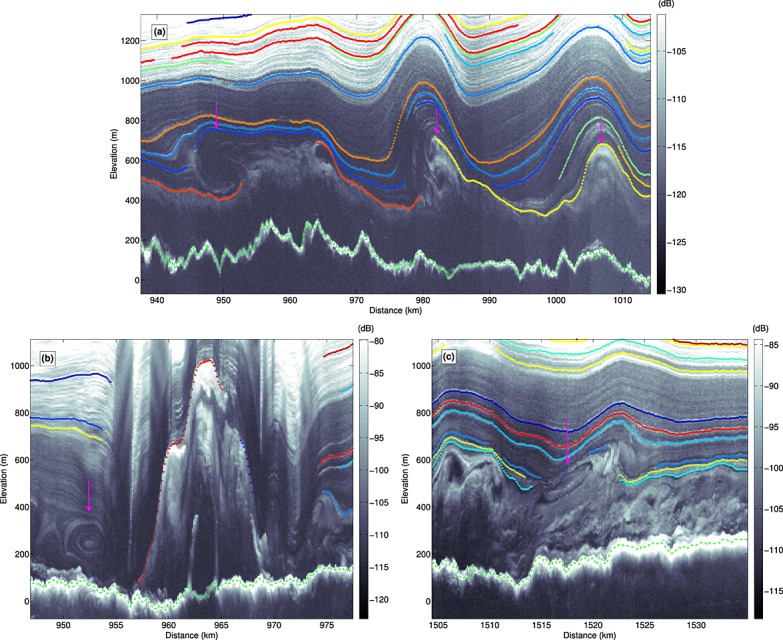
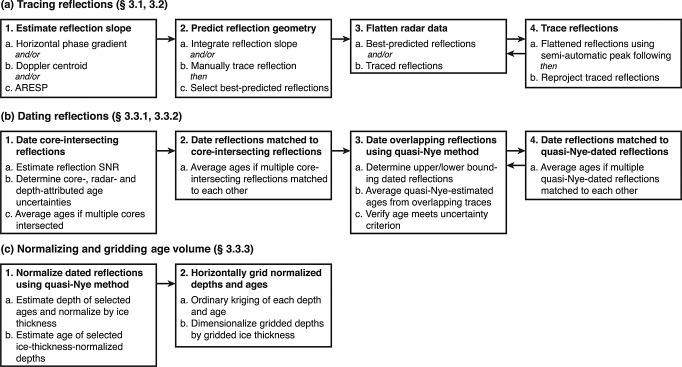
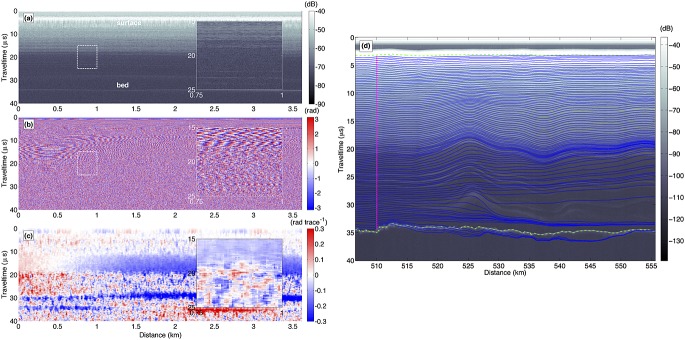
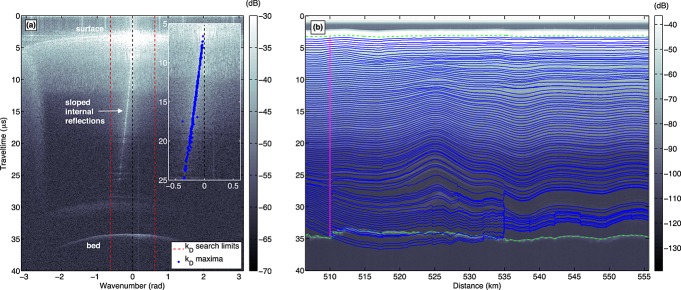
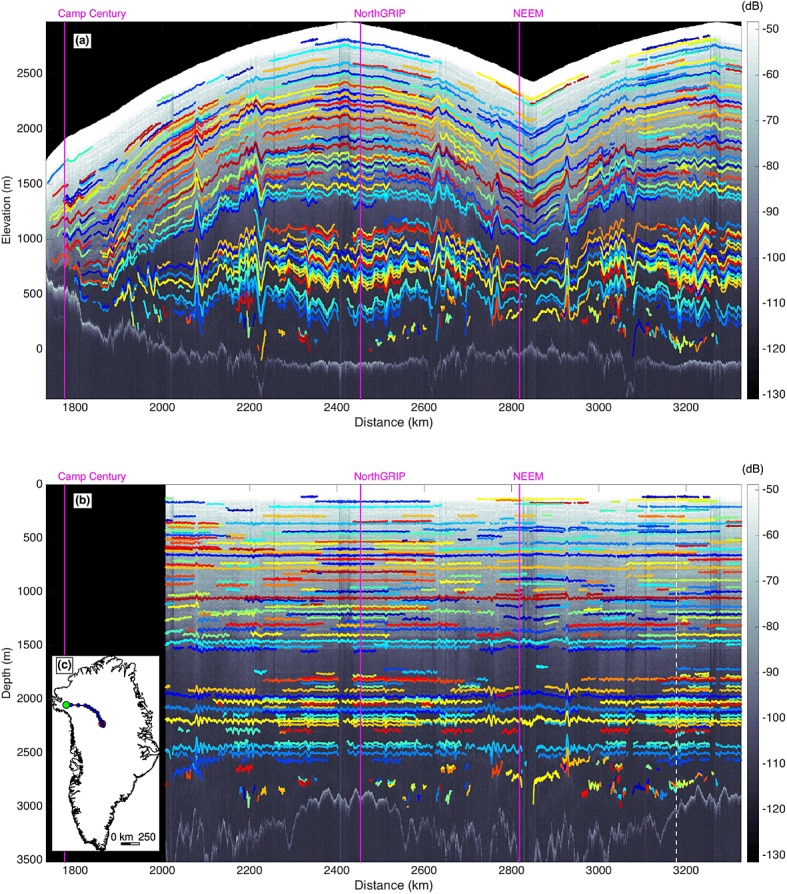
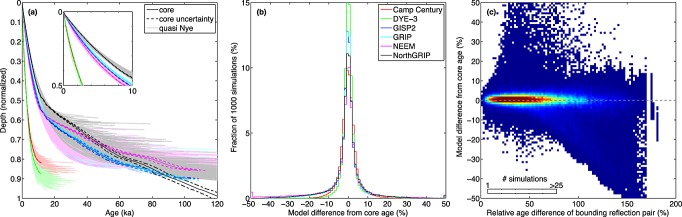
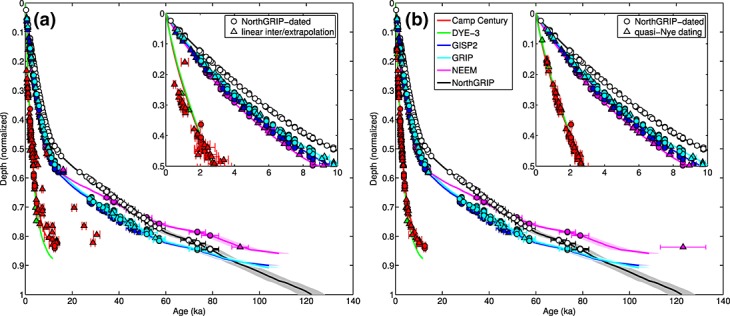
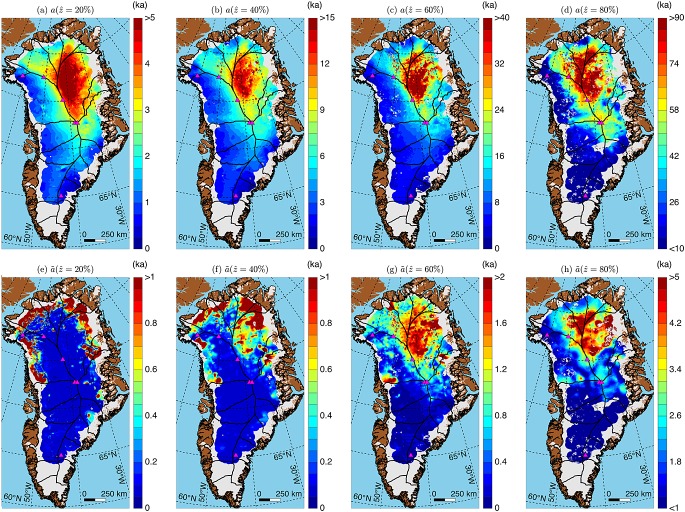
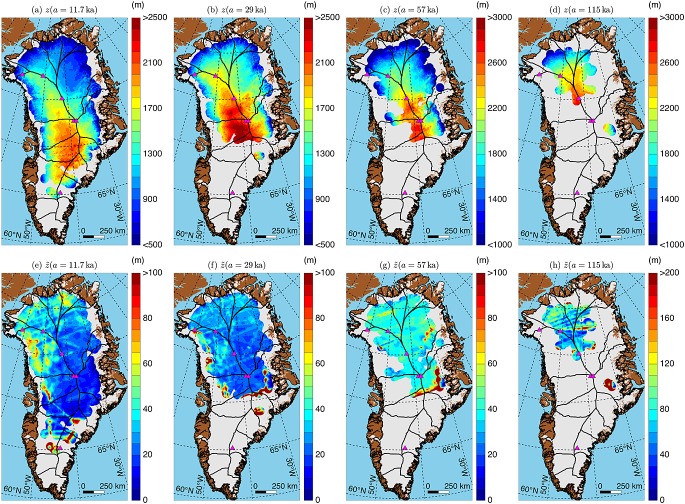
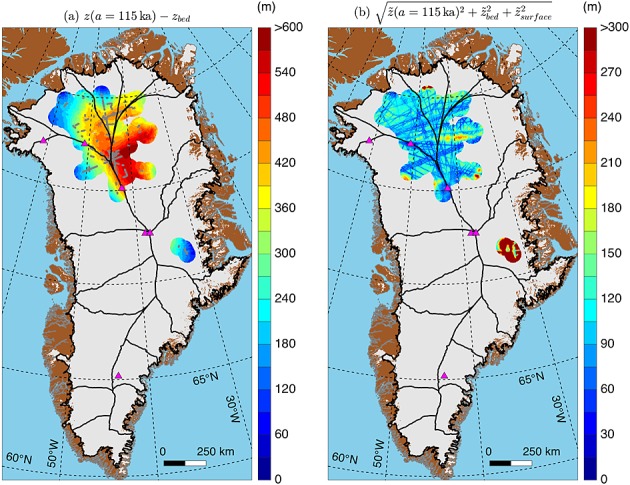
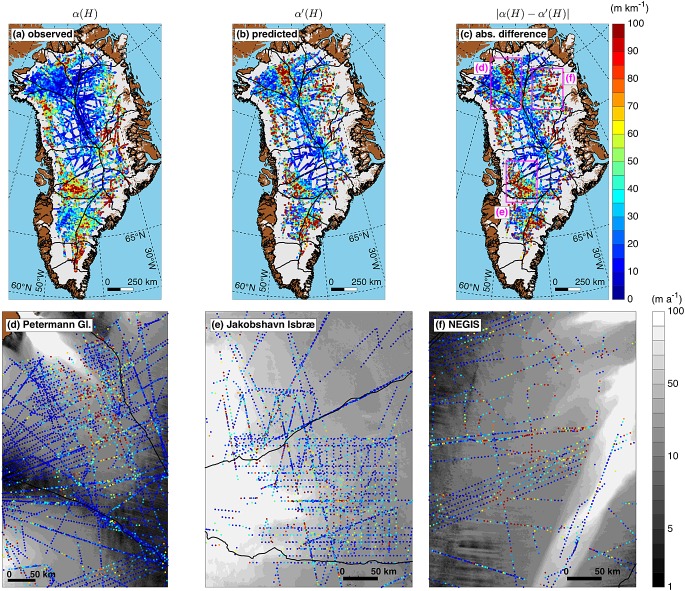
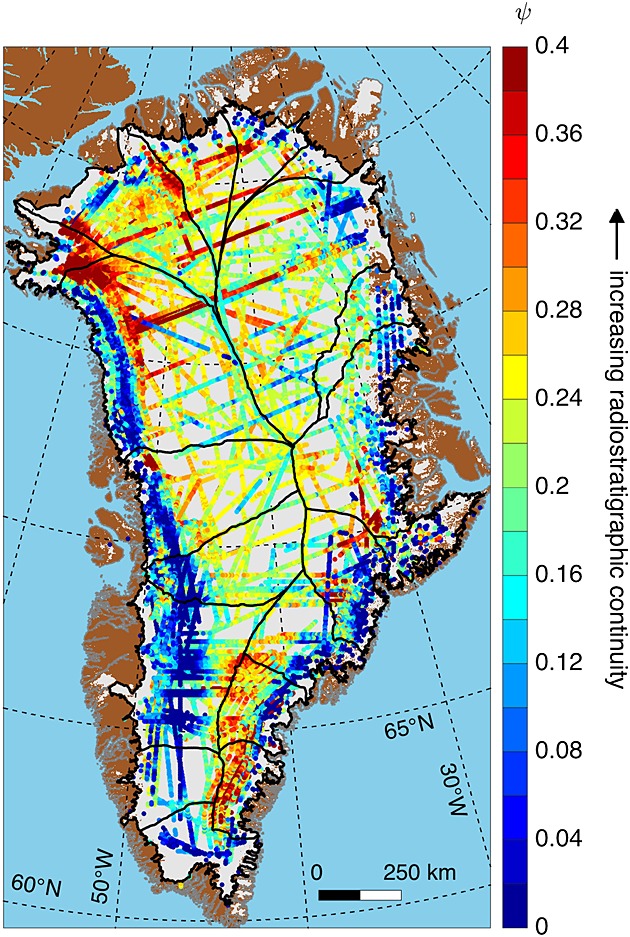
Several decades of ice-penetrating radar surveys of the Greenland and Antarctic ice sheets have observed numerous widespread internal reflections. Analysis of this radiostratigraphy has produced valuable insights into ice sheet dynamics and motivates additional mapping of these reflections. Here we present a comprehensive deep radiostratigraphy of the Greenland Ice Sheet from airborne deep ice-penetrating radar data collected over Greenland by The University of Kansas between 1993 and 2013. To map this radiostratigraphy efficiently, we developed new techniques for predicting reflection slope from the phase recorded by coherent radars. When integrated along track, these slope fields predict the radiostratigraphy and simplify semiautomatic reflection tracing. Core-intersecting reflections were dated using synchronized depth-age relationships for six deep ice cores. Additional reflections were dated by matching reflections between transects and by extending reflection-inferred depth-age relationships using the local effective vertical strain rate. The oldest reflections, dating to the Eemian period, are found mostly in the northern part of the ice sheet. Within the onset regions of several fast-flowing outlet glaciers and ice streams, reflections typically do not conform to the bed topography. Disrupted radiostratigraphy is also observed in a region north of the Northeast Greenland Ice Stream that is not presently flowing rapidly. Dated reflections are used to generate a gridded age volume for most of the ice sheet and also to determine the depths of key climate transitions that were not observed directly. This radiostratigraphy provides a new constraint on the dynamics and history of the Greenland Ice Sheet.
Phase information predicts reflection slope and simplifies reflection tracingReflections can be dated away from ice cores using a simple ice flow modelRadiostratigraphy is often disrupted near the onset of fast ice flow.
几十年来,对格陵兰岛和南极冰盖的探冰雷达调查观测到了众多广泛分布的内部反射。对这种放射性地层学的分析为冰盖动力学提供了有价值的见解,并促使人们对这些反射进行更多测绘。在此,我们根据堪萨斯大学于1993年至2013年在格陵兰岛收集的机载深穿透冰雷达数据,展示了格陵兰冰盖全面的深部放射性地层学。为了高效测绘这种放射性地层学,我们开发了新技术,用于根据相干雷达记录的相位预测反射斜率。当沿航迹积分时,这些斜率场可预测放射性地层学并简化半自动反射追踪。利用六个深冰芯的同步深度 - 年龄关系对与冰芯相交的反射进行了测年。通过匹配不同剖面之间的反射以及利用局部有效垂直应变率扩展反射推断的深度 - 年龄关系,对其他反射进行了测年。最古老的反射可追溯到埃姆间冰期,主要发现于冰盖北部。在几条快速流动的出口冰川和冰流的起始区域内,反射通常与床面地形不一致。在东北格陵兰冰流以北目前并非快速流动的区域也观测到了 disrupted 放射性地层学。测年反射用于生成冰盖大部分区域的网格化年龄体积,还用于确定未直接观测到的关键气候转变的深度。这种放射性地层学为格陵兰冰盖的动力学和历史提供了新的约束。
相位信息可预测反射斜率并简化反射追踪
利用简单的冰流模型可在远离冰芯处对反射进行测年
放射性地层学在快速冰流起始附近常常被 disrupted 。 (注:原文中“disrupted”未翻译,因为不清楚其确切含义,可能是专业术语,需根据具体学科知识确定准确译法)