Zhang Chen-Song, Liu Qi, Li Mengqi, Lin Shu-Yong, Peng Yongying, Wu Di, Li Terytty Yang, Fu Qiang, Jia Weiping, Wang Xinjun, Ma Teng, Zong Yue, Cui Jiwen, Pu Chengfei, Lian Guili, Guo Huiling, Ye Zhiyun, Lin Sheng-Cai
State Key Laboratory of Cellular Stress Biology, Innovation Center for Cell Signaling Network, School of Life Sciences, Xiamen University, Xiamen, Fujian 361005, China.
Department of Urology, Shanghai Jiao Tong University Affiliated Sixth People's Hospital, Shanghai 200233, China.
Cell Res. 2015 Sep;25(9):1025-42. doi: 10.1038/cr.2015.90. Epub 2015 Jul 28.
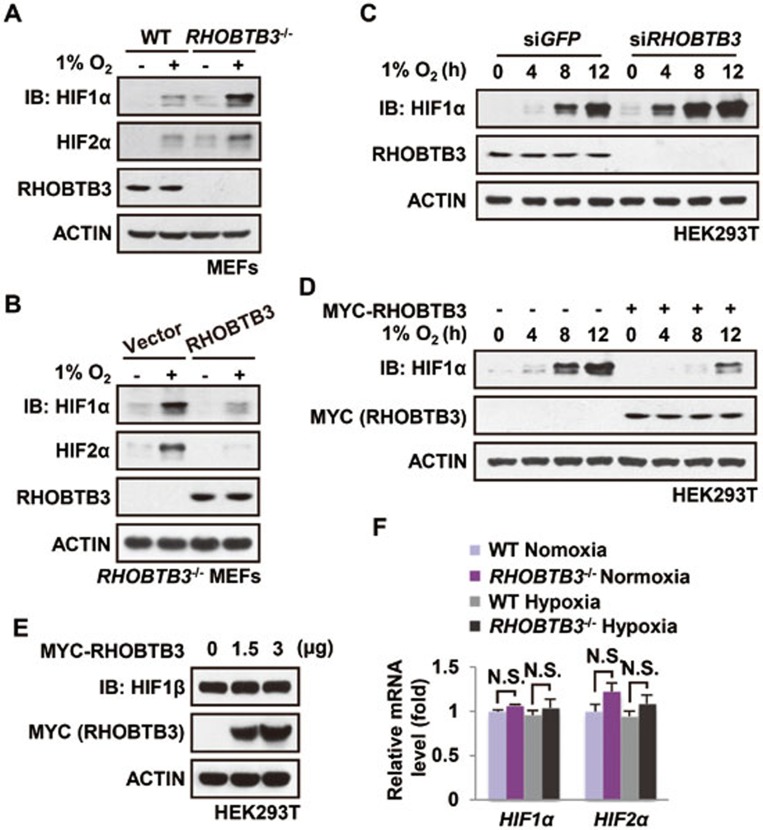
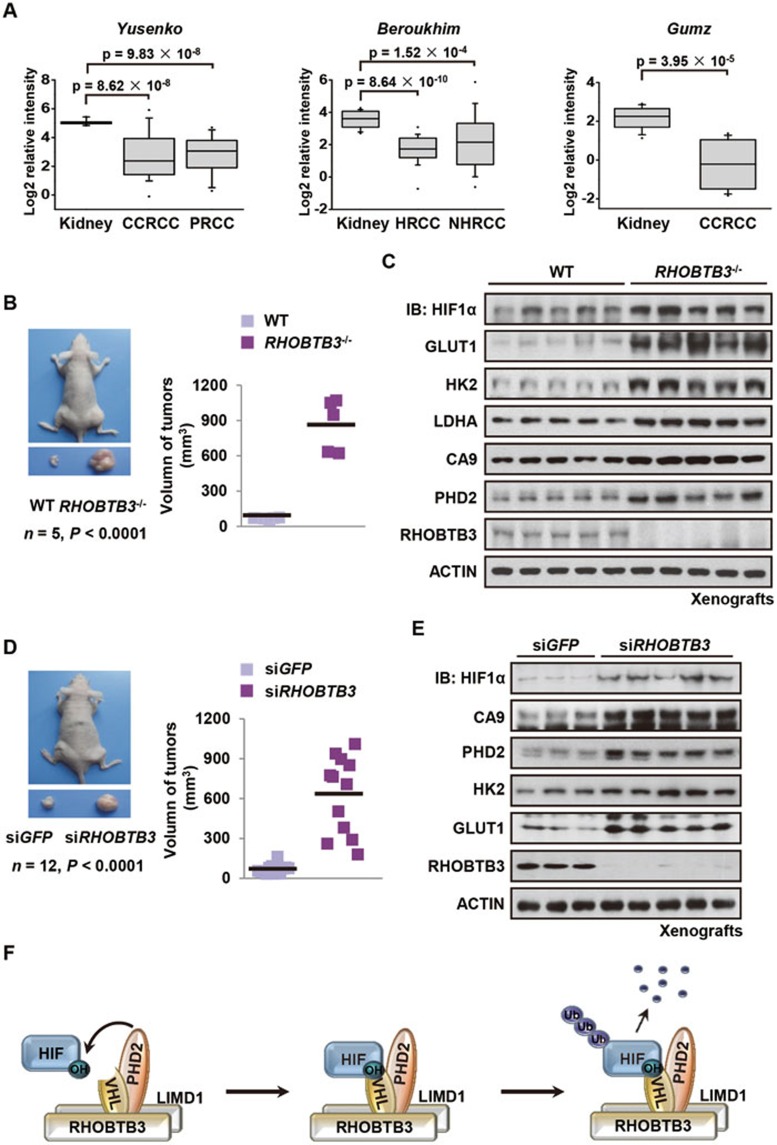
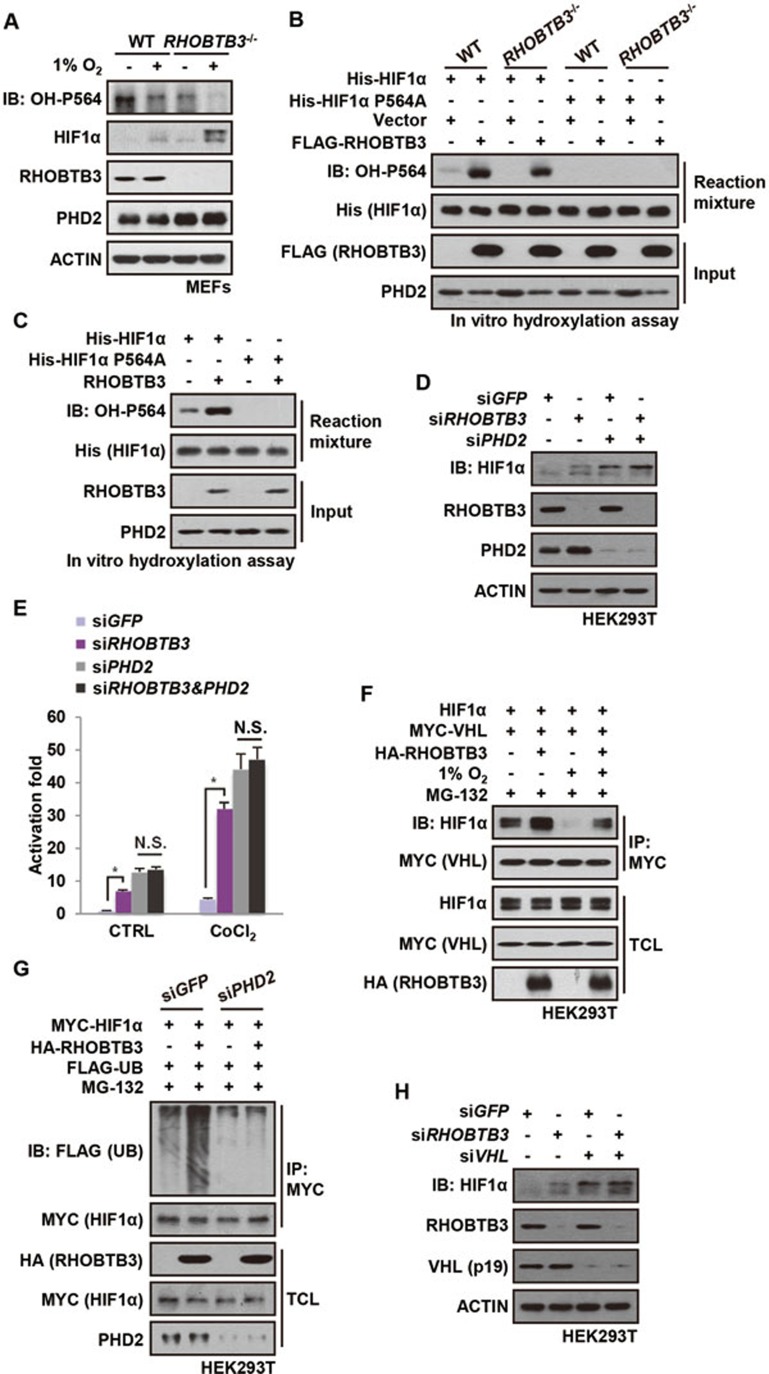
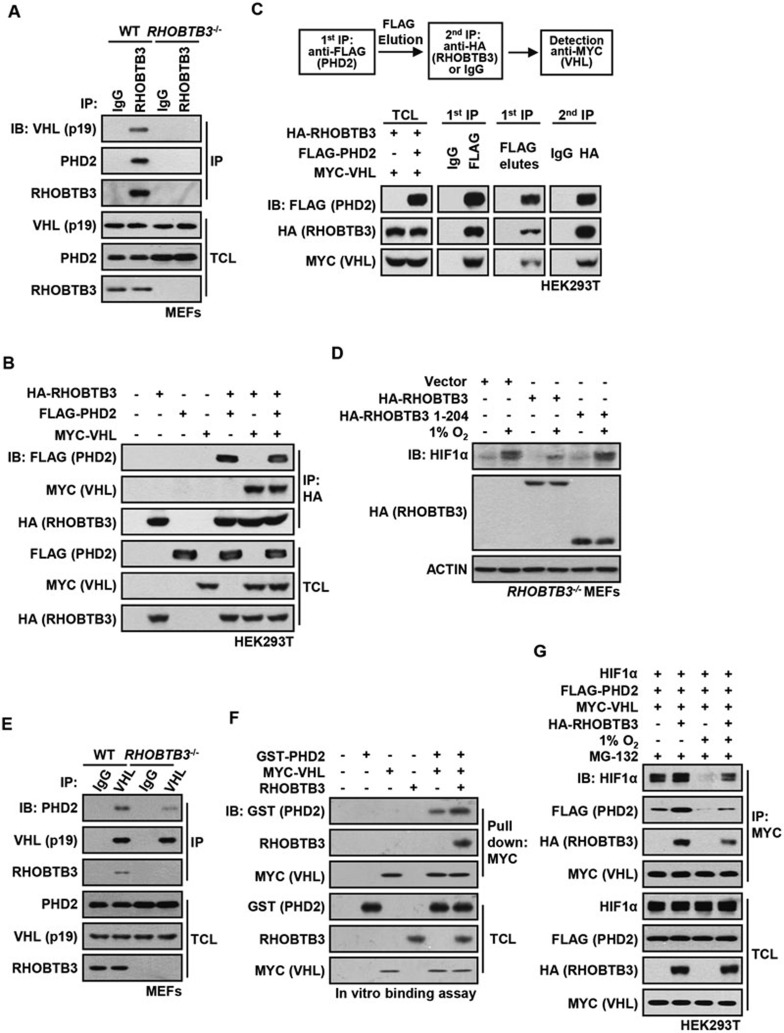
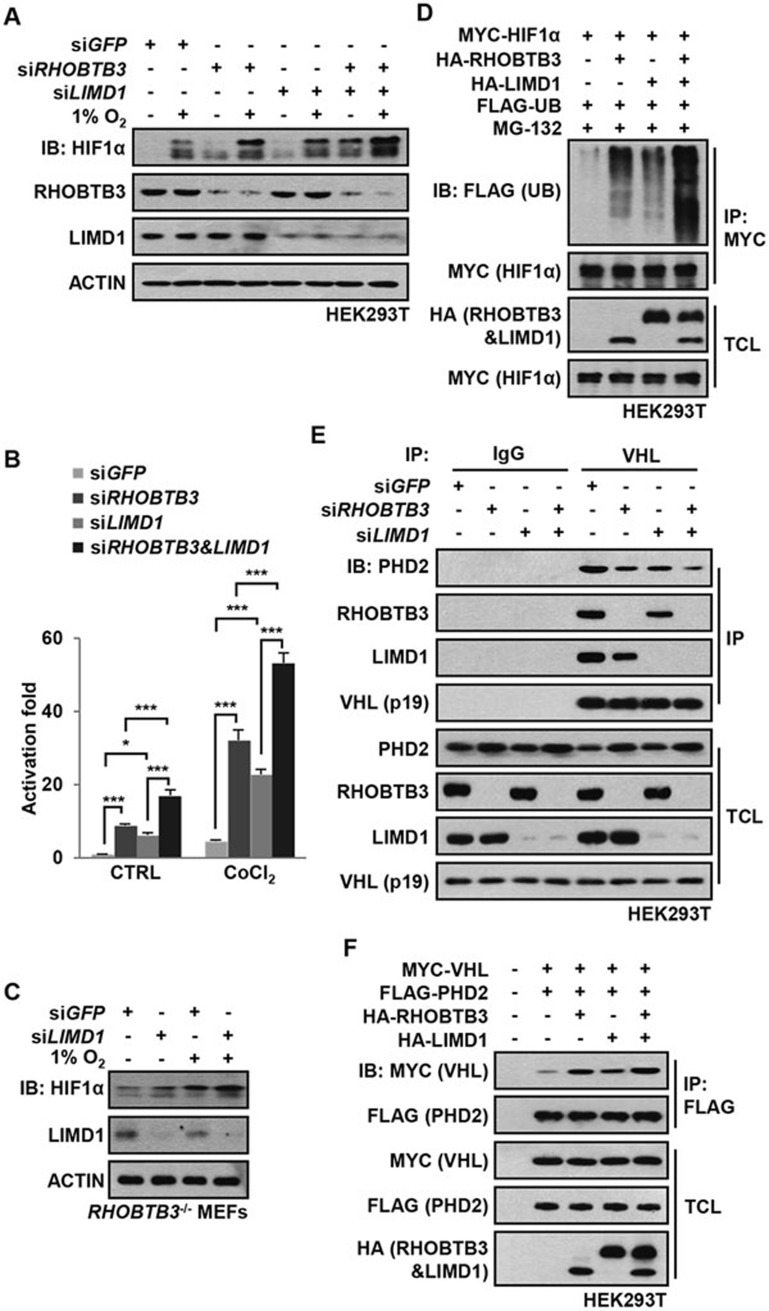
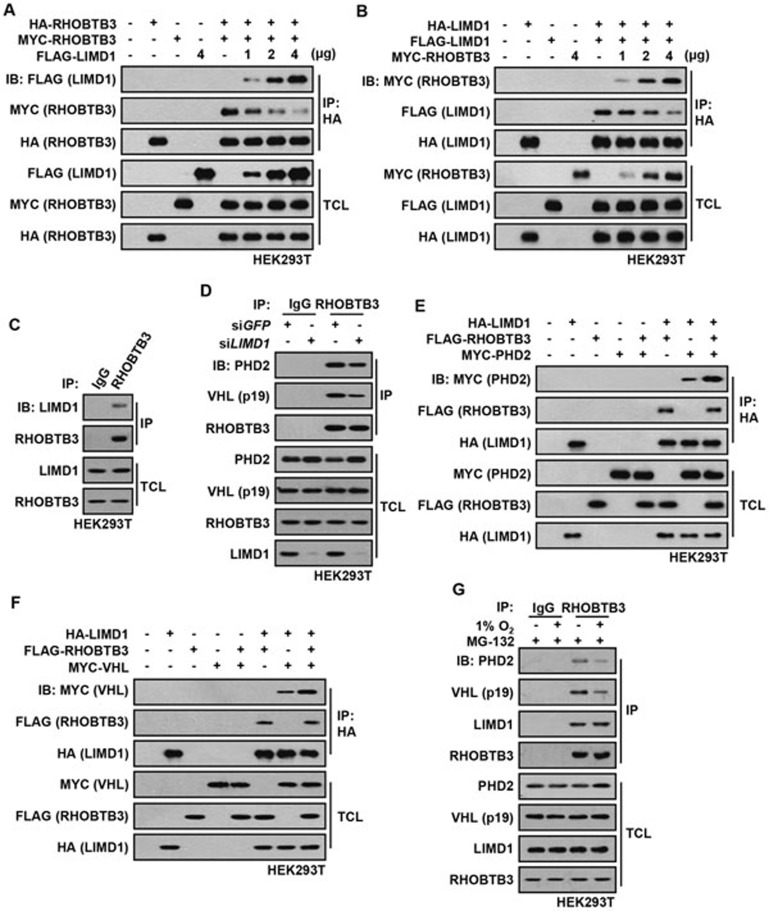
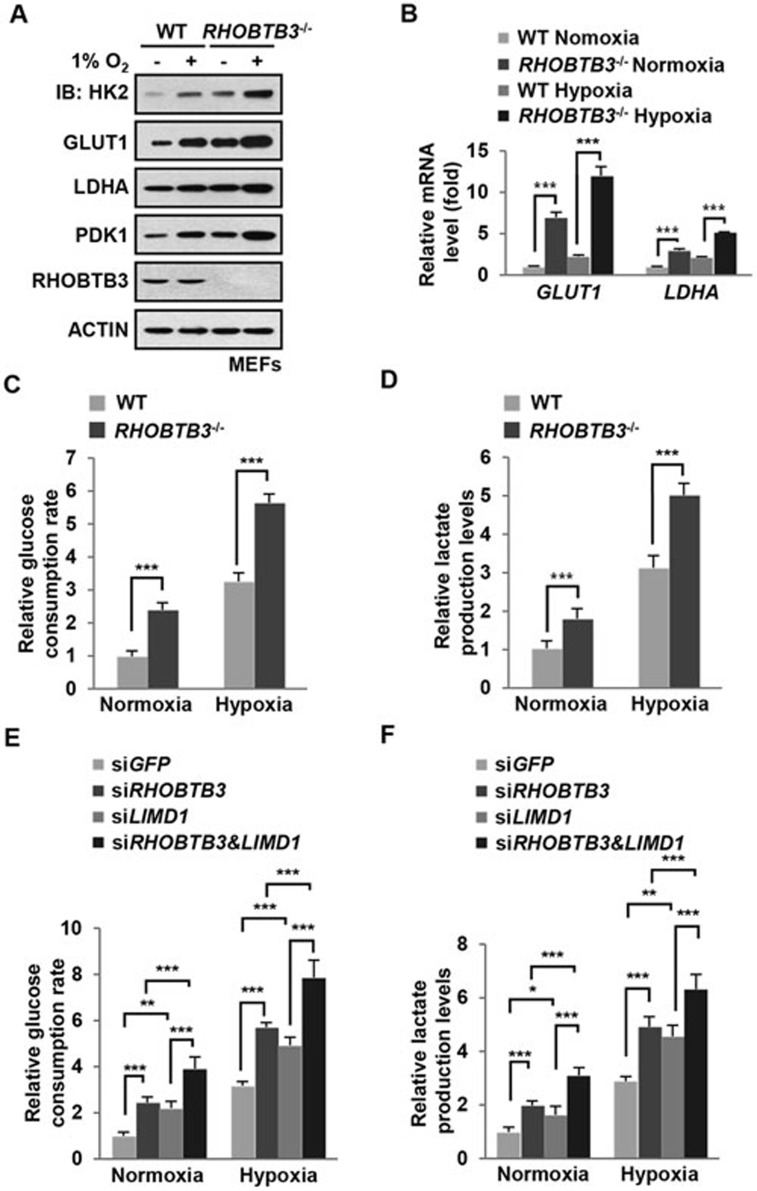
Hypoxia-inducible factors (HIFs) are master regulators of adaptive responses to low oxygen, and their α-subunits are rapidly degraded through the ubiquitination-dependent proteasomal pathway after hydroxylation. Aberrant accumulation or activation of HIFs is closely linked to many types of cancer. However, how hydroxylation of HIFα and its delivery to the ubiquitination machinery are regulated remains unclear. Here we show that Rho-related BTB domain-containing protein 3 (RHOBTB3) directly interacts with the hydroxylase PHD2 to promote HIFα hydroxylation. RHOBTB3 also directly interacts with the von Hippel-Lindau (VHL) protein, a component of the E3 ubiquitin ligase complex, facilitating ubiquitination of HIFα. Remarkably, RHOBTB3 dimerizes with LIMD1, and constructs a RHOBTB3/LIMD1-PHD2-VHL-HIFα complex to effect the maximal degradation of HIFα. Hypoxia reduces the RHOBTB3-centered complex formation, resulting in an accumulation of HIFα. Importantly, the expression level of RHOBTB3 is greatly reduced in human renal carcinomas, and RHOBTB3 deficiency significantly elevates the Warburg effect and accelerates xenograft growth. Our work thus reveals that RHOBTB3 serves as a scaffold to organize a multi-subunit complex that promotes the hydroxylation, ubiquitination and degradation of HIFα.
缺氧诱导因子(HIFs)是低氧适应性反应的主要调节因子,其α亚基在羟基化后通过泛素化依赖性蛋白酶体途径迅速降解。HIFs的异常积累或激活与多种癌症密切相关。然而,HIFα的羟基化及其向泛素化机制的传递是如何被调控的仍不清楚。在这里,我们表明含Rho相关BTB结构域蛋白3(RHOBTB3)直接与羟化酶PHD2相互作用以促进HIFα羟基化。RHOBTB3还直接与E3泛素连接酶复合物的一个组分冯·希佩尔-林道(VHL)蛋白相互作用,促进HIFα的泛素化。值得注意的是,RHOBTB3与LIMD1二聚化,并构建了一个RHOBTB3/LIMD1-PHD2-VHL-HIFα复合物以实现HIFα的最大程度降解。缺氧会减少以RHOBTB3为中心的复合物形成,导致HIFα积累。重要的是,RHOBTB3的表达水平在人类肾癌中大幅降低,并且RHOBTB3缺陷显著提高了瓦伯格效应并加速了异种移植瘤生长。因此,我们的研究揭示了RHOBTB3作为一个支架来组织一个多亚基复合物,该复合物促进HIFα的羟基化、泛素化和降解。