Lee Myung Chul, Kim Dae Hee, Jeon Yeo Reum, Rah Dong Kyun, Lew Dae Hyun, Choi Eun Chang, Lee Won Jai
Department of Plastic and Reconstructive Surgery, Institute for Human Tissue Restoration, Yonsei University College of Medicine, Seoul, Korea.
Department of Otorhinolaryngology, Yonsei University College of Medicine, Seoul, Korea.
Arch Plast Surg. 2015 Jul;42(4):461-8. doi: 10.5999/aps.2015.42.4.461. Epub 2015 Jul 14.
Functional restoration of the facial expression is necessary after facial nerve resection to treat head and neck tumors. This study was conducted to evaluate the functional outcomes of patients who underwent facial nerve cable grafting immediately after tumor resection.
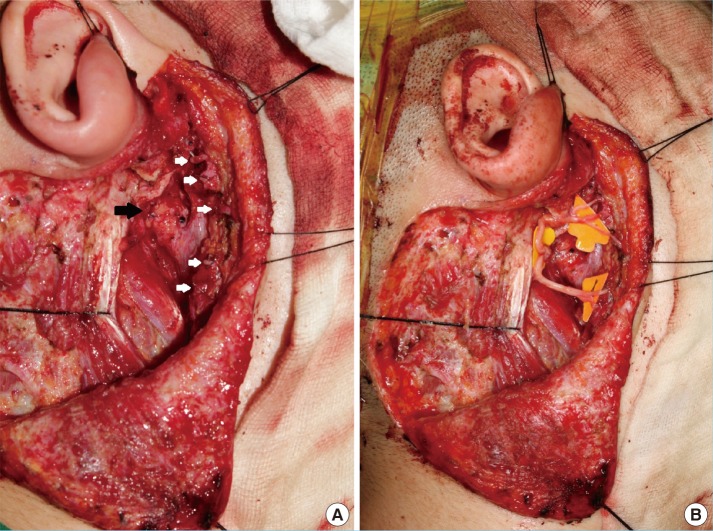
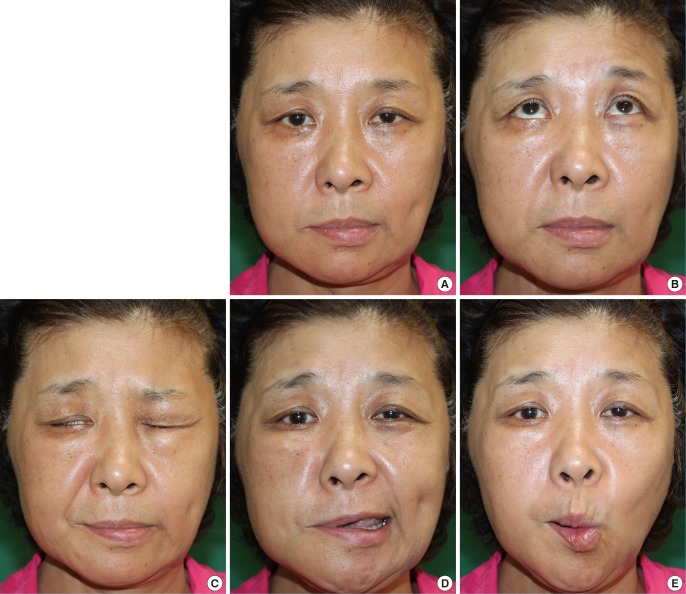
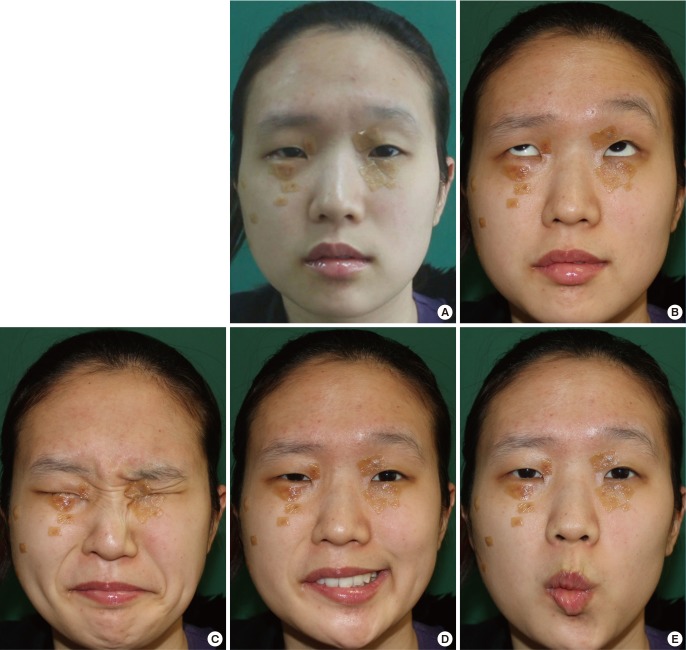
Patients who underwent cable grafting from April 2007 to August 2011 were reviewed, in which a harvested branch of the sural nerve was grafted onto each facial nerve division. Twelve patients underwent facial nerve cable grafting after radical parotidectomy, total parotidectomy, or schwannoma resection, and the functional facial expression of each patient was evaluated using the Facial Nerve Grading Scale 2.0. The results were analyzed according to patient age, follow-up duration, and the use of postoperative radiation therapy.
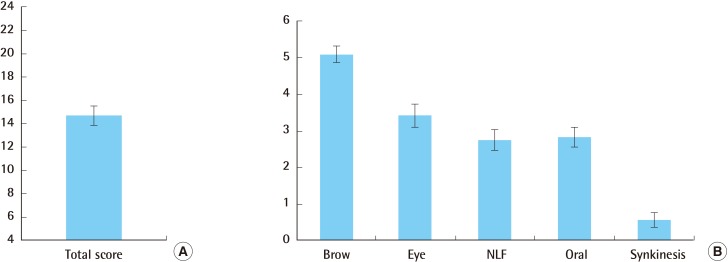
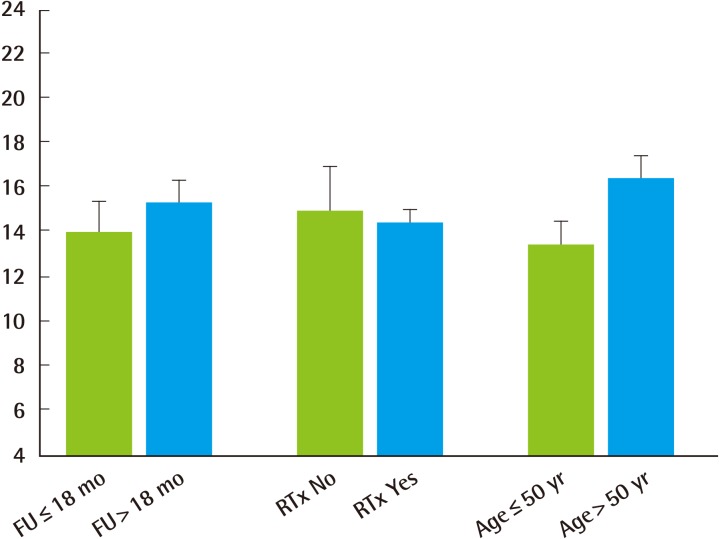
Among the 12 patients who were evaluated, the mean follow-up duration was 21.8 months, the mean age at the time of surgery was 42.8 years, and the mean facial expression score was 14.6 points, indicating moderate dysfunction. Facial expression scores were not influenced by age at the time of surgery, follow-up duration, or the use of postoperative radiation therapy.
The results of this study indicate that facial nerve cable grafting using the sural nerve can restore facial expression. Although patients were provided with appropriate treatment, the survival rate for salivary gland cancer was poor. We conclude that immediate facial nerve reconstruction is a worthwhile procedure that improves quality of life by allowing the recovery of facial expression, even in patients who are older or may require radiation therapy.
为治疗头颈部肿瘤而进行面神经切除术后,面部表情的功能恢复是必要的。本研究旨在评估肿瘤切除后立即进行面神经电缆移植患者的功能结局。
回顾了2007年4月至2011年8月期间接受电缆移植的患者,其中将腓肠神经的一个采集分支移植到每个面神经分支上。12例患者在根治性腮腺切除术、全腮腺切除术或神经鞘瘤切除术后接受了面神经电缆移植,并使用面神经分级量表2.0评估了每位患者的功能性面部表情。根据患者年龄、随访时间和术后放疗的使用情况对结果进行分析。
在接受评估的12例患者中,平均随访时间为21.8个月,手术时的平均年龄为42.8岁,平均面部表情评分为14.6分,表明存在中度功能障碍。面部表情评分不受手术时年龄、随访时间或术后放疗使用情况的影响。
本研究结果表明,使用腓肠神经进行面神经电缆移植可以恢复面部表情。尽管为患者提供了适当的治疗,但唾液腺癌的生存率较低。我们得出结论,即使是年龄较大或可能需要放疗的患者,立即进行面神经重建也是一项有价值的手术,可通过恢复面部表情来提高生活质量。