Hibaoui Youssef, Feki Anis
Department of Genetic Medicine and Development, University of Geneva Medical School and Geneva University Hospitals, 1 Rue Michel-Servet, CH-1211 Geneva, Switzerland.
Department of Obstetrics and Gynecology, Cantonal Hospital of Fribourg, Chemin des Pensionnats 2-6, 1708 Fribourg, Switzerland.
J Clin Med. 2015 Apr 15;4(4):696-714. doi: 10.3390/jcm4040696.
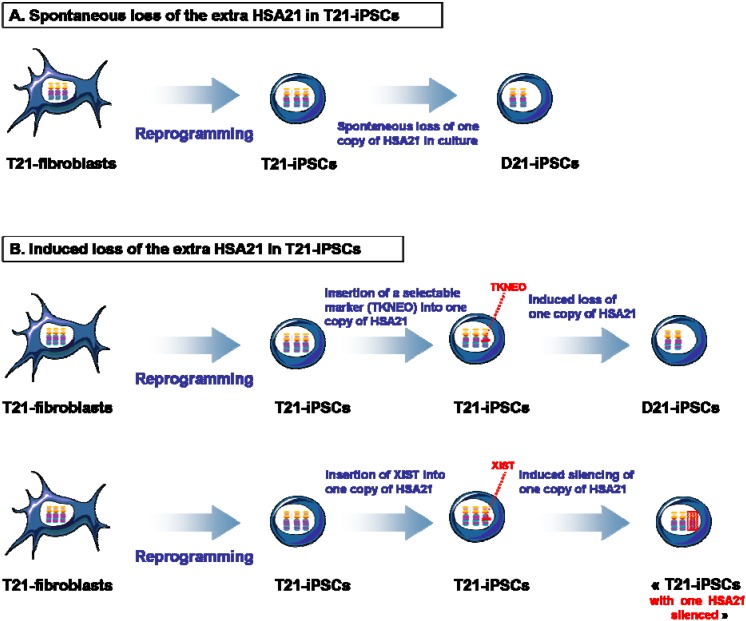
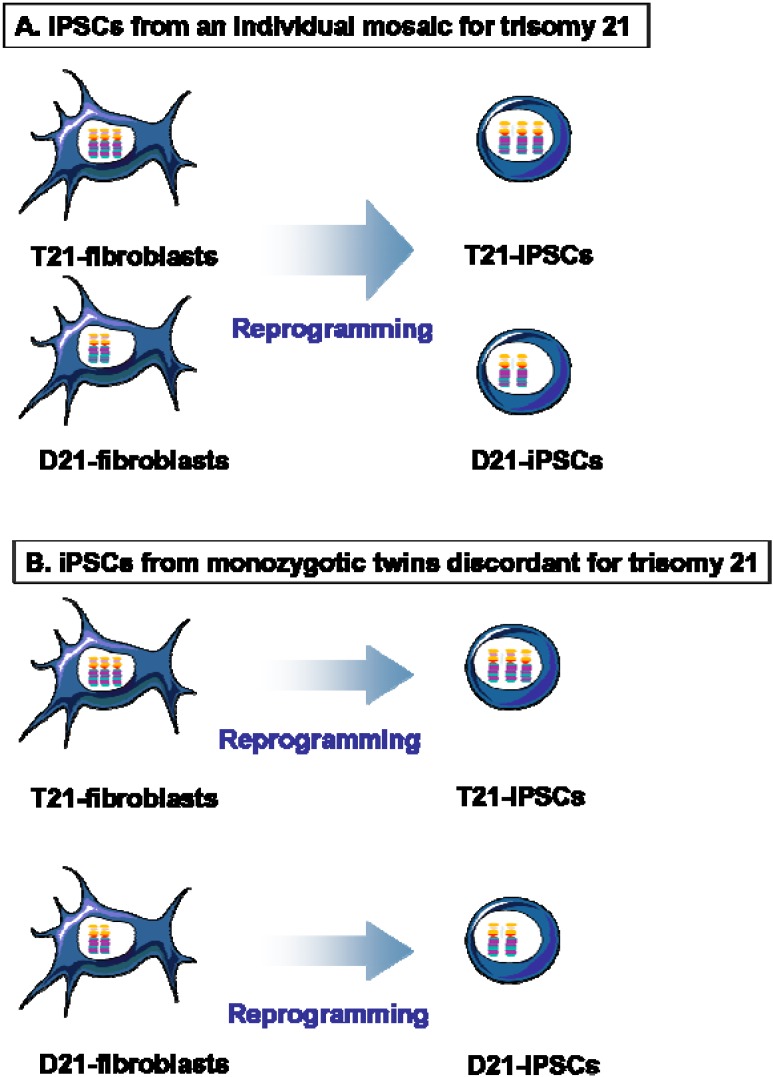
Down syndrome (DS, trisomy 21), is the most common viable chromosomal disorder, with an incidence of 1 in 800 live births. Its phenotypic characteristics include intellectual impairment and several other developmental abnormalities, for the majority of which the pathogenetic mechanisms remain unknown. Several models have been used to investigate the mechanisms by which the extra copy of chromosome 21 leads to the DS phenotype. In the last five years, several laboratories have been successful in reprogramming patient cells carrying the trisomy 21 anomaly into induced pluripotent stem cells, i.e., T21-iPSCs. In this review, we summarize the different T21-iPSCs that have been generated with a particular interest in the technical procedures and the somatic cell types used for the reprogramming.
唐氏综合征(DS,21三体综合征)是最常见的可存活染色体疾病,活产发病率为1/800。其表型特征包括智力障碍和其他几种发育异常,其中大多数发病机制尚不清楚。已经使用了几种模型来研究21号染色体额外拷贝导致DS表型的机制。在过去五年中,几个实验室已成功地将携带21三体异常的患者细胞重编程为诱导多能干细胞,即T21-iPSC。在本综述中,我们总结了已产生的不同T21-iPSC,特别关注用于重编程的技术程序和体细胞类型。