Department of Circuit Theory, Faculty of Electrical Engineering, Czech Technical University in Prague , Prague , Czech Republic ; Department of Neurology and Centre of Clinical Neuroscience, First Faculty of Medicine, Charles University in Prague , Prague , Czech Republic.
Department of Circuit Theory, Faculty of Electrical Engineering, Czech Technical University in Prague , Prague , Czech Republic.
Front Bioeng Biotechnol. 2015 Jul 24;3:104. doi: 10.3389/fbioe.2015.00104. eCollection 2015.
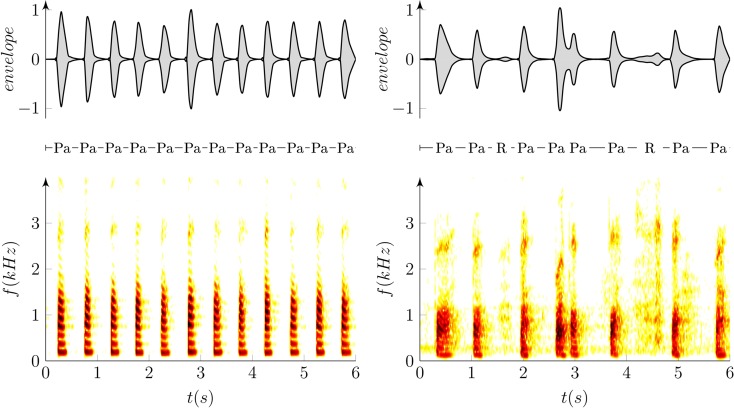
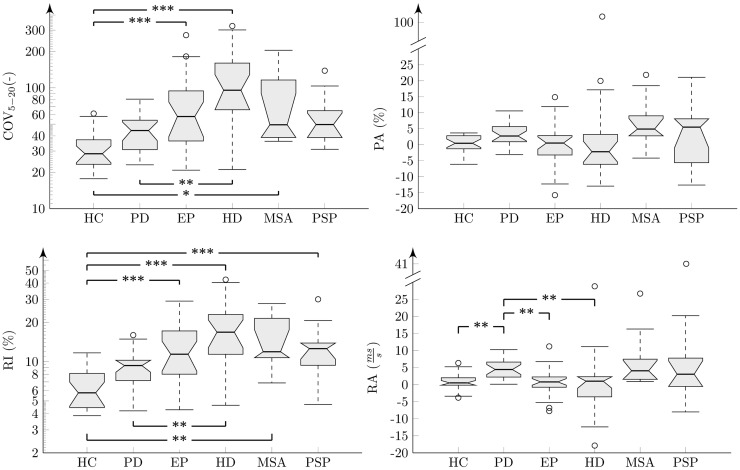
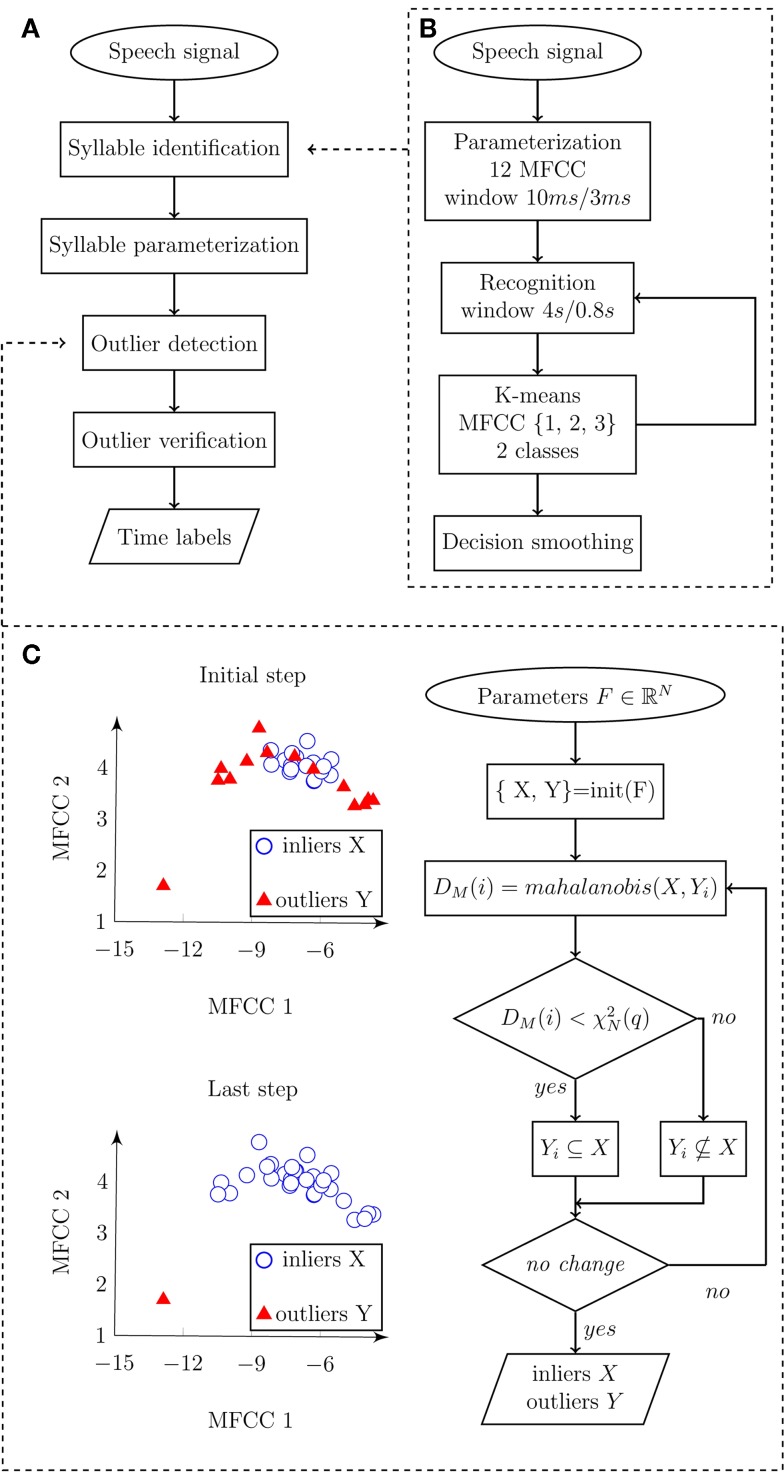
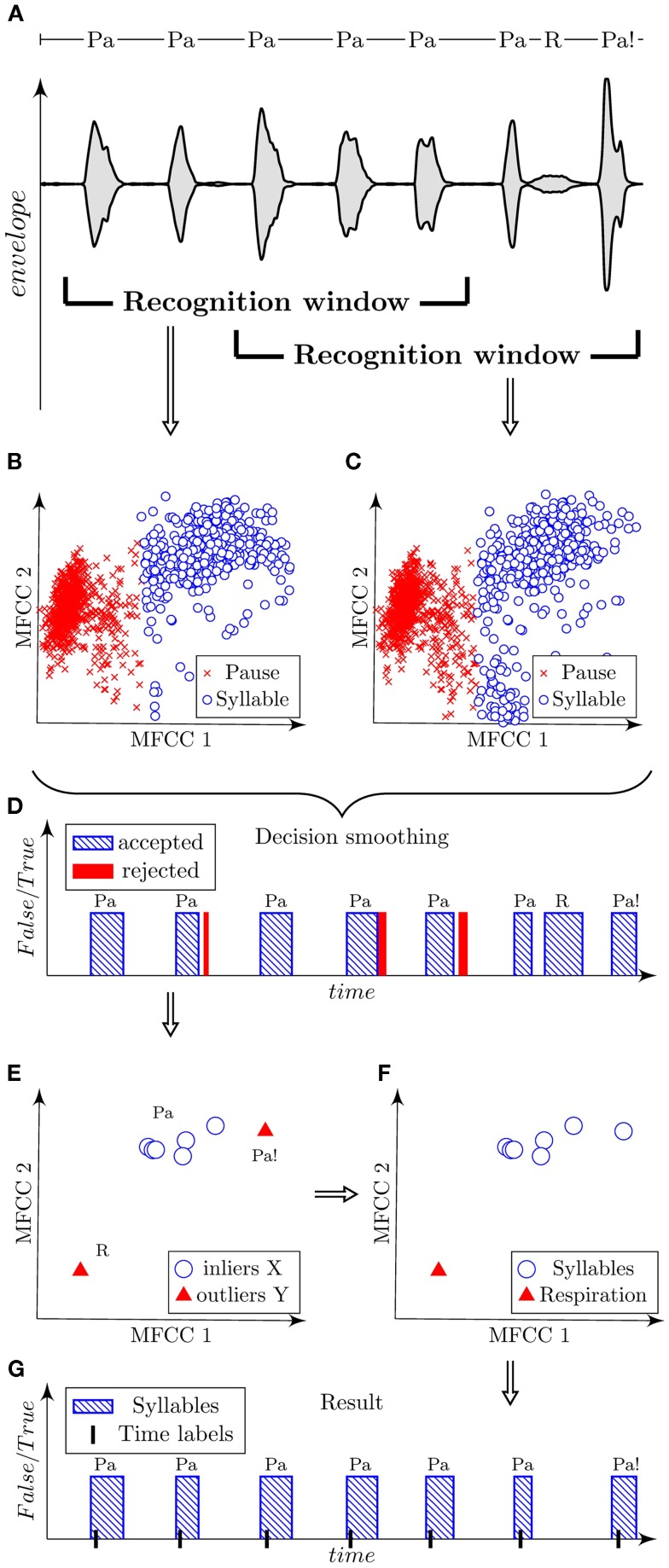
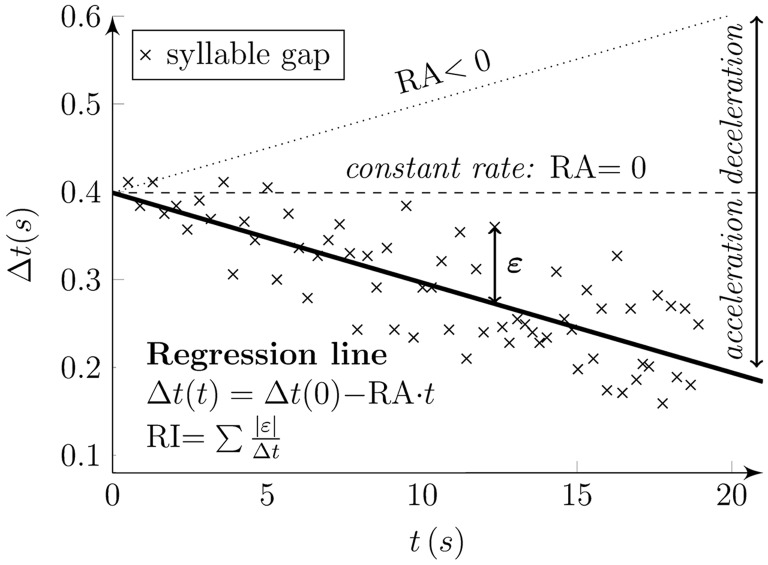
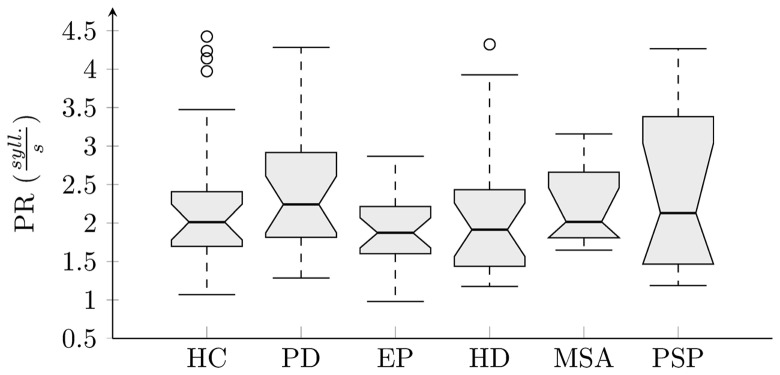
Speech rhythm abnormalities are commonly present in patients with different neurodegenerative disorders. These alterations are hypothesized to be a consequence of disruption to the basal ganglia circuitry involving dysfunction of motor planning, programing, and execution, which can be detected by a syllable repetition paradigm. Therefore, the aim of the present study was to design a robust signal processing technique that allows the automatic detection of spectrally distinctive nuclei of syllable vocalizations and to determine speech features that represent rhythm instability (RI) and rhythm acceleration (RA). A further aim was to elucidate specific patterns of dysrhythmia across various neurodegenerative disorders that share disruption of basal ganglia function. Speech samples based on repetition of the syllable /pa/ at a self-determined steady pace were acquired from 109 subjects, including 22 with Parkinson's disease (PD), 11 progressive supranuclear palsy (PSP), 9 multiple system atrophy (MSA), 24 ephedrone-induced parkinsonism (EP), 20 Huntington's disease (HD), and 23 healthy controls. Subsequently, an algorithm for the automatic detection of syllables as well as features representing RI and RA were designed. The proposed detection algorithm was able to correctly identify syllables and remove erroneous detections due to excessive inspiration and non-speech sounds with a very high accuracy of 99.6%. Instability of vocal pace performance was observed in PSP, MSA, EP, and HD groups. Significantly increased pace acceleration was observed only in the PD group. Although not significant, a tendency for pace acceleration was observed also in the PSP and MSA groups. Our findings underline the crucial role of the basal ganglia in the execution and maintenance of automatic speech motor sequences. We envisage the current approach to become the first step toward the development of acoustic technologies allowing automated assessment of rhythm in dysarthrias.
言语节律异常常见于不同神经退行性疾病患者。这些改变被假设为基底神经节回路中断的结果,涉及运动规划、编程和执行功能障碍,这可以通过音节重复范式检测到。因此,本研究旨在设计一种强大的信号处理技术,允许自动检测音节发声的频谱特征核,并确定代表节律不稳定(RI)和节律加速(RA)的言语特征。另一个目的是阐明在具有基底神经节功能障碍的各种神经退行性疾病中共同存在的节律失调的特定模式。从 109 名受试者中获取基于音节 /pa/ 自我确定的稳定节奏重复的言语样本,包括 22 名帕金森病(PD)患者、11 名进行性核上性麻痹(PSP)患者、9 名多系统萎缩(MSA)患者、24 名冰毒诱导的帕金森病(EP)患者、20 名亨廷顿病(HD)患者和 23 名健康对照者。随后,设计了一种用于自动检测音节以及代表 RI 和 RA 的特征的算法。所提出的检测算法能够以非常高的准确率 99.6%正确识别音节并去除由于过度吸气和非言语声音引起的错误检测。PSP、MSA、EP 和 HD 组观察到发声节奏性能不稳定。仅在 PD 组中观察到明显的节奏加速增加。尽管不显著,但在 PSP 和 MSA 组中也观察到节奏加速的趋势。我们的发现强调了基底神经节在执行和维持自动言语运动序列中的关键作用。我们设想目前的方法将成为开发允许自动评估构音障碍节律的声学技术的第一步。