Adela Ramu, Banerjee Sanjay K
Drug Discovery Research Center, Translational Health Science and Technology Institute (THSTI), Faridabad, Haryana 122014, India.
J Diabetes Res. 2015;2015:490842. doi: 10.1155/2015/490842. Epub 2015 Jul 27.
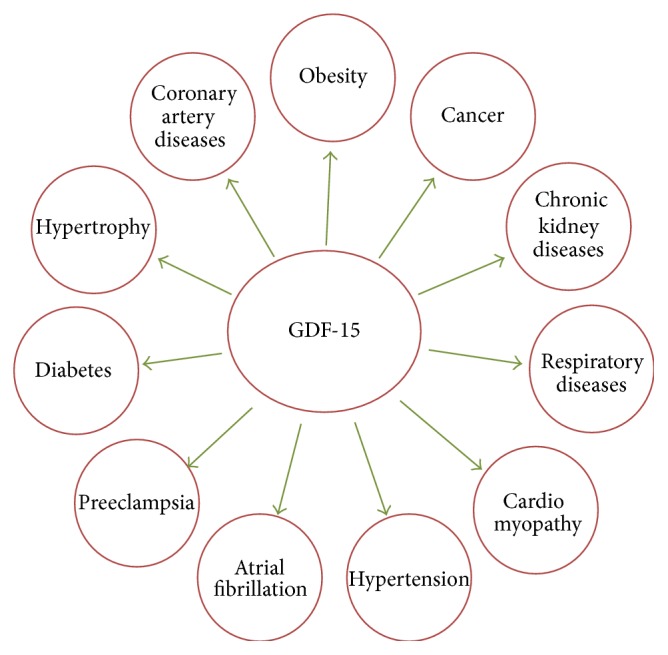
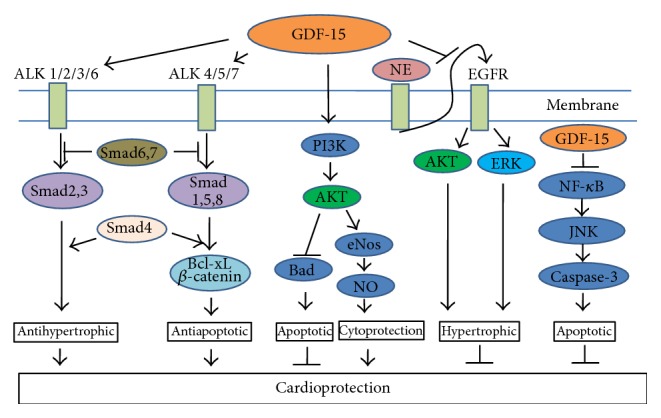
Growth differentiation factor-15 (GDF-15) is a stress responsive cytokine. It is highly expressed in cardiomyocytes, adipocytes, macrophages, endothelial cells, and vascular smooth muscle cells in normal and pathological condition. GDF-15 increases during tissue injury and inflammatory states and is associated with cardiometabolic risk. Increased GDF-15 levels are associated with cardiovascular diseases such as hypertrophy, heart failure, atherosclerosis, endothelial dysfunction, obesity, insulin resistance, diabetes, and chronic kidney diseases in diabetes. Increased GDF-15 level is linked with the progression and prognosis of the disease condition. Age, smoking, and environmental factors are other risk factors that may increase GDF-15 level. Most of the scientific studies reported that GDF-15 plays a protective role in different tissues. However, few reports show that the deficiency of GDF-15 is beneficial against vascular injury and inflammation. GDF-15 protects heart, adipose tissue, and endothelial cells by inhibiting JNK (c-Jun N-terminal kinase), Bad (Bcl-2-associated death promoter), and EGFR (epidermal growth factor receptor) and activating Smad, eNOS, PI3K, and AKT signaling pathways. The present review describes the different animal and clinical studies and patent updates of GDF-15 in diabetes and cardiovascular diseases. It is a challenge for the scientific community to use GDF-15 information for patient monitoring, clinical decision-making, and replacement of current treatment strategies for diabetic and cardiovascular diseases.
生长分化因子-15(GDF-15)是一种应激反应性细胞因子。在正常和病理状态下,它在心肌细胞、脂肪细胞、巨噬细胞、内皮细胞和血管平滑肌细胞中高表达。在组织损伤和炎症状态下,GDF-15会升高,并与心脏代谢风险相关。GDF-15水平升高与心血管疾病有关,如肥大、心力衰竭、动脉粥样硬化、内皮功能障碍、肥胖、胰岛素抵抗、糖尿病以及糖尿病中的慢性肾脏疾病。GDF-15水平升高与疾病状态的进展和预后相关。年龄、吸烟和环境因素是可能增加GDF-15水平的其他风险因素。大多数科学研究报告称GDF-15在不同组织中发挥保护作用。然而,少数报告显示GDF-15缺乏对血管损伤和炎症有益。GDF-15通过抑制JNK(c-Jun氨基末端激酶)、Bad(Bcl-2相关死亡促进因子)和EGFR(表皮生长因子受体)以及激活Smad、eNOS、PI3K和AKT信号通路来保护心脏、脂肪组织和内皮细胞。本综述描述了GDF-15在糖尿病和心血管疾病方面的不同动物和临床研究以及专利更新情况。对于科学界来说,利用GDF-15信息进行患者监测、临床决策以及替代糖尿病和心血管疾病的现有治疗策略是一项挑战。