Lin Chao, He Hongquan, Li Zheng, Liu Yinglong, Chao Honglu, Ji Jing, Liu Ning
Department of Neurosurgery, the First Affiliated Hospital of Nanjing Medical University, 300 Guangzhou Road, Nanjing, Jiangsu, 210029 China.
Department of Neurosurgery, Gaochun Hospital, Nanjing, Jiangsu Province China.
Sci Rep. 2015 Aug 25;5:13442. doi: 10.1038/srep13442.
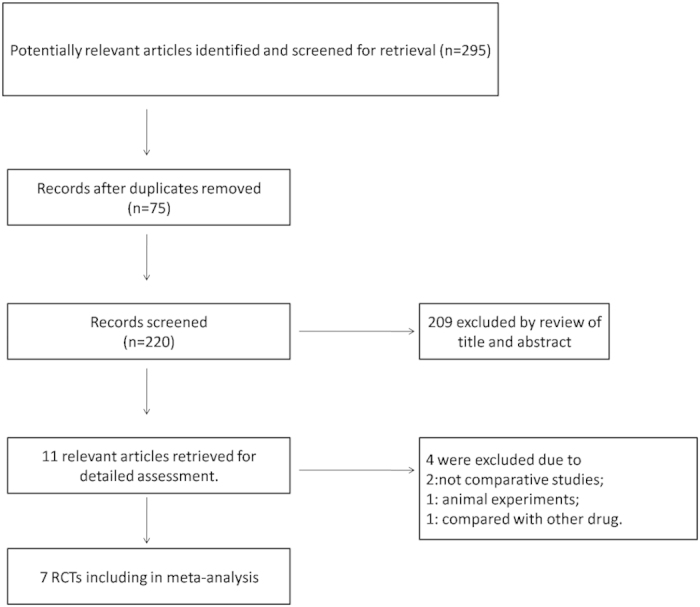
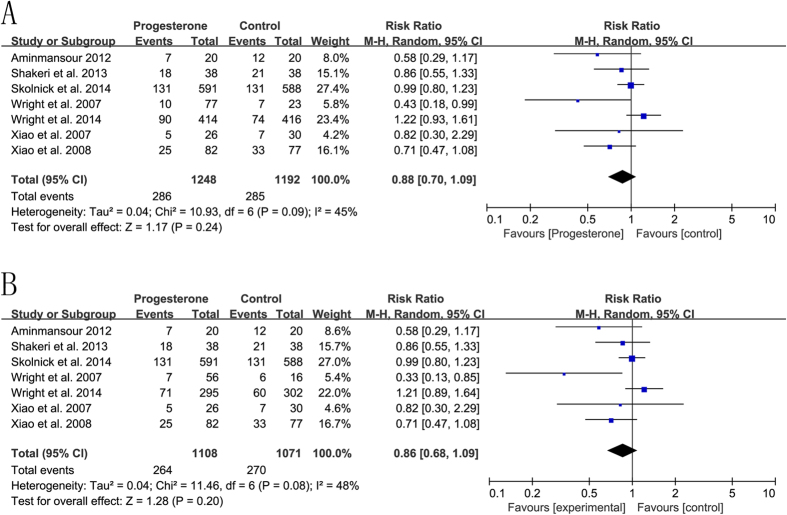
Progesterone has been shown to have neuroprotective effects in multiple animal models of brain injury, whereas the efficacy and safety in patients with traumatic brain injury (TBI) remains contentious. Here, a total of seven randomized controlled trials (RCTs) with 2492 participants were included to perform this meta-analysis. Compared with placebo, there was no significant decrease to be found in the rate of death or vegetative state for patients with acute TBI (RR = 0.88, 95%CI = 0.70, 1.09, p = 0.24). Furthermore, progesterone was not associated with good recovery in comparison with placebo (RR = 1.00, 95%CI = 0.88, 1.14, p = 0.95). Together, our study suggested that progesterone did not improve outcomes over placebo in the treatment of acute TBI.
已证实孕酮在多种脑损伤动物模型中具有神经保护作用,而其在创伤性脑损伤(TBI)患者中的疗效和安全性仍存在争议。在此,共纳入7项随机对照试验(RCT),涉及2492名参与者,以进行此项荟萃分析。与安慰剂相比,急性TBI患者的死亡率或植物状态发生率没有显著降低(RR = 0.88,95%CI = 0.70,1.09,p = 0.24)。此外,与安慰剂相比,孕酮与良好恢复无关(RR = 1.00,95%CI = 0.88,1.14,p = 0.95)。总之,我们的研究表明,在急性TBI治疗中,孕酮并不比安慰剂更能改善预后。