Pan Lei, Zeng Wenfang, Niu Liang, Lu Zhenhua, Liu Hui, Cui Guochao, Zhu Yunqin, Chu Jinfang, Li Weiping, Fang Weichao, Cai Zuguo, Li Guohuai, Wang Zhiqiang
Key Laboratory of Fruit Breeding Technology, Ministry of Agriculture, Zhengzhou Fruit Research Institute, Chinese Academy of Agricultural Sciences, Zhengzhou 450009, China Key Laboratory of Horticultural Plant Biology, Ministry of Education, Huazhong Agricultural University, Wuhan 430070, China.
Key Laboratory of Fruit Breeding Technology, Ministry of Agriculture, Zhengzhou Fruit Research Institute, Chinese Academy of Agricultural Sciences, Zhengzhou 450009, China.
J Exp Bot. 2015 Dec;66(22):7031-44. doi: 10.1093/jxb/erv400. Epub 2015 Aug 24.
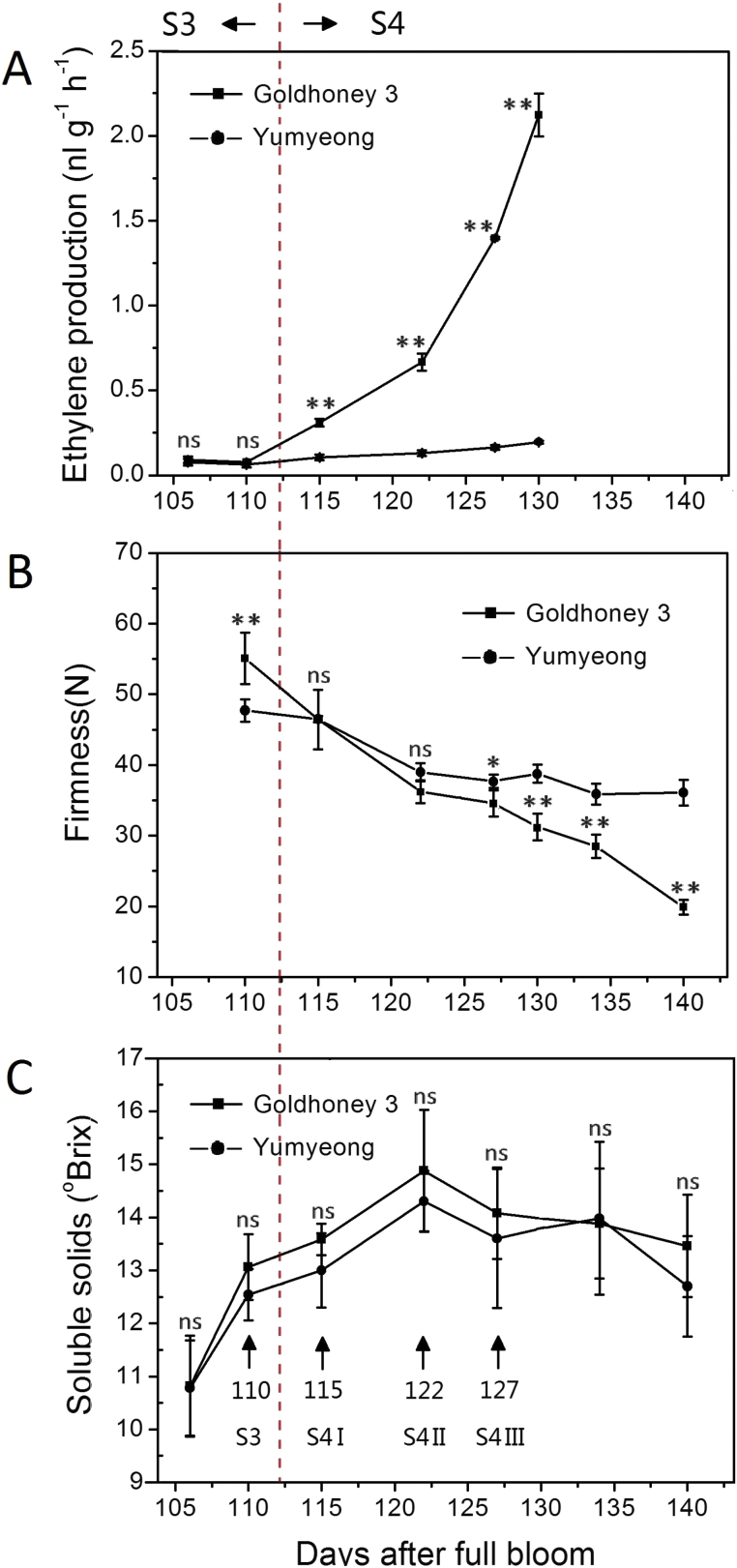
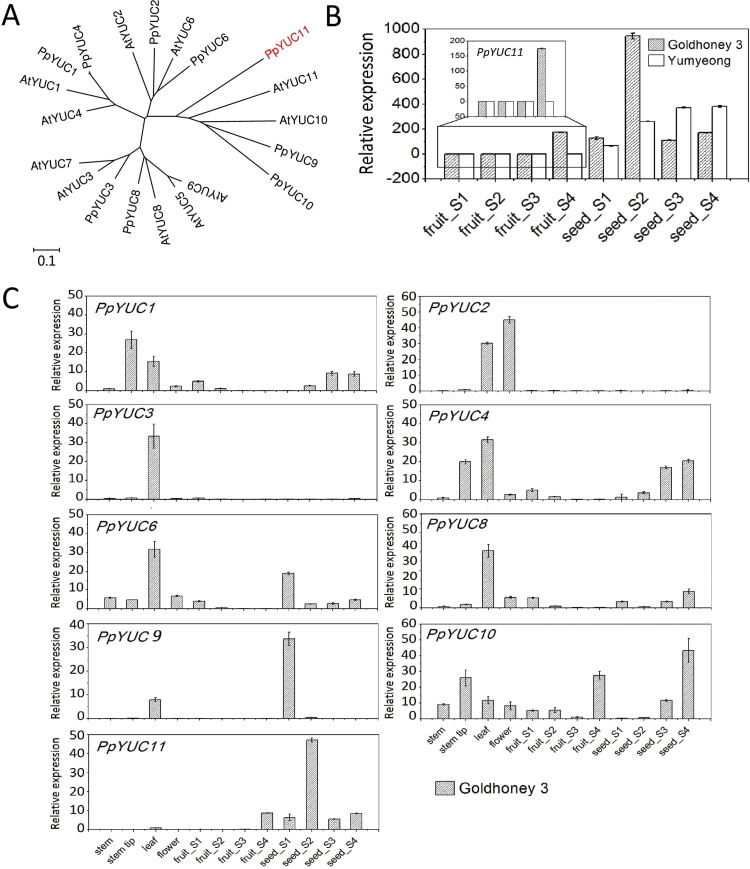
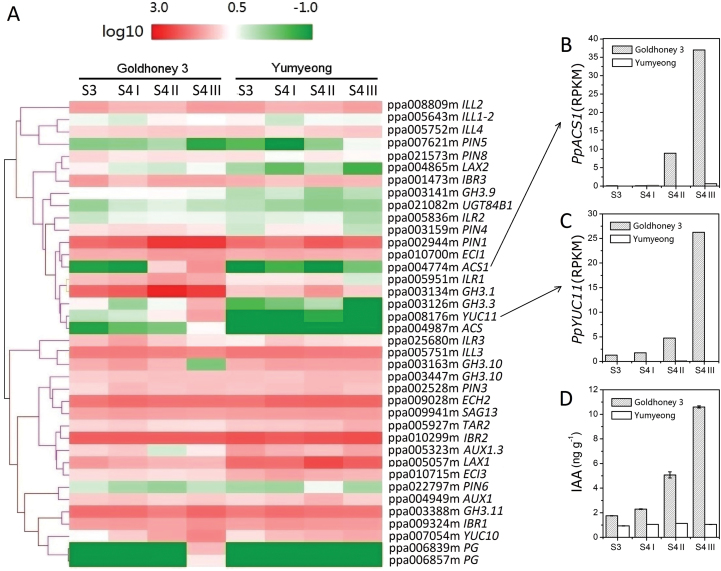
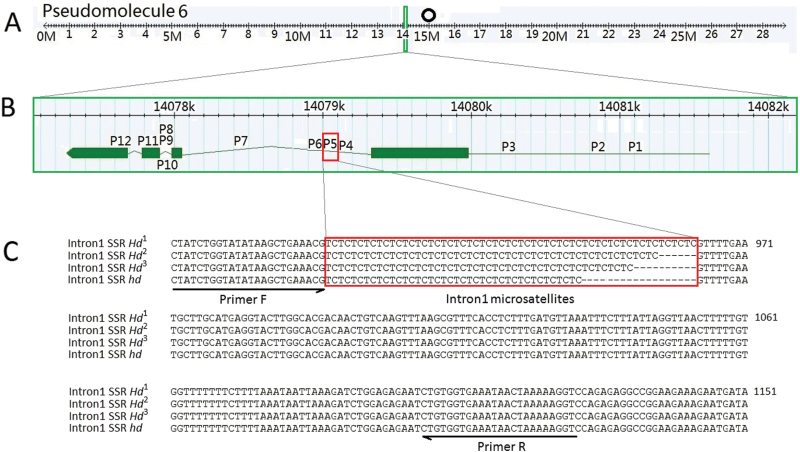
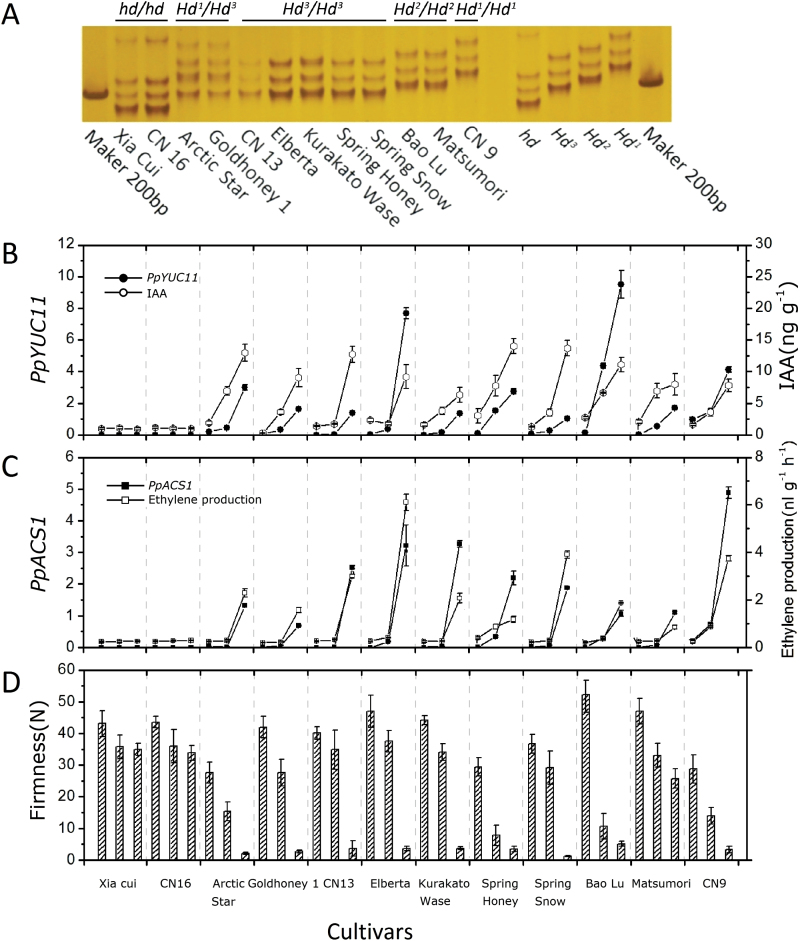
High concentrations of indole-3-acetic acid (IAA) are required for climacteric ethylene biosynthesis to cause fruit softening in melting flesh peaches at the late ripening stage. By contrast, the fruits of stony hard peach cultivars do not soften and produce little ethylene due to the low IAA concentrations. To investigate the regulation of IAA accumulation during peach ripening [the transition from stage S3 to stage S4 III (climacteric)], a digital gene expression (DGE) analysis was performed. The expression patterns of auxin-homeostasis-related genes were compared in fruits of the melting flesh peach 'Goldhoney 3' and the stony hard flesh peach 'Yumyeong' during the ripening stage. It is revealed here that a YUCCA flavin mono-oxygenase gene (PpYUC11, ppa008176m), a key gene in auxin biosynthesis, displayed an identical differential expression profile to the profiles of IAA accumulation and PpACS1 transcription: the mRNA transcripts increased at the late ripening stage in melting flesh peaches but were below the limit of detection in mature fruits of stony hard peaches. In addition, the strong association between intron TC microsatellite genotypes of PpYUC11 and the flesh texture (normal or stony hard) is described in 43 peach varieties, indicating that this locus may be responsible for the stony hard phenotype in peach. These findings support the hypothesis that PpYUC11 may play an essential role in auxin biosynthesis during peach fruit ripening and is a candidate gene for the control of the stony hard phenotype in peach.
跃变型乙烯生物合成需要高浓度的吲哚 - 3 - 乙酸(IAA),以促使软溶质桃在成熟后期果实软化。相比之下,硬溶质桃品种的果实由于IAA浓度低而不会软化且几乎不产生乙烯。为了研究桃果实成熟过程中(从S3阶段到S4 III阶段(跃变期))IAA积累的调控机制,进行了数字基因表达(DGE)分析。比较了软溶质桃‘黄金蜜3号’和硬溶质桃‘美味’在成熟阶段果实中生长素稳态相关基因的表达模式。结果表明,生长素生物合成中的关键基因——一个YUCCA黄素单加氧酶基因(PpYUC11,ppa008176m),其差异表达谱与IAA积累及PpACS1转录谱相同:在软溶质桃成熟后期mRNA转录本增加,但在硬溶质桃成熟果实中低于检测限。此外,在43个桃品种中描述了PpYUC11内含子TC微卫星基因型与果肉质地(正常或硬溶质)之间的强关联,表明该位点可能是桃硬溶质表型的原因。这些发现支持了以下假设:PpYUC11可能在桃果实成熟过程中的生长素生物合成中起重要作用,并且是控制桃硬溶质表型的候选基因。