Bidgood Susanna R, Mercer Jason
Medical Research Council-Laboratory for Molecular Cell Biology, University College London, Gower Street, London WC1E 6BT, UK.
Viruses. 2015 Aug 21;7(8):4800-25. doi: 10.3390/v7082844.
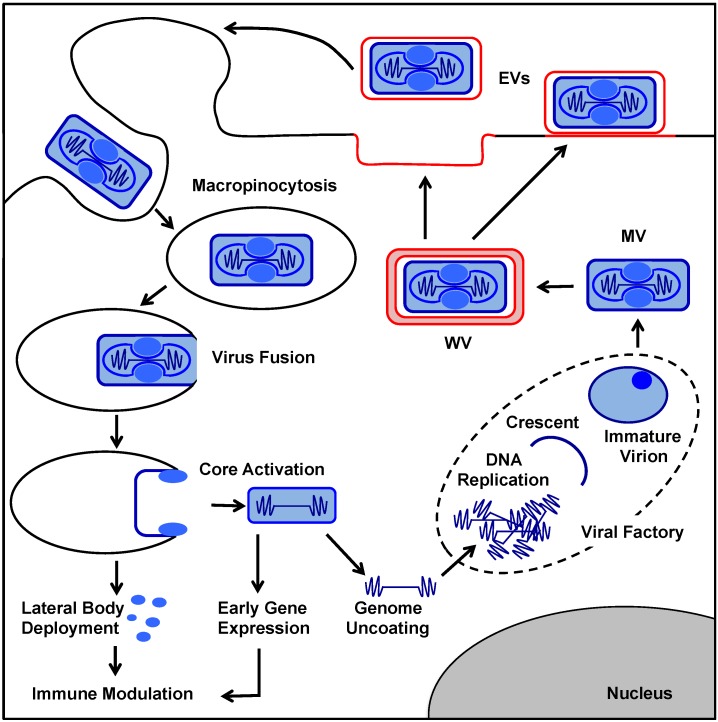
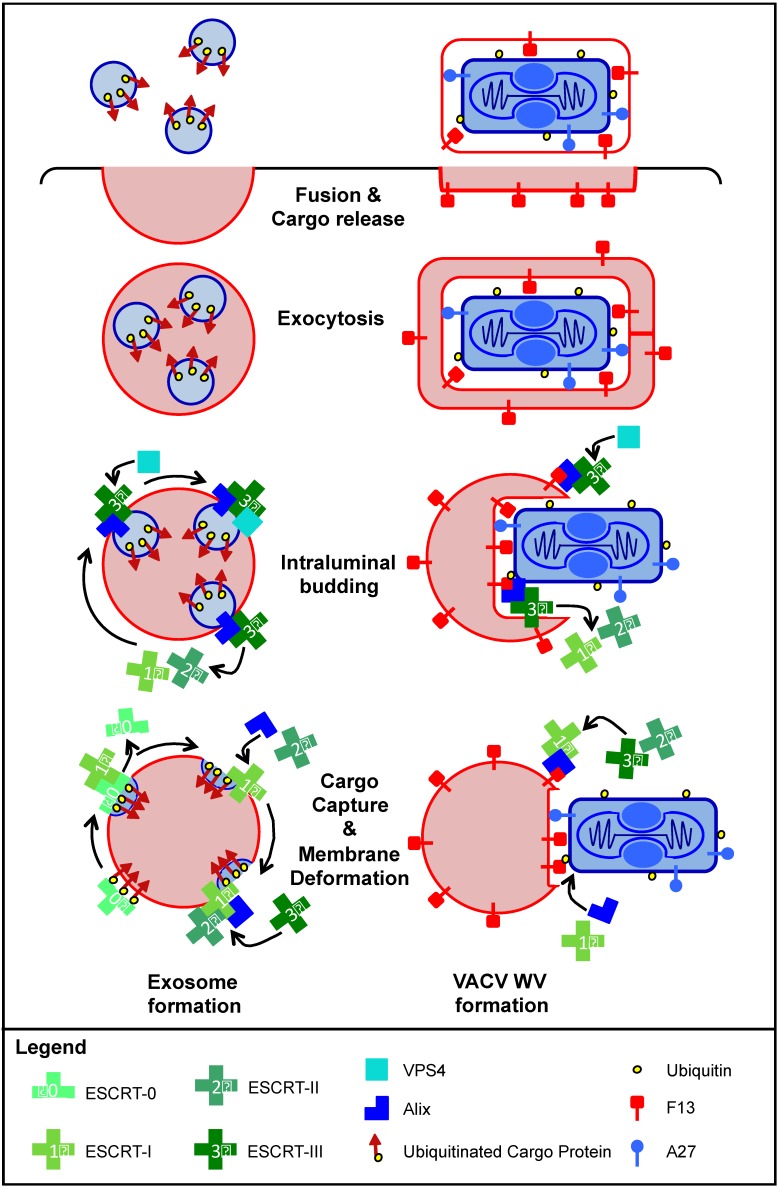
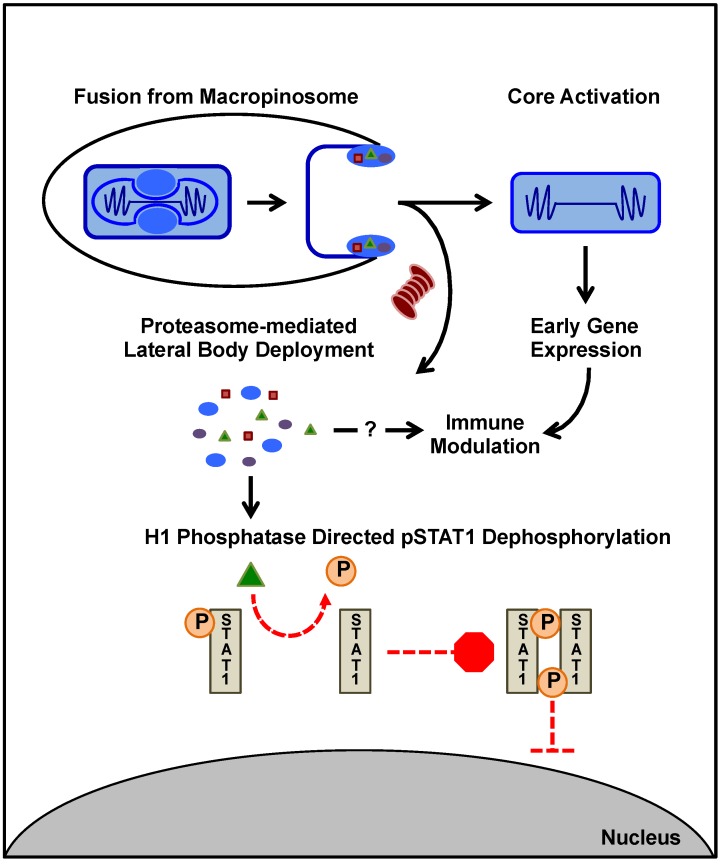
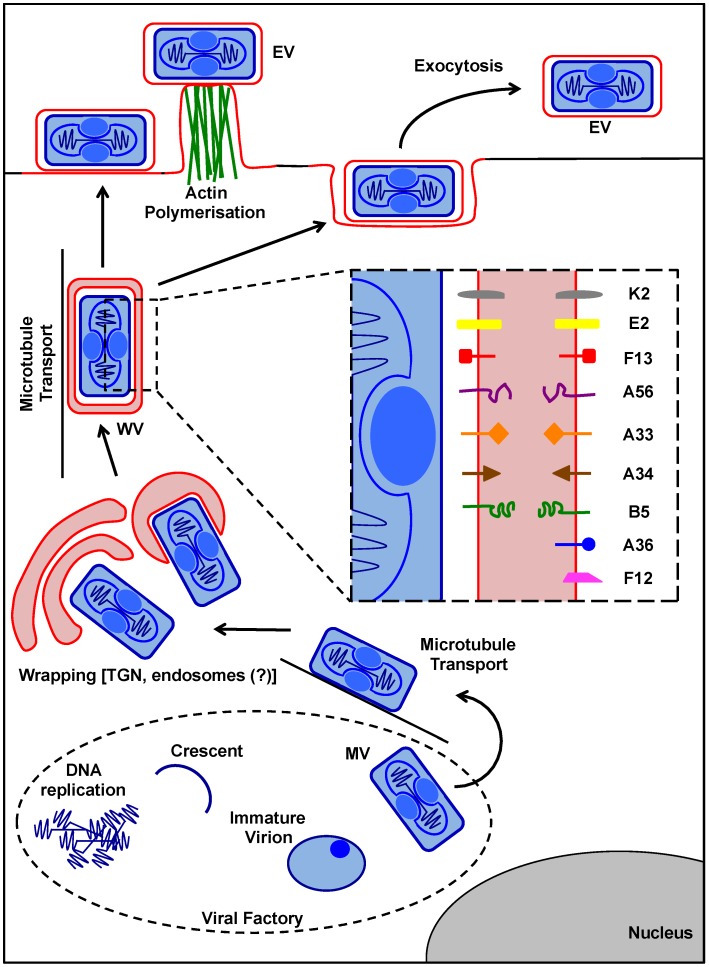
As all viruses rely on cellular factors throughout their replication cycle, to be successful they must evolve strategies to evade and/or manipulate the defence mechanisms employed by the host cell. In addition to their expression of a wide array of host modulatory factors, several recent studies have suggested that poxviruses may have evolved unique mechanisms to shunt or evade host detection. These potential mechanisms include mimicry of apoptotic bodies by mature virions (MVs), the use of viral sub-structures termed lateral bodies for the packaging and delivery of host modulators, and the formation of a second, "cloaked" form of infectious extracellular virus (EVs). Here we discuss these various strategies and how they may facilitate poxvirus immune evasion. Finally we propose a model for the exploitation of the cellular exosome pathway for the formation of EVs.
由于所有病毒在其复制周期中都依赖细胞因子,为了成功复制,它们必须进化出逃避和/或操纵宿主细胞防御机制的策略。除了表达多种宿主调节因子外,最近的几项研究表明,痘病毒可能已经进化出独特的机制来避开或逃避宿主检测。这些潜在机制包括成熟病毒粒子(MVs)对凋亡小体的模拟、利用称为侧体的病毒亚结构来包装和递送宿主调节剂,以及形成第二种“隐形”形式的传染性细胞外病毒(EVs)。在这里,我们讨论这些不同的策略以及它们如何促进痘病毒的免疫逃避。最后,我们提出了一个利用细胞外泌体途径形成EVs的模型。