Al-Ashwal Abdullah, Alnouri Fahad, Sabbour Hani, Al-Mahfouz Abdulraof, Al-Sayed Nasreen, Razzaghy-Azar Maryam, Al-Allaf Faisal, Al-Waili Khalid, Banerjee Yajnavalka, Genest Jacques, Santos Raul D, Al-Rasadi Khalid
Department of Clinical Biochemistry, Sultan Qaboos University Hospital, Muscat, Sultanate of Oman.
Curr Vasc Pharmacol. 2015;13(6):759-70. doi: 10.2174/1570161113666150827125040.
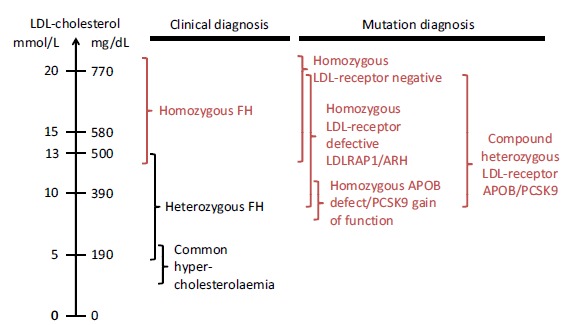
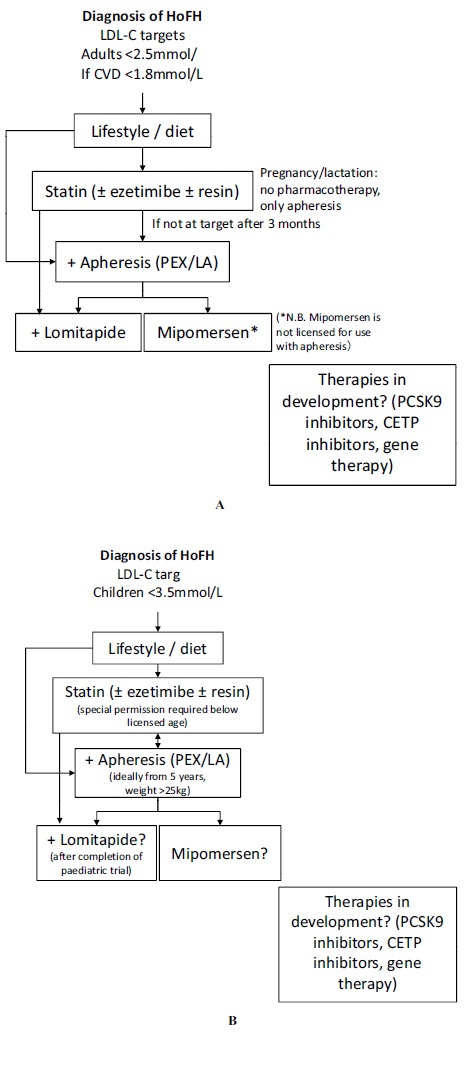
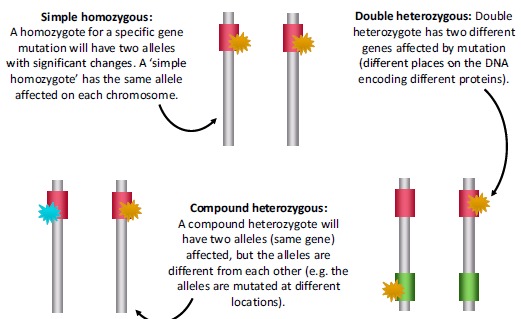
We present clinical practice guidelines for the diagnosis and treatment of homozygous familial hypercholesterolaemia (HoFH) in the Middle East region. While guidelines are broadly applicable in Europe, in the Middle East we experience a range of confounding factors that complicate disease management to a point whereby the European guidance cannot be applied without significant modification. Specifically, for disease prevalence, the Middle East region has an established epidemic of diabetes and metabolic syndrome that can complicate treatment and mask a clinical diagnosis of HoFH. We have also a high incidence of consanguineous marriages, which increase the risk of transmission of recessive and homozygous genetic disorders. This risk is further augmented in autosomal dominant disorders such as familial hypercholesterolaemia (FH), in which a range of defective genes can be transmitted, all of which contribute to the phenotypic expression of the disease. In terms of treatment, we do not have access to lipoprotein apheresis on the same scale as in Europe, and there remains a significant reliance on statins, ezetimibe and the older plasma exchange methods. Additionally, we do not have widespread access to anti-apolipoprotein B therapies and microsomal transfer protein inhibitors. In order to adapt existing global guidance documents on HoFH to the Middle East region, we convened a panel of experts from Oman, Saudi Arabia, UAE, Iran and Bahrain to draft a regional guidance document for HoFH. We also included selected experts from outside the region. This panel statement will form the foundation of a detailed appraisal of the current FH management in the Middle Eastern population and thereby provide a suitable set of guidelines tailored for the region.
我们提出了中东地区纯合子家族性高胆固醇血症(HoFH)诊断和治疗的临床实践指南。虽然这些指南在欧洲广泛适用,但在中东地区,我们面临一系列复杂因素,使疾病管理变得复杂,以至于不经重大修改就无法应用欧洲的指导意见。具体而言,就疾病患病率而言,中东地区存在糖尿病和代谢综合征的既定流行情况,这会使治疗复杂化并掩盖HoFH的临床诊断。我们还有较高的近亲结婚率,这增加了隐性和纯合子遗传疾病传播的风险。在常染色体显性疾病如家族性高胆固醇血症(FH)中,这种风险进一步增加,因为一系列缺陷基因都可能被遗传,所有这些基因都促成了该疾病的表型表达。在治疗方面,我们无法像欧洲那样广泛开展脂蛋白分离术,并且仍然严重依赖他汀类药物、依折麦布和较旧的血浆置换方法。此外,我们无法广泛获得抗载脂蛋白B疗法和微粒体转移蛋白抑制剂。为了使现有的关于HoFH的全球指导文件适用于中东地区,我们召集了来自阿曼、沙特阿拉伯、阿联酋、伊朗和巴林的专家小组,起草一份HoFH的区域指导文件。我们还纳入了该地区以外的部分专家。本专家小组声明将构成对中东人群当前FH管理进行详细评估的基础,从而提供一套适合该地区的指南。