Wang Dan, Hu Kebang, Gao Ningning, Zhang Hao, Jiang Yanlin, Liu Caigang, Wang Shouyu, Zhao Zuowei
Breast Disease and Reconstruction Center, Breast Cancer Key Lab of Dalian, The Second Hospital of Dalian Medical University, Dalian, China 116023.
Department of Urology, First Hospital of Jilin University, Changchun, China 130021.
Oncotarget. 2015 Oct 6;6(30):29296-310. doi: 10.18632/oncotarget.4828.
To clarify the composition of wound fluid (WF) and investigate the impact of WF on breast cancer cell lines.
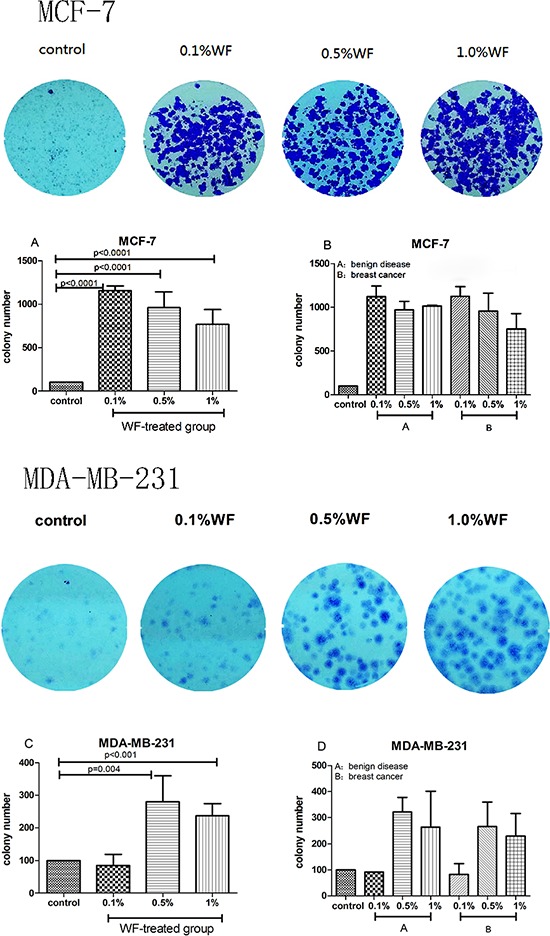
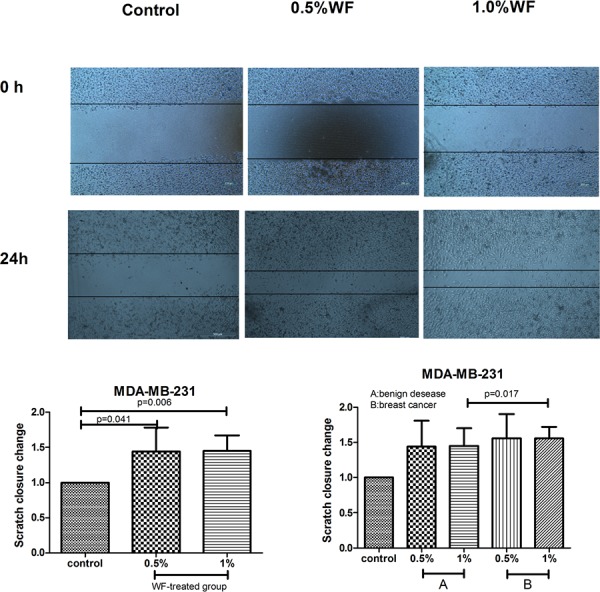
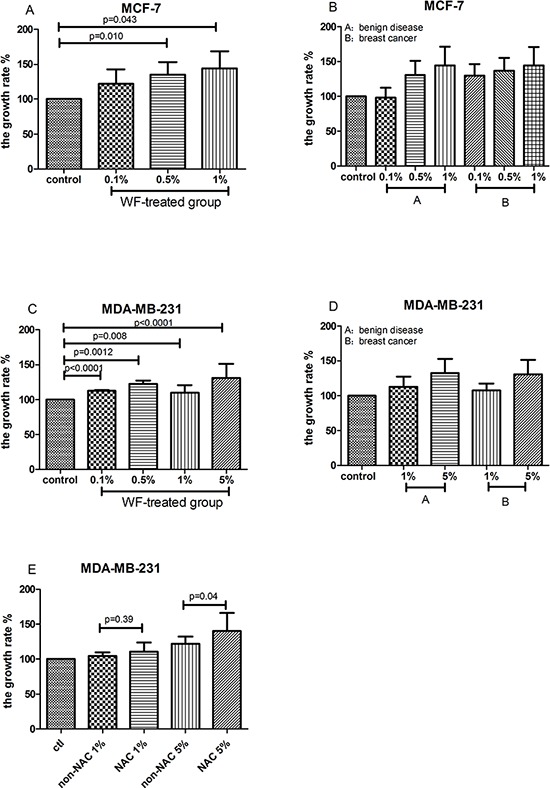
The proliferation and migration of WF-treated breast cancer cells MDA-MB-231 and MCF-7 were assessed with colony formation test, MTT cell proliferation test and scratch wound test. The quantitative profiles of WF were analyzed using Bio-Plex Pro kits.
The proliferation and migration of WF-treated breast cancer cells were significantly higher than that of untreated cells. Fifteen cytokines, 29 chemokines and 9 matrix metalloproteinases (MMPs) were assessed in WF. The concentrations of these factors were influenced by post-surgery days, neoadjuvant chemotherapy (NAC), TNM stage, pathological type and molecular subtype. The WF harvested from patients underwent NAC showed significant higher profiles of interleukin-1β (IL-1β), IL-4, IL-6, IL-17F, IL-21, IL-23, IL-25, IL-31, Interferon γ (IFNγ), CD40 ligand (CD40L), tumor necrosis factor α (TNFα), CXCL1, CXCL2, CXCL5, CCL3, CCL7 and CCL20.
Surgery-induced WF promotes the proliferation and migration of breast cancer cells. The composition of WF is influenced by various clinical features and provides potential therapeutic targets to control local recurrence and tumor progression.
阐明伤口渗出液(WF)的成分,并研究WF对乳腺癌细胞系的影响。
采用集落形成试验、MTT细胞增殖试验和划痕试验评估经WF处理的乳腺癌细胞MDA-MB-231和MCF-7的增殖和迁移情况。使用Bio-Plex Pro试剂盒分析WF的定量特征。
经WF处理的乳腺癌细胞的增殖和迁移明显高于未处理的细胞。对WF中的15种细胞因子、29种趋化因子和9种基质金属蛋白酶(MMPs)进行了评估。这些因子的浓度受术后天数、新辅助化疗(NAC)、TNM分期、病理类型和分子亚型的影响。从接受NAC的患者身上采集的WF显示白细胞介素-1β(IL-1β)、IL-4、IL-6、IL-17F、IL-21、IL-23、IL-25、IL-31、干扰素γ(IFNγ)、CD40配体(CD40L)、肿瘤坏死因子α(TNFα)、CXCL1、CXCL2、CXCL5、CCL3、CCL7和CCL20的水平显著更高。
手术诱导的WF促进乳腺癌细胞的增殖和迁移。WF的成分受多种临床特征影响,并为控制局部复发和肿瘤进展提供了潜在的治疗靶点。