Wilson John T, van Loon Raoul, Wang Wei, Zawieja David C, Moore James E
Department of Bioengineering, Imperial College London, South Kensington Campus, London SW7 2AZ, UK.
College of Engineering, Swansea University, Singleton Park, Swansea SA2 8PP, UK.
J Biomech. 2015 Oct 15;48(13):3584-90. doi: 10.1016/j.jbiomech.2015.07.045. Epub 2015 Aug 11.
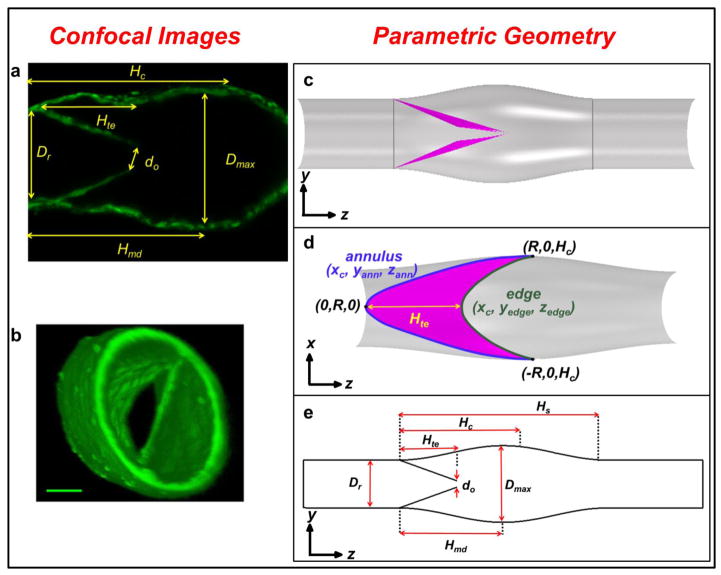
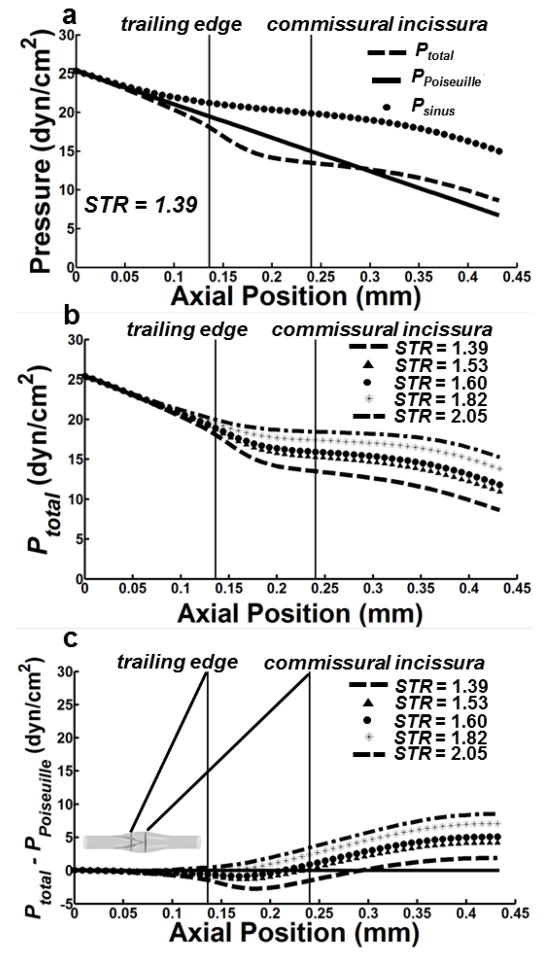
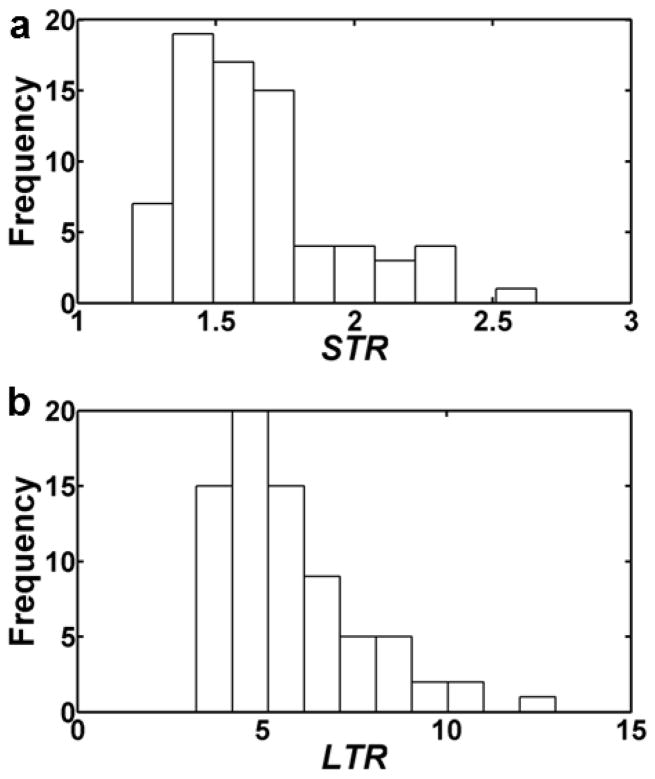
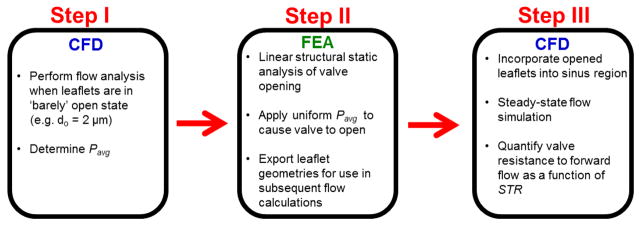
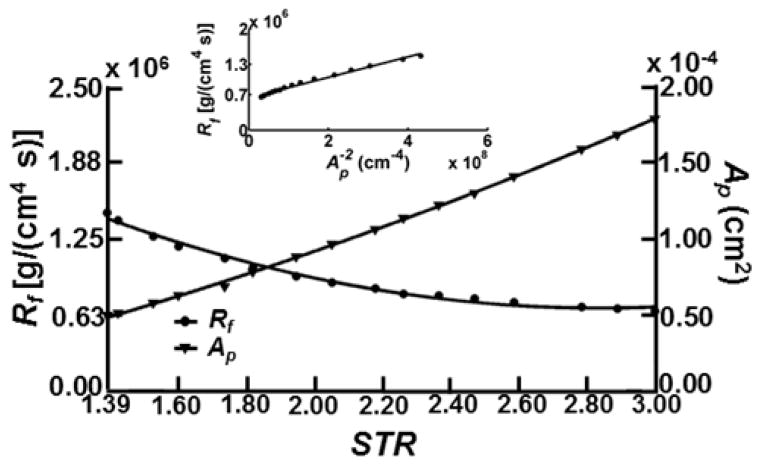
The lymphatic system is vital to a proper maintenance of fluid and solute homeostasis. Collecting lymphatics are composed of actively contracting tubular vessels segmented by bulbous sinus regions that encapsulate bi-leaflet check valves. Valve resistance to forward flow strongly influences pumping performance. However, because of the sub-millimeter size of the vessels with flow rates typically <1 ml/h and pressures of a few cmH2O, resistance is difficult to measure experimentally. Using a newly defined idealized geometry, we employed an uncoupled approach where the solid leaflet deflections of the open valve were computed and lymph flow calculations were subsequently performed. We sought to understand: 1) the effect of sinus and leaflet size on the resulting deflections experienced by the valve leaflets and 2) the effects on valve resistance to forward flow of the fully open valve. For geometries with sinus-to-root diameter ratios >1.39, the average resistance to forward flow was 0.95×10(6)[g/(cm4 s)]. Compared to the viscous pressure drop that would occur in a straight tube the same diameter as the upstream lymphangion, valve leaflets alone increase the pressure drop up to 35%. However, the presence of the sinus reduces viscous losses, with the net effect that when combined with leaflets the overall resistance is less than that of the equivalent continuing straight tube. Accurately quantifying resistance to forward flow will add to the knowledge used to develop therapeutics for treating lymphatic disorders and may eventually lead to understanding some forms of primary lymphedema.
淋巴系统对于维持液体和溶质的内环境稳定至关重要。集合淋巴管由主动收缩的管状血管组成,这些血管被球状窦区域分隔,球状窦区域包裹着双叶单向阀。瓣膜对正向流动的阻力强烈影响泵血性能。然而,由于血管尺寸小于一毫米,流速通常<1毫升/小时,压力为几厘米水柱,阻力很难通过实验测量。我们使用新定义的理想化几何结构,采用一种解耦方法,计算开放瓣膜的实心瓣叶挠度,随后进行淋巴液流动计算。我们试图了解:1)窦和瓣叶大小对瓣膜瓣叶所产生挠度的影响,以及2)对完全开放瓣膜正向流动阻力的影响。对于窦与根部直径比>1.39的几何结构,正向流动的平均阻力为0.95×10(6)[克/(厘米4·秒)]。与直径与上游淋巴管相同的直管中会出现的粘性压降相比,仅瓣膜瓣叶就会使压降增加高达35%。然而,窦的存在减少了粘性损失,其净效应是,当与瓣叶结合时,总阻力小于等效连续直管的阻力。准确量化正向流动阻力将增加用于开发治疗淋巴疾病疗法的知识,并最终可能有助于理解某些形式的原发性淋巴水肿。