Boyraz Mehmet, Pirgon Özgür, Dündar Bumin, Çekmez Ferhat, Hatipoğlu Nihal
Süleyman Demirel University Faculty of Medicine, Department of Pediatric Endocrinology and Diabetes, Isparta, Turkey Phone: +90 246 211 93 02 E-mail:
J Clin Res Pediatr Endocrinol. 2015 Jun;7(2):121-7. doi: 10.4274/jcrpe.1749.
To investigate the efficacy and safety of n-3 polyunsaturated fatty acids (PUFA) treatment in obese children with nonalcoholic fatty liver disease (NAFLD).
One hundred and eight obese (body mass index (BMI) >95th percentile for age and sex) adolescents with NAFLD were included in the study. Mean age of the subjects was 13.8 ± 3.9 years (9-17 yrs). The diagnosis of NAFLD was based on the presence of liver steatosis with high transaminases. The subjects were randomly divided into two groups. Group 1 (PUFA group, n=52) received a 1000 mg dose of PUFA once daily for 12 months and lifestyle intervention. Group 2 (placebo group, n=56) received a recommended diet plus placebo and lifestyle intervention for 12 months. Insulin resistance was evaluated by homeostasis model assessment of insulin resistance (HOMA-IR) from fasting samples.
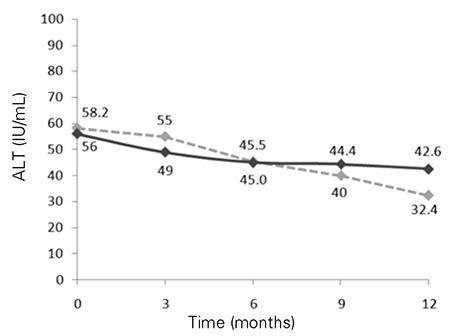
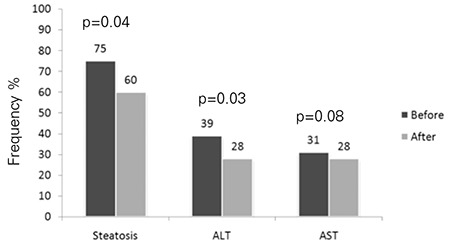
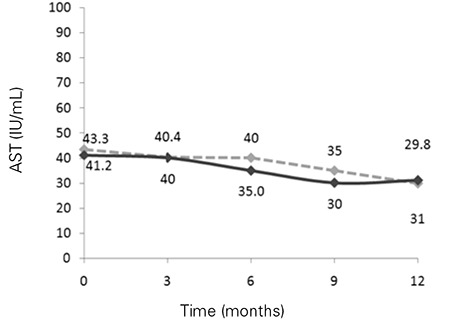
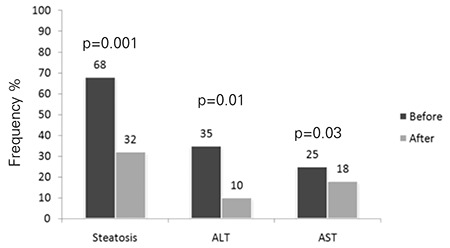
BMI, fasting insulin levels and HOMA-IR values in both groups decreased significantly at the end of the study. In group 1, 67.8% of the patients had a decrease from baseline in the prevalence of steatosis (p<0.001). Frequency of elevated alanine aminotransferase (ALT) levels (39.2% to 14.2%; p<0.01) and elevated aspartate aminotransferase (AST) levels (25% to 17.8%; p=0.01) decreased significantly in the PUFA group. Following a 12-month diet plus placebo and lifestyle intervention treatment, 40.3% (21) of the patients in the placebo group also showed a decrease in frequency of steatosis (p=0.04) and slight decreases in frequency of elevated ALT levels (38.4% to 28.8%; p=0.01) and AST levels (30.7% to 28.8%; p>0.05).
Our results indicated that n-3 PUFA treatment is safe and efficacious in obese children with NAFLD and can improve ultrasonographic findings and the elevated transaminase levels.
探讨n-3多不饱和脂肪酸(PUFA)治疗肥胖儿童非酒精性脂肪性肝病(NAFLD)的疗效及安全性。
108例肥胖(体重指数(BMI)高于年龄和性别的第95百分位数)且患有NAFLD的青少年纳入本研究。受试者的平均年龄为13.8±3.9岁(9 - 17岁)。NAFLD的诊断基于存在肝脂肪变性且转氨酶升高。受试者被随机分为两组。第1组(PUFA组,n = 52)每天服用1000 mg剂量的PUFA,共12个月,并进行生活方式干预。第2组(安慰剂组,n = 56)接受推荐饮食加安慰剂及生活方式干预,为期12个月。通过空腹样本的胰岛素抵抗稳态模型评估(HOMA-IR)来评估胰岛素抵抗。
研究结束时,两组的BMI、空腹胰岛素水平和HOMA-IR值均显著下降。在第1组中,67.8%的患者脂肪变性患病率较基线有所下降(p<0.001)。PUFA组中丙氨酸转氨酶(ALT)水平升高的频率(从39.2%降至14.2%;p<0.01)和天冬氨酸转氨酶(AST)水平升高的频率(从25%降至17.8%;p = 0.01)显著降低。经过12个月的饮食加安慰剂及生活方式干预治疗后,安慰剂组中40.3%(21例)的患者脂肪变性频率也有所下降(p = 0.04),ALT水平升高的频率略有下降(从38.4%降至28.8%;p = 0.01),AST水平升高的频率略有下降(从30.7%降至28.8%;p>0.05)。
我们的结果表明,n-3 PUFA治疗对患有NAFLD的肥胖儿童是安全有效的,并且可以改善超声检查结果及转氨酶升高的情况。