Zou Jun, Shankar Nathan
Department of Pharmaceutical Sciences, University of Oklahoma Health Sciences Center, Oklahoma City, Oklahoma, United States of America.
PLoS One. 2015 Aug 28;10(8):e0136947. doi: 10.1371/journal.pone.0136947. eCollection 2015.
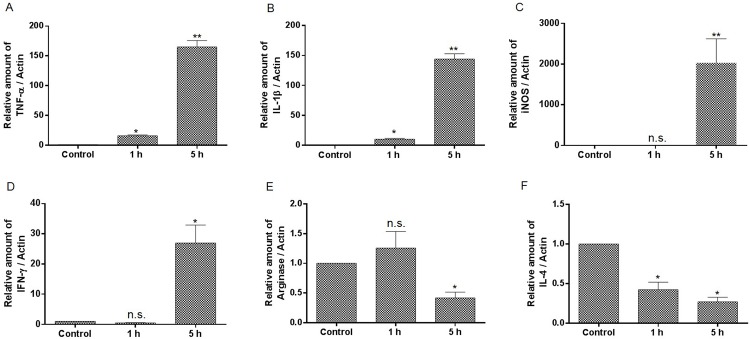
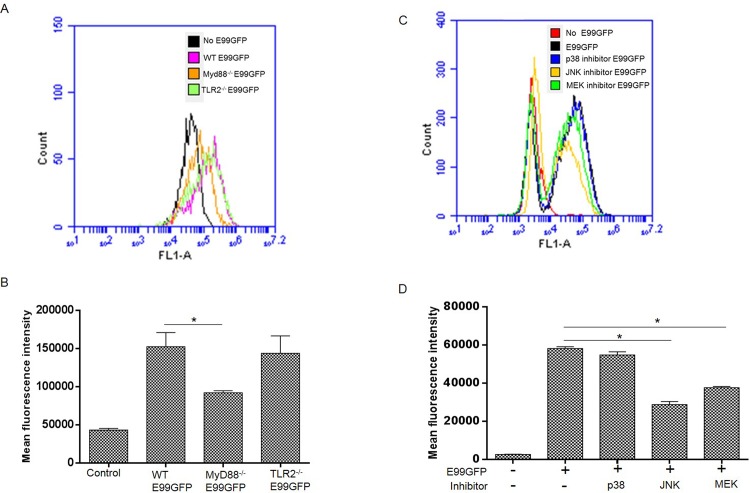
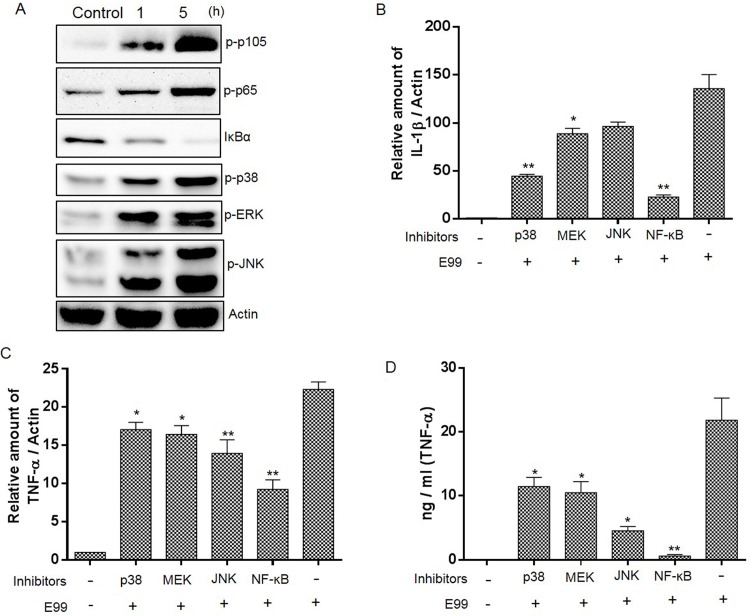
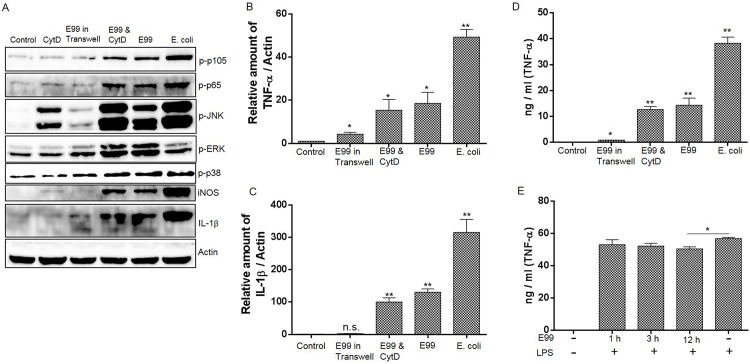
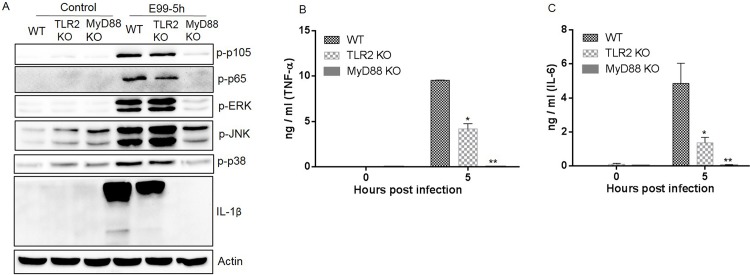
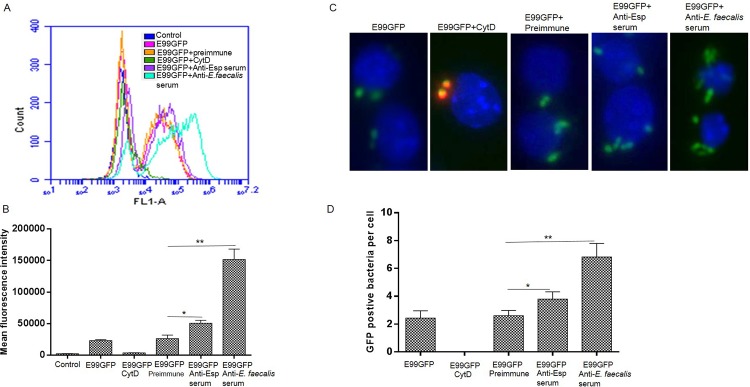
Enterococcus faecalis is a commensal bacterium residing in the gastrointestinal tract of mammals, but in certain situations it is also an opportunistic pathogen which can cause serious disease. Macrophages have been shown to play a critical role in controlling infections by commensal enterococci and also have an important role in mediating chromosomal instability and promoting colon cancer during high-level enterococcal colonization in genetically susceptible mice. However, the molecular mechanisms involved in the interaction of macrophages with enterococci during infection are not fully understood. In this study, using BMDM and RAW264.7 macrophages we show that enterococcal infection activates ERK, JNK and p38 MAPK as well as NF-κB, and drives polarization of macrophages towards the M1 phenotype. Inhibition of NF-κB activation significantly reduced the expression of TNF-α and IL-1β, as did the inhibition of ERK, JNK and p38 MAPK, although to differing extent. Enterococci-induced activation of these pathways and subsequent cytokine expression was contact dependent, modest compared to activation by E. coli and, required the adaptor protein MyD88. Phagocytosis of enterococci by macrophages was enhanced by preopsonization with E. faecalis antiserum and involved the ERK and JNK signaling pathways, with the adaptor protein MyD88 as an important mediator. This study of the interaction of macrophages with enterococci could provide a foundation for studying the pathogenesis of infection by this opportunistic pathogen and to developing new therapeutic approaches to combat enterococcal infection.
粪肠球菌是一种存在于哺乳动物胃肠道中的共生细菌,但在某些情况下它也是一种机会致病菌,可导致严重疾病。巨噬细胞已被证明在控制共生肠球菌感染中起关键作用,并且在基因易感小鼠高水平肠球菌定植期间介导染色体不稳定和促进结肠癌方面也发挥重要作用。然而,感染期间巨噬细胞与肠球菌相互作用所涉及的分子机制尚未完全了解。在本研究中,我们使用骨髓来源的巨噬细胞(BMDM)和RAW264.7巨噬细胞表明,肠球菌感染激活ERK、JNK和p38丝裂原活化蛋白激酶(MAPK)以及核因子κB(NF-κB),并驱动巨噬细胞向M1表型极化。抑制NF-κB活化显著降低肿瘤坏死因子-α(TNF-α)和白细胞介素-1β(IL-1β)的表达,抑制ERK、JNK和p38 MAPK也有同样效果,尽管程度不同。肠球菌诱导的这些信号通路激活和随后的细胞因子表达是接触依赖性的,与大肠杆菌激活相比程度适中,并且需要衔接蛋白髓样分化因子88(MyD88)。用粪肠球菌抗血清预调理可增强巨噬细胞对肠球菌的吞噬作用,这涉及ERK和JNK信号通路,衔接蛋白MyD88是重要的介导因子。这项关于巨噬细胞与肠球菌相互作用的研究可为研究这种机会致病菌的感染发病机制以及开发对抗肠球菌感染的新治疗方法提供基础。