Ahn Sung Hyun, Kim Doo Hyun, Lee Ah Ram, Kim Beom Kyung, Park Yong Kwang, Park Eun-Sook, Ahn Sang Hoon, Shin Gu-Choul, Park Soree, Kang Hong Seok, Rhee Jin-Kyu, Yang Sung-Il, Chong Youhoon, Kim Kyun-Hwan
Department of Pharmacology, Center for Cancer Research and Diagnostic Medicine, IBST, School of Medicine, Konkuk University, Seoul, Korea.
Department of Internal Medicine and Institute of Gastroenterology, Yonsei University College of Medicine, Seoul, Korea.
PLoS One. 2015 Aug 31;10(8):e0136728. doi: 10.1371/journal.pone.0136728. eCollection 2015.
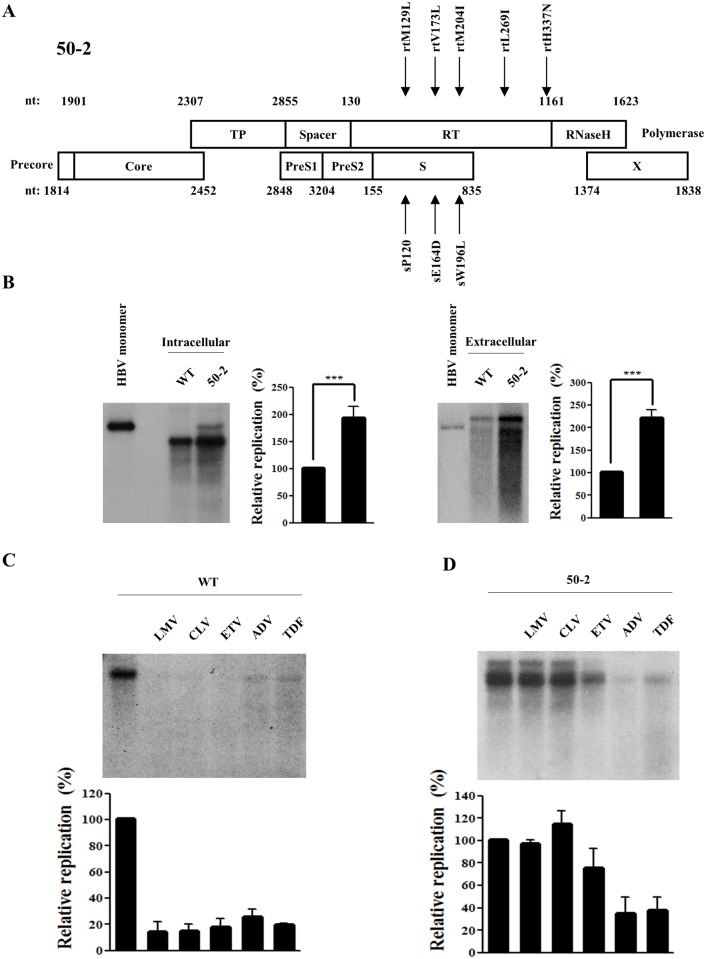
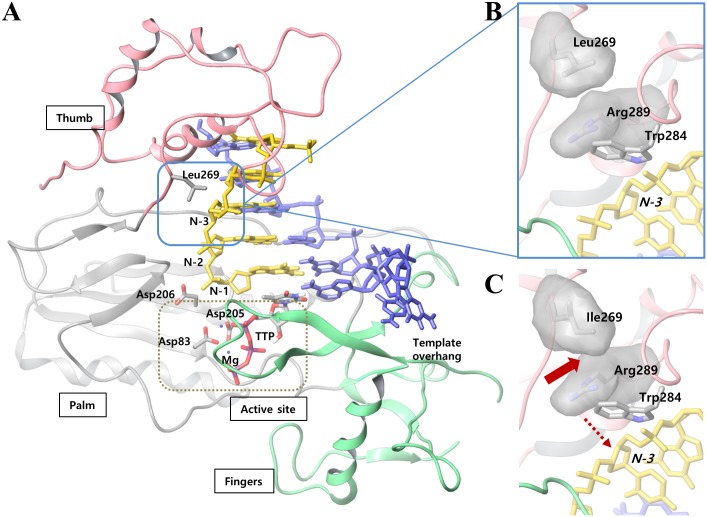
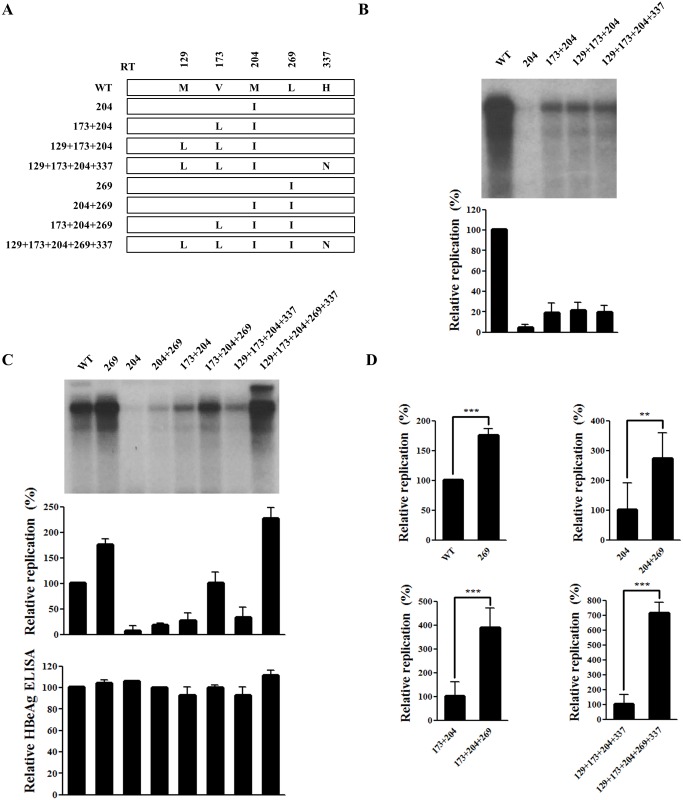
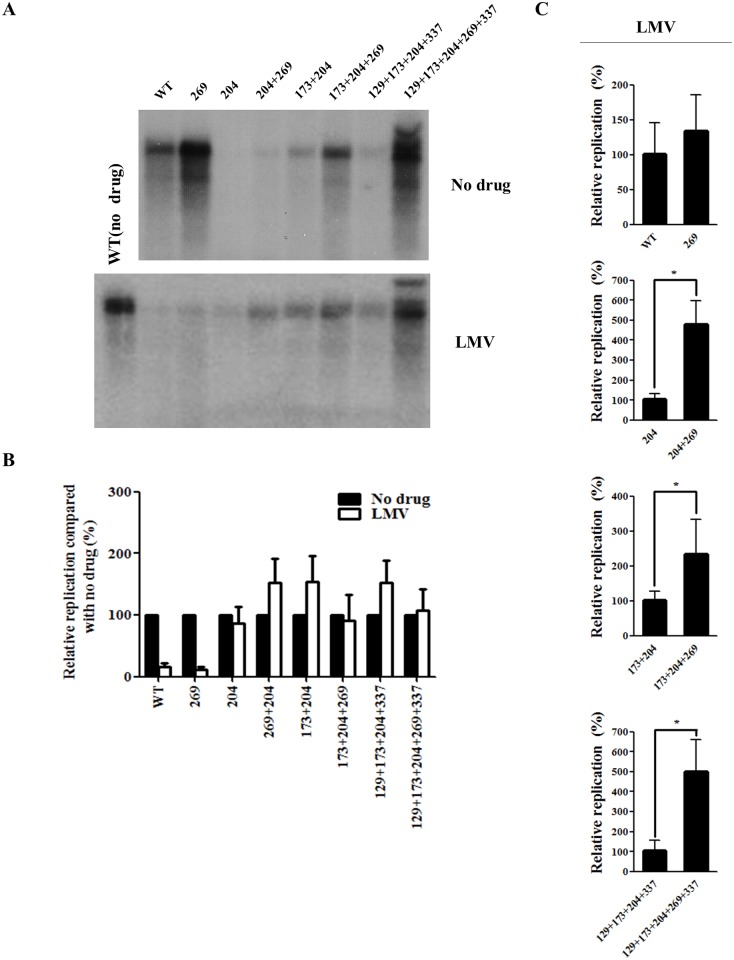
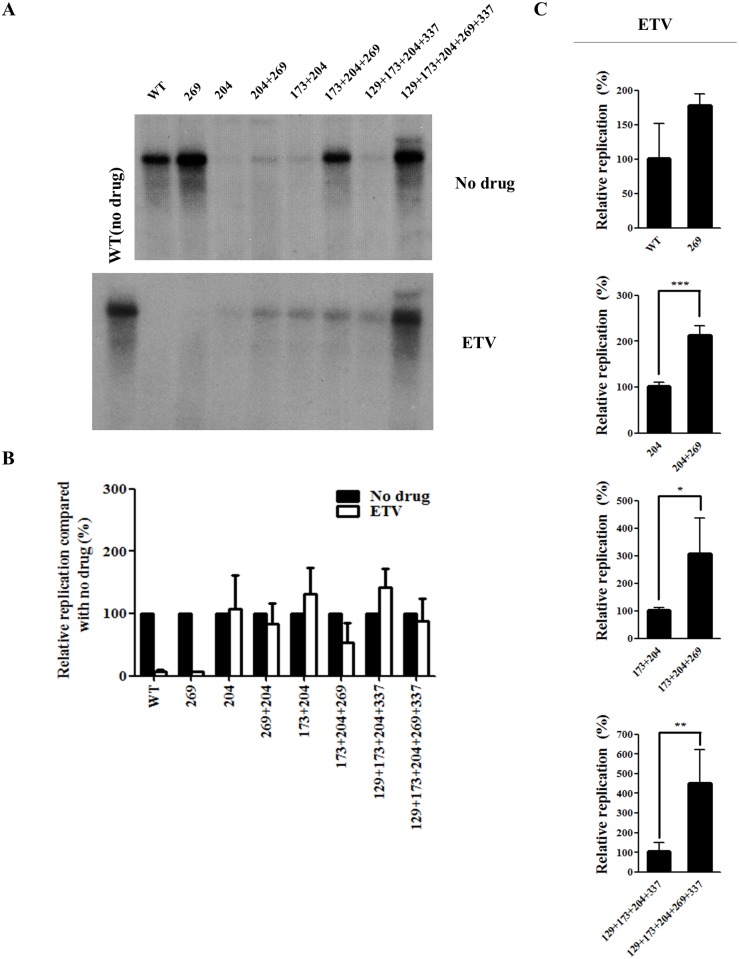
The emergence of compensatory mutations in the polymerase gene of drug resistant hepatitis B virus (HBV) is associated with treatment failure. We previously identified a multi-drug resistant HBV mutant, which displayed resistance towards lamivudine (LMV), clevudine (CLV), and entecavir (ETV), along with a strong replication capacity. The aim of this study was to identify the previously unknown compensatory mutations, and to determine the clinical relevance of this mutation during antiviral therapy. In vitro mutagenesis, drug susceptibility assay, and molecular modeling studies were performed. The rtL269I substitution conferred 2- to 7-fold higher replication capacity in the wild-type (WT) or YMDD mutation backbone, regardless of drug treatment. The rtL269I substitution alone did not confer resistance to LMV, ETV, adefovir (ADV), or tenofovir (TDF). However, upon combination with YMDD mutation, the replication capacity under LMV or ETV treatment was enhanced by several folds. Molecular modeling studies suggested that the rtL269I substitution affects template binding, which may eventually lead to the enhanced activity of rtI269-HBV polymerase in both WT virus and YMDD mutant. The clinical relevance of the rtL269I substitution was validated by its emergence in association with YMDD mutation in chronic hepatitis B (CHB) patients with sub-optimal response or treatment failure to LMV or CLV. Our study suggests that substitution at rt269 in HBV polymerase is associated with multi-drug resistance, which may serve as a novel compensatory mutation for replication-defective multi-drug resistant HBV.
耐药性乙型肝炎病毒(HBV)聚合酶基因中补偿性突变的出现与治疗失败有关。我们之前鉴定出一种多药耐药HBV突变体,它对拉米夫定(LMV)、克来夫定(CLV)和恩替卡韦(ETV)耐药,同时具有很强的复制能力。本研究的目的是鉴定此前未知的补偿性突变,并确定该突变在抗病毒治疗期间的临床相关性。进行了体外诱变、药物敏感性测定和分子模拟研究。无论是否进行药物治疗,rtL269I替代在野生型(WT)或YMDD突变主干中赋予了高2至7倍的复制能力。单独的rtL269I替代并未赋予对LMV、ETV、阿德福韦(ADV)或替诺福韦(TDF)的耐药性。然而,与YMDD突变联合时,LMV或ETV治疗下的复制能力提高了数倍。分子模拟研究表明,rtL269I替代影响模板结合,这最终可能导致rtI269-HBV聚合酶在野生型病毒和YMDD突变体中活性增强。rtL269I替代的临床相关性通过其在对LMV或CLV反应欠佳或治疗失败的慢性乙型肝炎(CHB)患者中与YMDD突变一起出现而得到验证。我们的研究表明,HBV聚合酶rt269位点的替代与多药耐药有关,这可能作为复制缺陷型多药耐药HBV的一种新的补偿性突变。