Govindan J Amaranath, Jayamani Elamparithi, Zhang Xinrui, Breen Peter, Larkins-Ford Jonah, Mylonakis Eleftherios, Ruvkun Gary
Department of Molecular Biology, Massachusetts General Hospital, Boston, Massachusetts 02114, USA.
Department of Genetics, Harvard Medical School, Boston, Massachusetts 02115, USA.
Nat Cell Biol. 2015 Oct;17(10):1294-303. doi: 10.1038/ncb3229. Epub 2015 Aug 31.
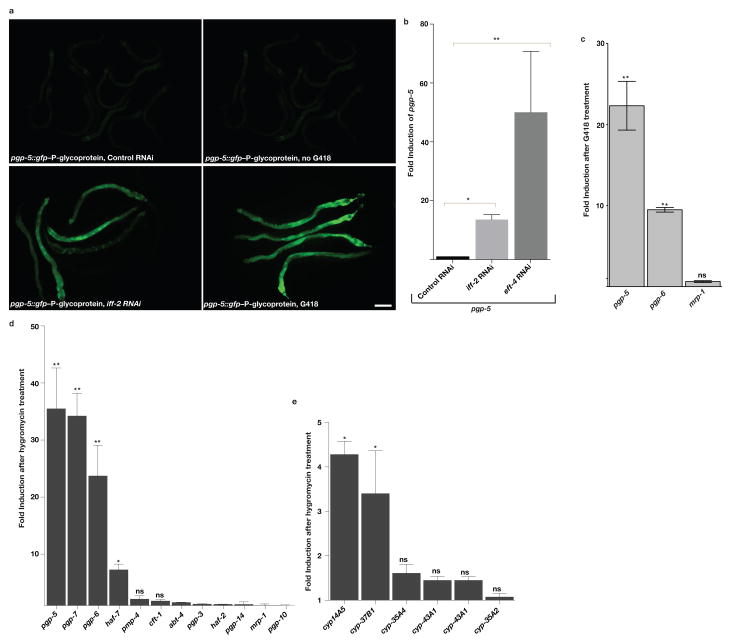
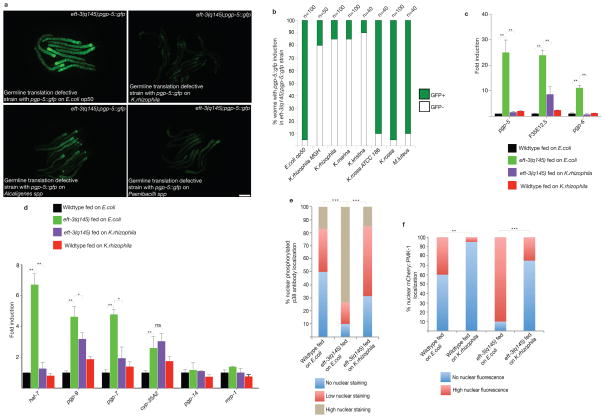
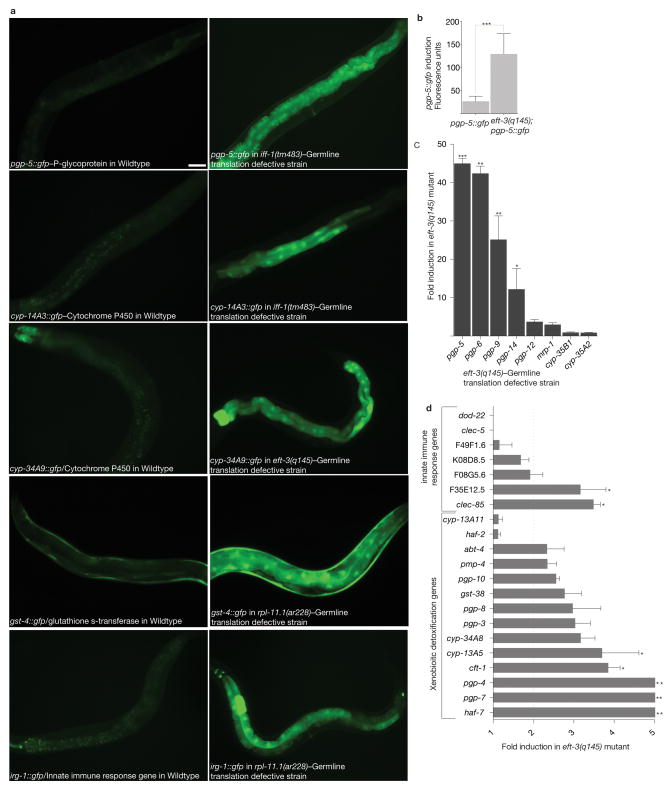
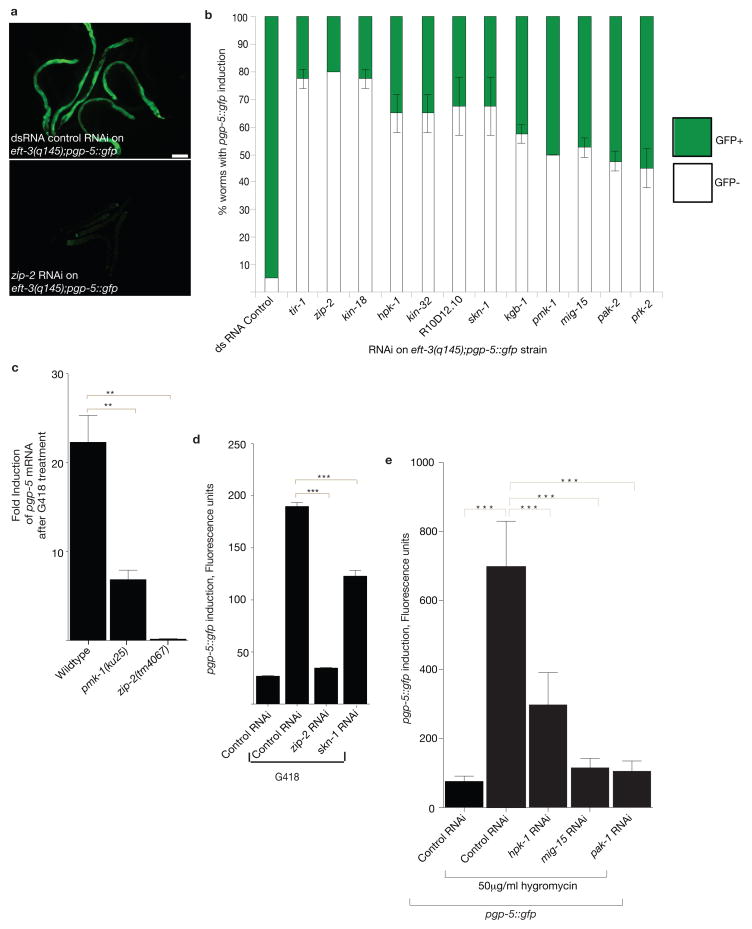
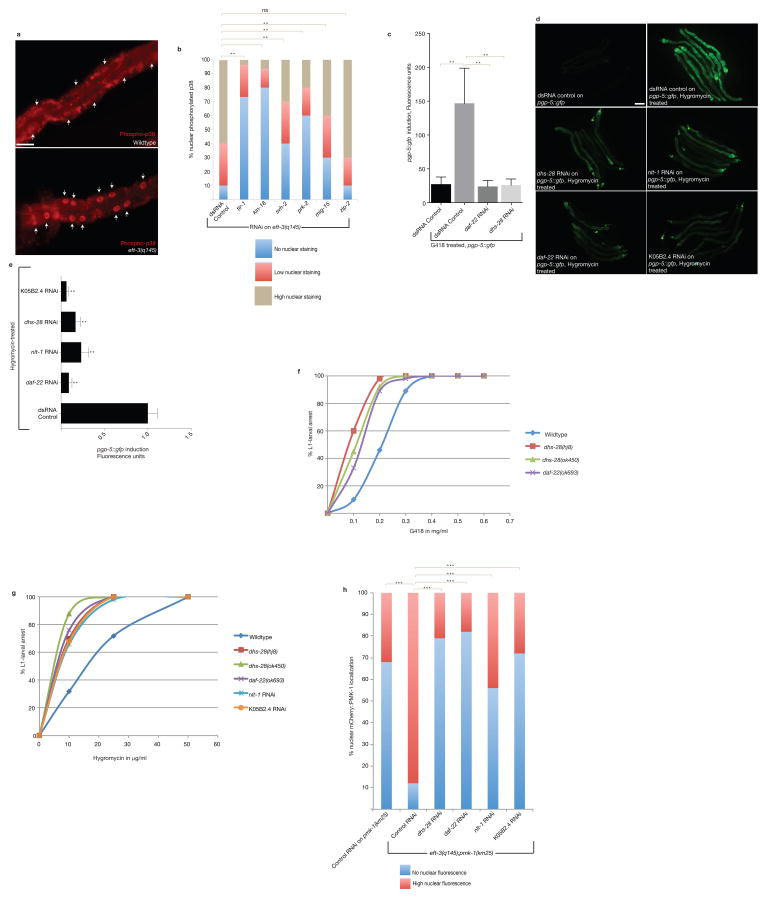
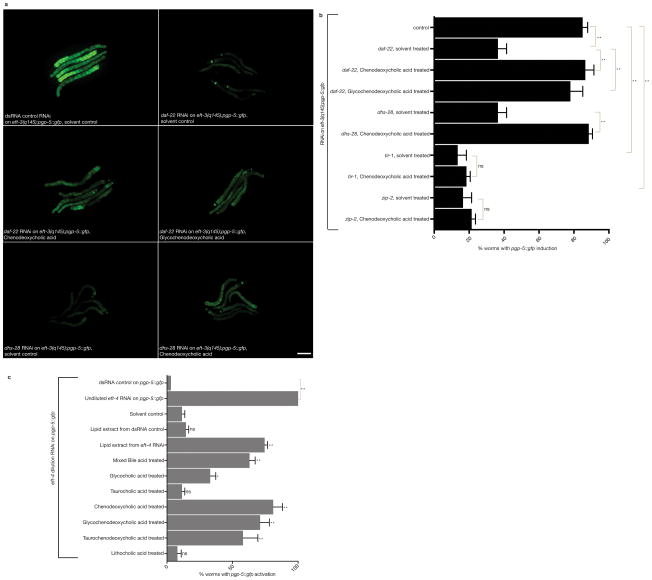
Translation in eukaryotes is followed to detect toxins and virulence factors and coupled to the induction of defence pathways. Caenorhabditis elegans germline-specific mutations in translation components are detected by this system to induce detoxification and immune responses in distinct somatic cells. An RNA interference screen revealed gene inactivations that act at multiple steps in lipid biosynthetic and kinase pathways upstream of MAP kinase to mediate the systemic communication of translation defects to induce detoxification genes. Mammalian bile acids can rescue the defect in detoxification gene induction caused by C. elegans lipid biosynthetic gene inactivations. Extracts prepared from C. elegans with translation deficits but not from the wild type can also rescue detoxification gene induction in lipid-biosynthesis-defective strains. These eukaryotic antibacterial countermeasures are not ignored by bacteria: particular bacterial species suppress normal C. elegans detoxification responses to mutations in translation factors.
在真核生物中,翻译过程之后会检测毒素和毒力因子,并与防御途径的诱导相耦合。该系统可检测秀丽隐杆线虫翻译组件中的生殖系特异性突变,从而在不同的体细胞中诱导解毒和免疫反应。一项RNA干扰筛选揭示了基因失活,这些失活作用于丝裂原活化蛋白激酶上游的脂质生物合成和激酶途径的多个步骤,以介导翻译缺陷的系统性信号传递,从而诱导解毒基因。哺乳动物胆汁酸可以挽救秀丽隐杆线虫脂质生物合成基因失活所导致的解毒基因诱导缺陷。从有翻译缺陷的秀丽隐杆线虫中制备的提取物(而非野生型的提取物)也可以挽救脂质生物合成缺陷菌株中的解毒基因诱导。细菌并未忽视这些真核生物的抗菌对策:特定细菌物种会抑制秀丽隐杆线虫对翻译因子突变的正常解毒反应。