Tong Xuhui, Lopez William, Ramachandran Jayalakshmi, Ayad Wafaa A, Liu Yu, Lopez-Rodriguez Angelica, Harris Andrew L, Contreras Jorge E
Department of Pharmacology, Physiology and Neuroscience, New Jersey Medical School, Rutgers University, Newark, NJ 07103 Department of Pharmacology, Bengbu Medical College, Bengbu, Anhui Province 233000, China.
Department of Pharmacology, Physiology and Neuroscience, New Jersey Medical School, Rutgers University, Newark, NJ 07103.
J Gen Physiol. 2015 Sep;146(3):245-54. doi: 10.1085/jgp.201511375.
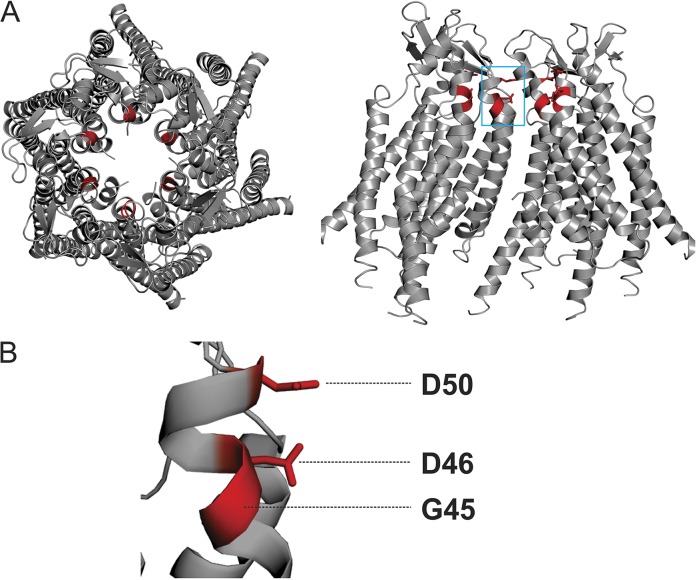
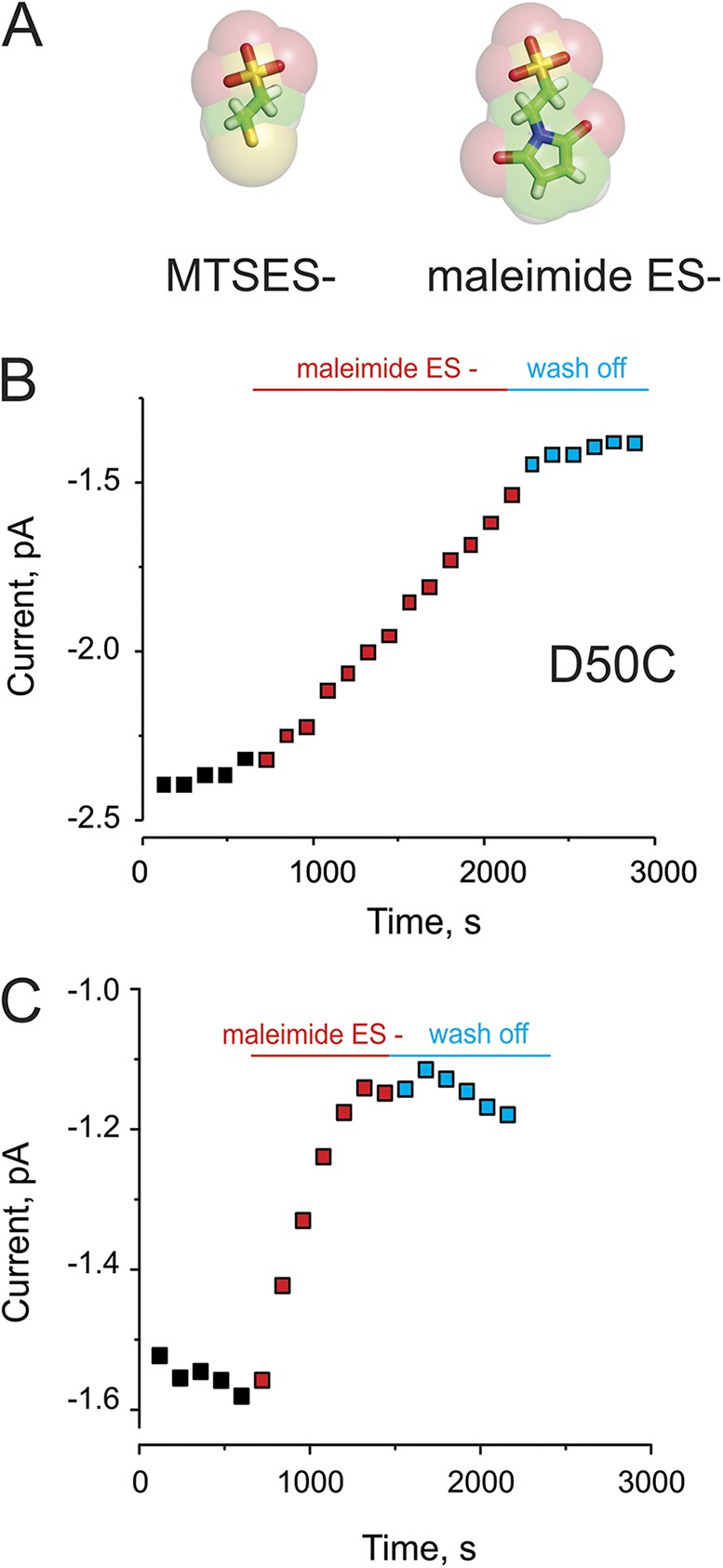
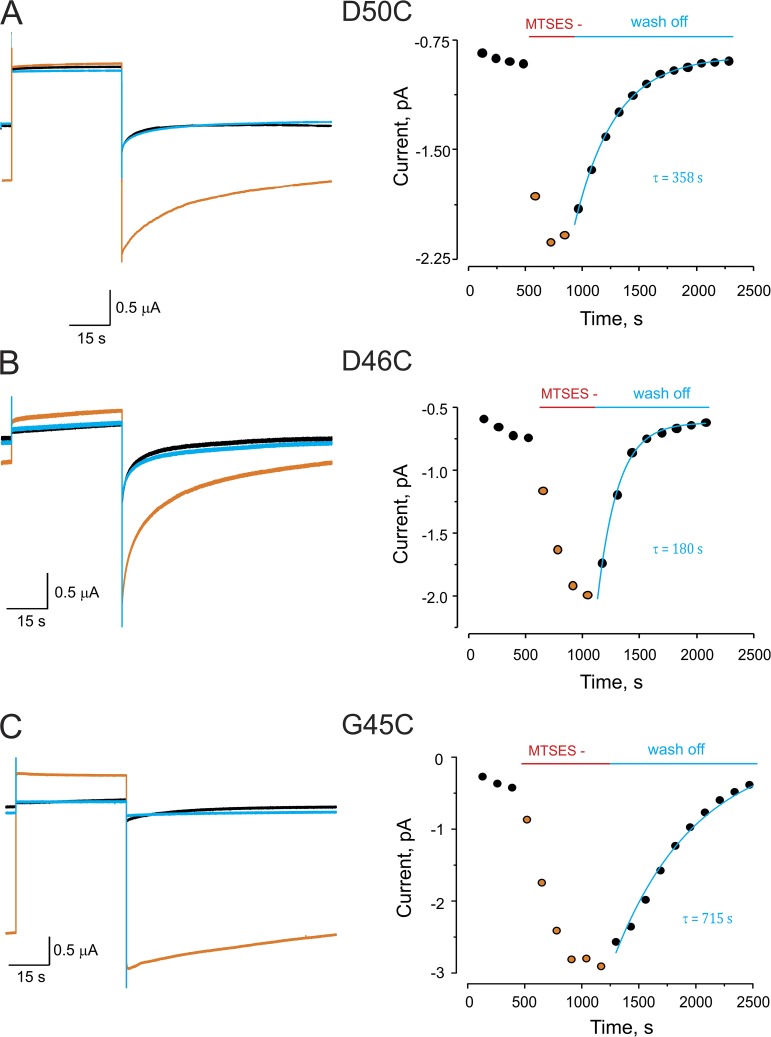
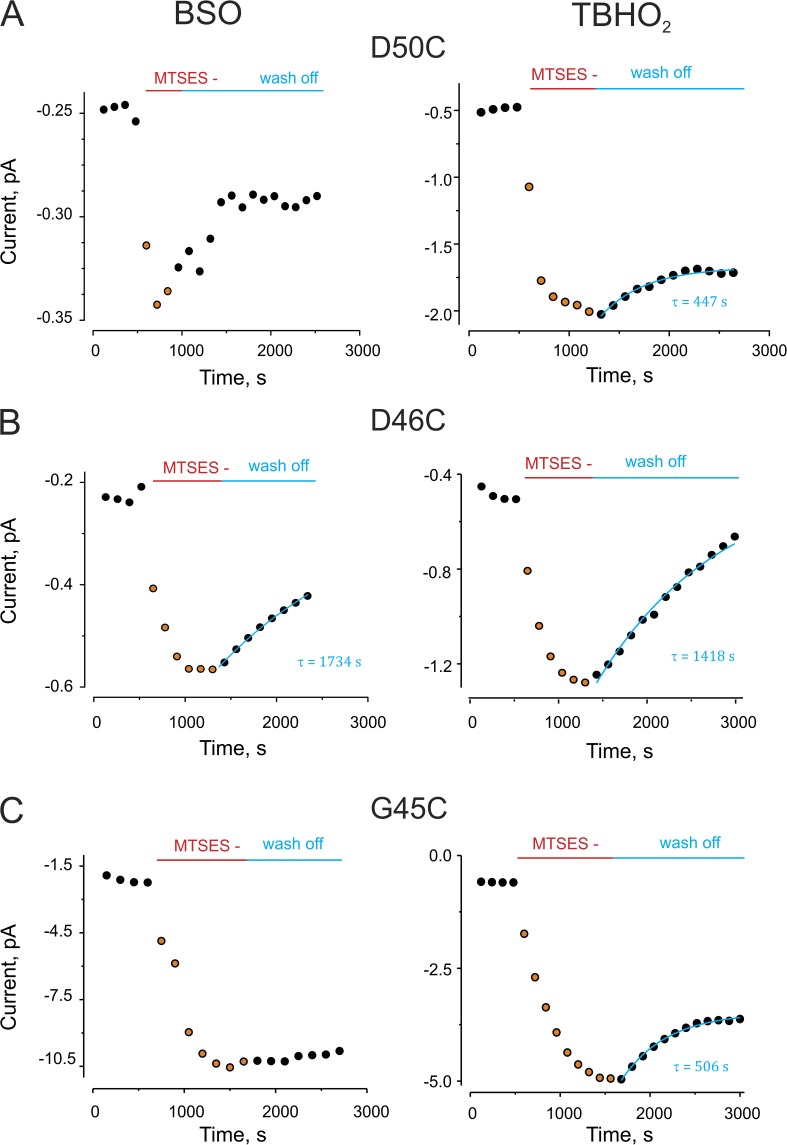
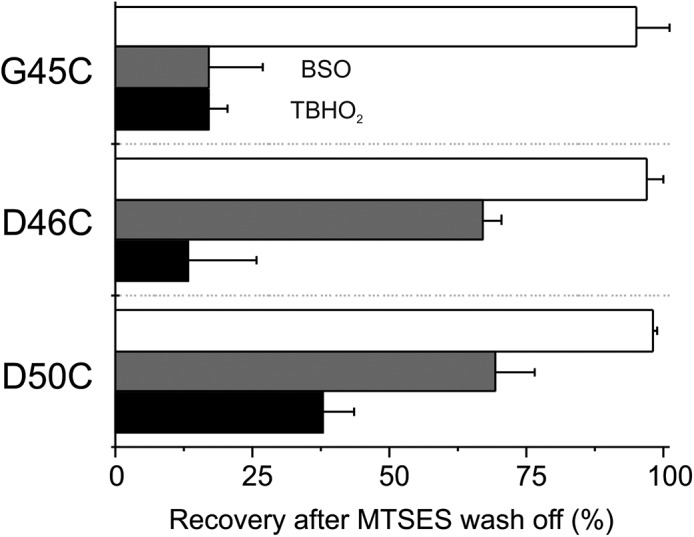
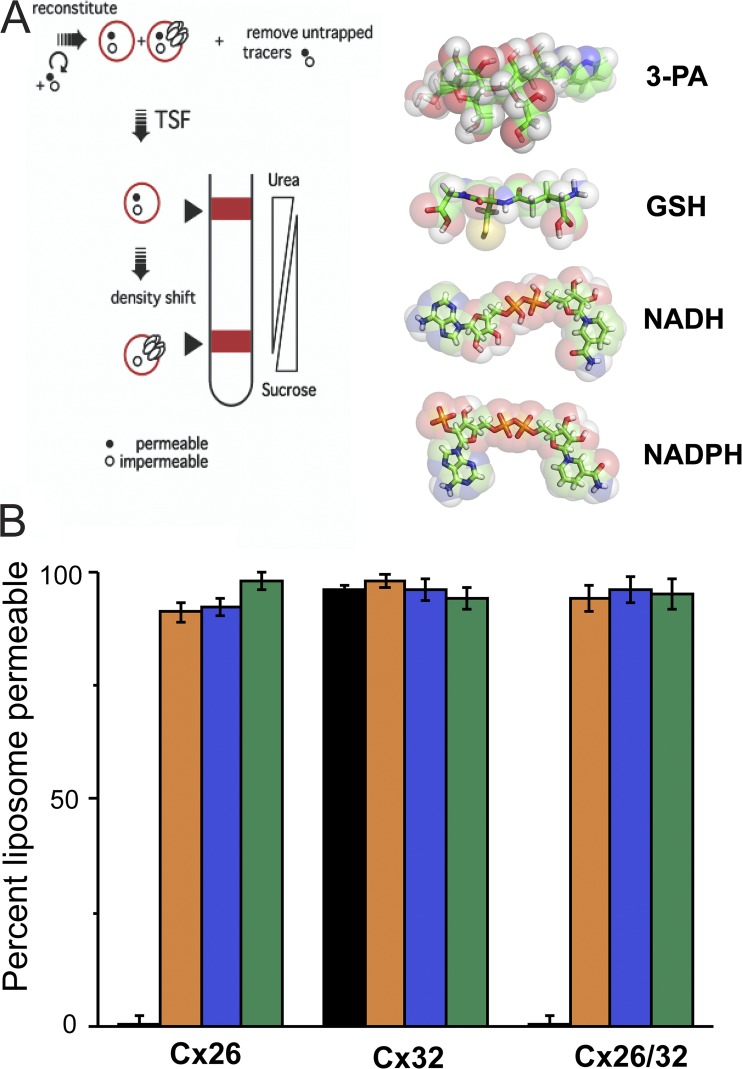
Cysteine-scanning mutagenesis combined with thiol reagent modification is a powerful method with which to define the pore-lining elements of channels and the changes in structure that accompany channel gating. Using the Xenopus laevis oocyte expression system and two-electrode voltage clamp, we performed cysteine-scanning mutagenesis of several pore-lining residues of connexin 26 (Cx26) hemichannels, followed by chemical modification using a methanethiosulfonate (MTS) reagent, to help identify the position of the gate. Unexpectedly, we observed that the effect of MTS modification on the currents was reversed within minutes of washout. Such a reversal should not occur unless reducing agents, which can break the disulfide thiol-MTS linkage, have access to the site of modification. Given the permeability to large metabolites of connexin channels, we tested whether cytosolic glutathione (GSH), the primary cell reducing agent, was reaching the modified sites through the connexin pore. Inhibition of gamma-glutamylcysteine synthetase by buthionine sulfoximine decreased the cytosolic GSH concentration in Xenopus oocytes and reduced reversibility of MTS modification, as did acute treatment with tert-butyl hydroperoxide, which oxidizes GSH. Cysteine modification based on thioether linkages (e.g., maleimides) cannot be reversed by reducing agents and did not reverse with washout. Using reconstituted hemichannels in a liposome-based transport-specific fractionation assay, we confirmed that homomeric Cx26 and Cx32 and heteromeric Cx26/Cx32 are permeable to GSH and other endogenous reductants. These results show that, for wide pores, accessibility of cytosolic reductants can lead to reversal of MTS-based thiol modifications. This potential for reversibility of thiol modification applies to on-cell accessibility studies of connexin channels and other channels that are permeable to large molecules, such as pannexin, CALHM, and VRAC.
半胱氨酸扫描诱变结合硫醇试剂修饰是一种强大的方法,可用于确定通道的孔内衬元件以及通道门控时伴随的结构变化。利用非洲爪蟾卵母细胞表达系统和双电极电压钳,我们对连接蛋白26(Cx26)半通道的几个孔内衬残基进行了半胱氨酸扫描诱变,随后使用甲硫基磺酸盐(MTS)试剂进行化学修饰,以帮助确定门的位置。出乎意料的是,我们观察到MTS修饰对电流的影响在洗脱后几分钟内就发生了逆转。除非能够破坏二硫键硫醇-MTS连接的还原剂能够进入修饰位点,否则这种逆转不应发生。鉴于连接蛋白通道对大代谢物具有通透性,我们测试了细胞内主要还原剂谷胱甘肽(GSH)是否通过连接蛋白孔到达修饰位点。丁硫氨酸亚砜胺抑制γ-谷氨酰半胱氨酸合成酶可降低非洲爪蟾卵母细胞中的细胞内GSH浓度,并降低MTS修饰的可逆性,用氧化GSH的叔丁基过氧化氢急性处理也有同样效果。基于硫醚键的半胱氨酸修饰(如马来酰亚胺)不能被还原剂逆转,洗脱时也不会逆转。在基于脂质体的转运特异性分级分析中使用重组半通道,我们证实同源性Cx26和Cx32以及异源性Cx26/Cx32对GSH和其他内源性还原剂具有通透性。这些结果表明,对于宽孔道,细胞内还原剂的可及性可导致基于MTS的硫醇修饰发生逆转。这种硫醇修饰的可逆性潜力适用于连接蛋白通道以及其他对大分子(如泛连接蛋白、CALHM和容积调节性阴离子通道)具有通透性的通道的细胞表面可及性研究。