Geng Jie, Pogozheva Irina D, Mosberg Henry I, Raghavan Malini
Department of Microbiology and Immunology, University of Michigan Medical School, Ann Arbor, MI 48109; and.
Department of Medicinal Chemistry, College of Pharmacy, University of Michigan Medical School, Ann Arbor, MI 48109.
J Immunol. 2015 Oct 1;195(7):3436-48. doi: 10.4049/jimmunol.1500985. Epub 2015 Aug 31.
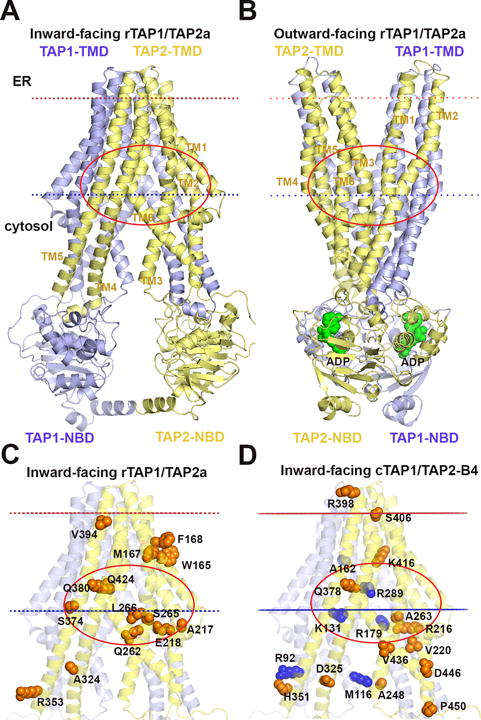
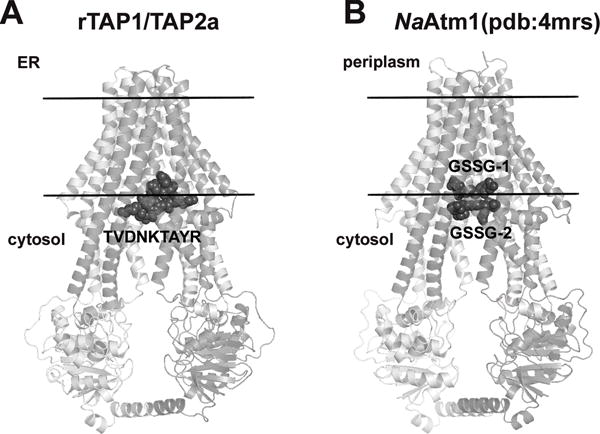
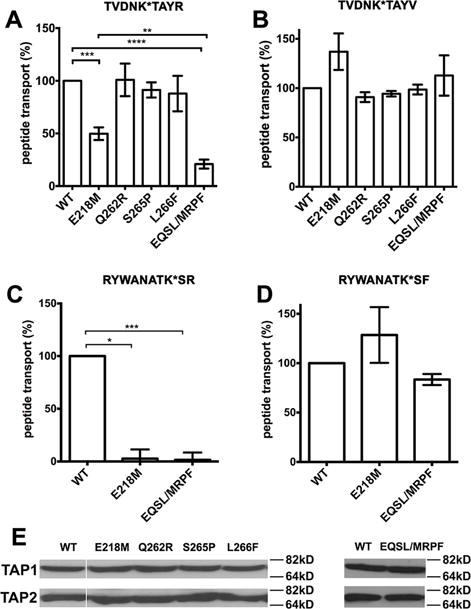
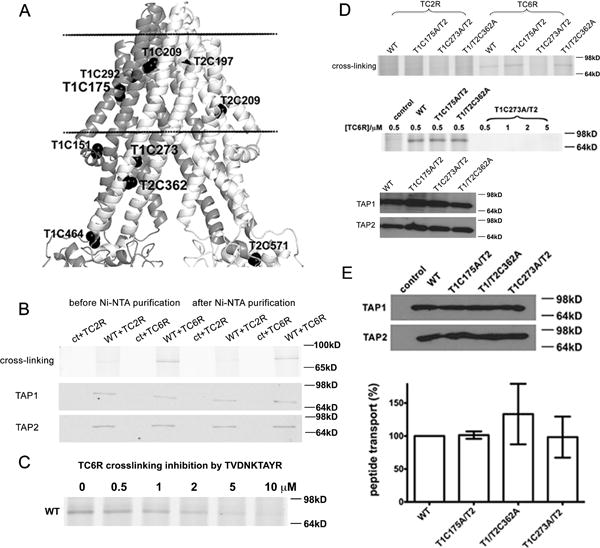
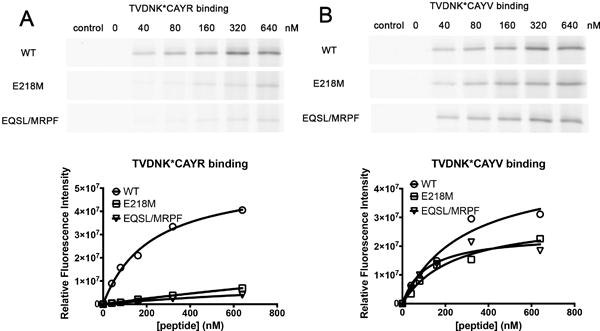
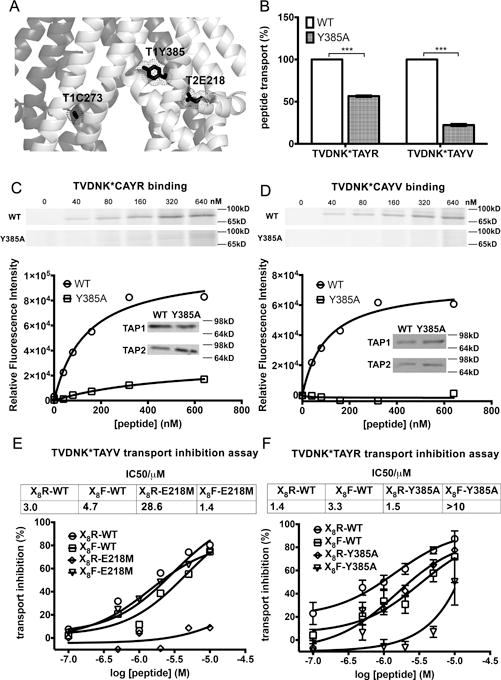
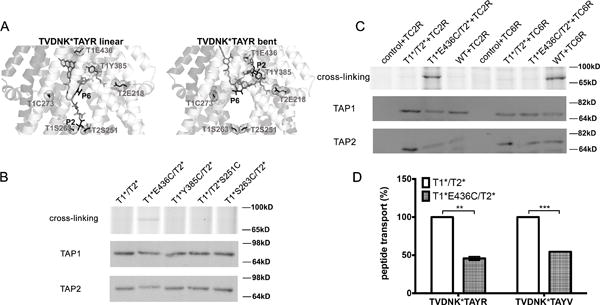
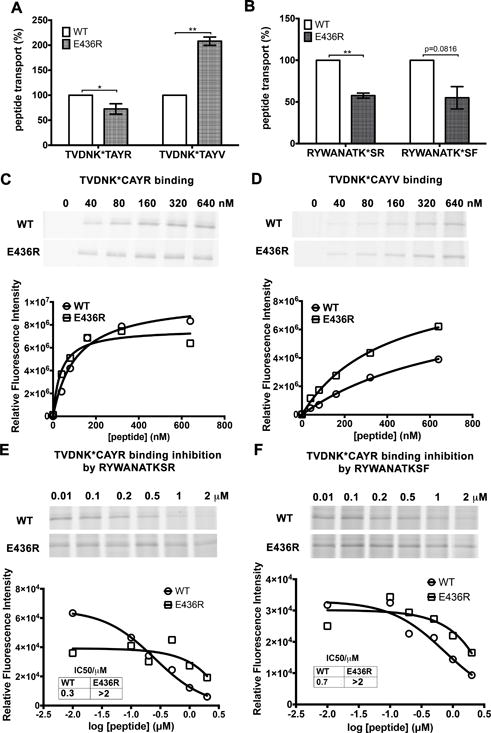
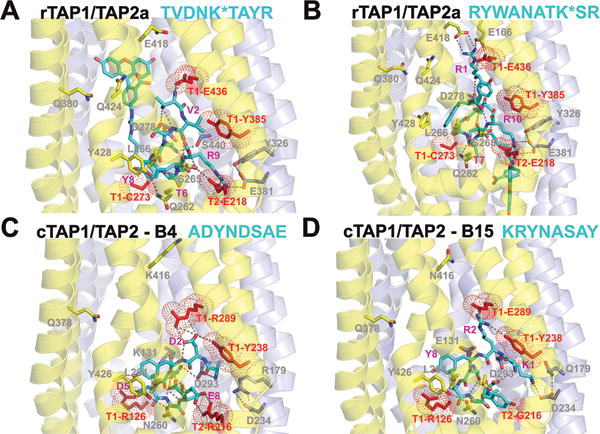
TAP1/TAP2 complexes translocate peptides from the cytosol to the endoplasmic reticulum lumen to enable immune surveillance by CD8(+) T cells. Peptide transport is preceded by peptide binding to a cytosol-accessible surface of TAP1/TAP2 complexes, but the location of the TAP peptide-binding pocket remains unknown. Guided by the known contributions of polymorphic TAP variants to peptide selection, we combined homology modeling of TAP with experimental measurements to identify several TAP residues that interact with peptides. Models for peptide-TAP complexes were generated, which indicate bent conformation for peptides. The peptide binding site of TAP is located at the hydrophobic boundary of the cytosolic membrane leaflet, with striking parallels to the glutathione binding site of NaAtm1, a transporter that functions in bacterial heavy metal detoxification. These studies illustrate the conservation of the ligand recognition modes of bacterial and mammalians transporters involved in peptide-guided cellular surveillance.
TAP1/TAP2复合物将肽从细胞质转运至内质网腔,以实现CD8(+) T细胞的免疫监视。在肽转运之前,肽会与TAP1/TAP2复合物的细胞质可及表面结合,但TAP肽结合口袋的位置仍然未知。基于多态性TAP变体对肽选择的已知作用,我们将TAP的同源建模与实验测量相结合,以鉴定与肽相互作用的几个TAP残基。生成了肽-TAP复合物模型,这些模型表明肽呈弯曲构象。TAP的肽结合位点位于细胞质膜小叶的疏水边界,与NaAtm1的谷胱甘肽结合位点有显著相似之处,NaAtm1是一种在细菌重金属解毒中起作用的转运蛋白。这些研究说明了参与肽引导细胞监视的细菌和哺乳动物转运蛋白的配体识别模式的保守性。